Air conditioning
maintenance contracts
A maintenance contract is not really about the machine. It is about the F-Gas records you are legally required to keep, and about not losing a trading day in August because nobody cleaned a coil in March.
- Free survey and heat load calculation on jobs over 5,000 pounds
- Quote split into plant, install, electrics and out-of-hours
- Out of hours fitting where the business cannot close
Accredited, and fitting the brands you know











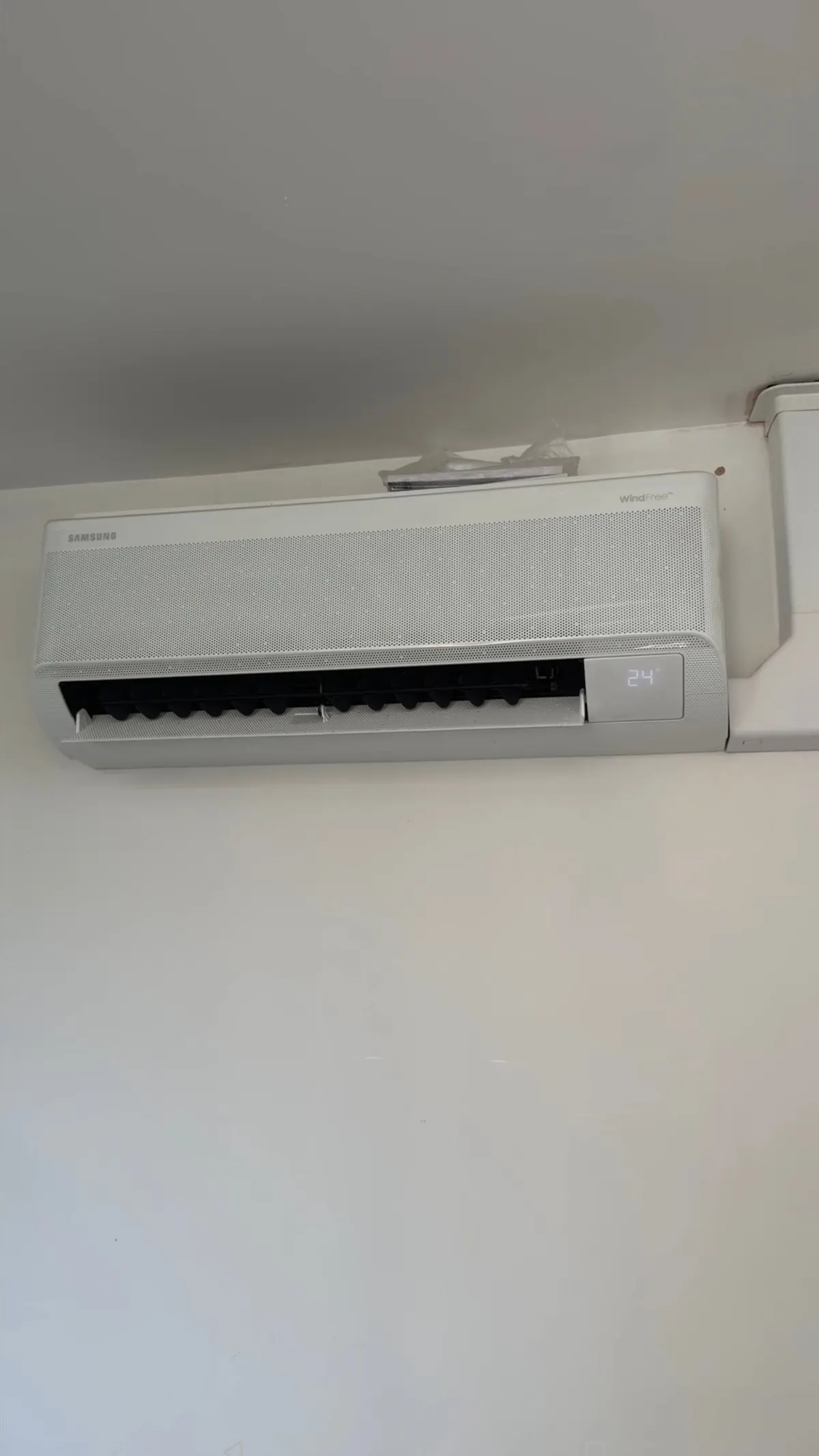
Air conditioning we have fitted
Our own jobs, photographed on site. Real rooms, real outdoor positions, nothing from a catalogue.
 Air conditioning
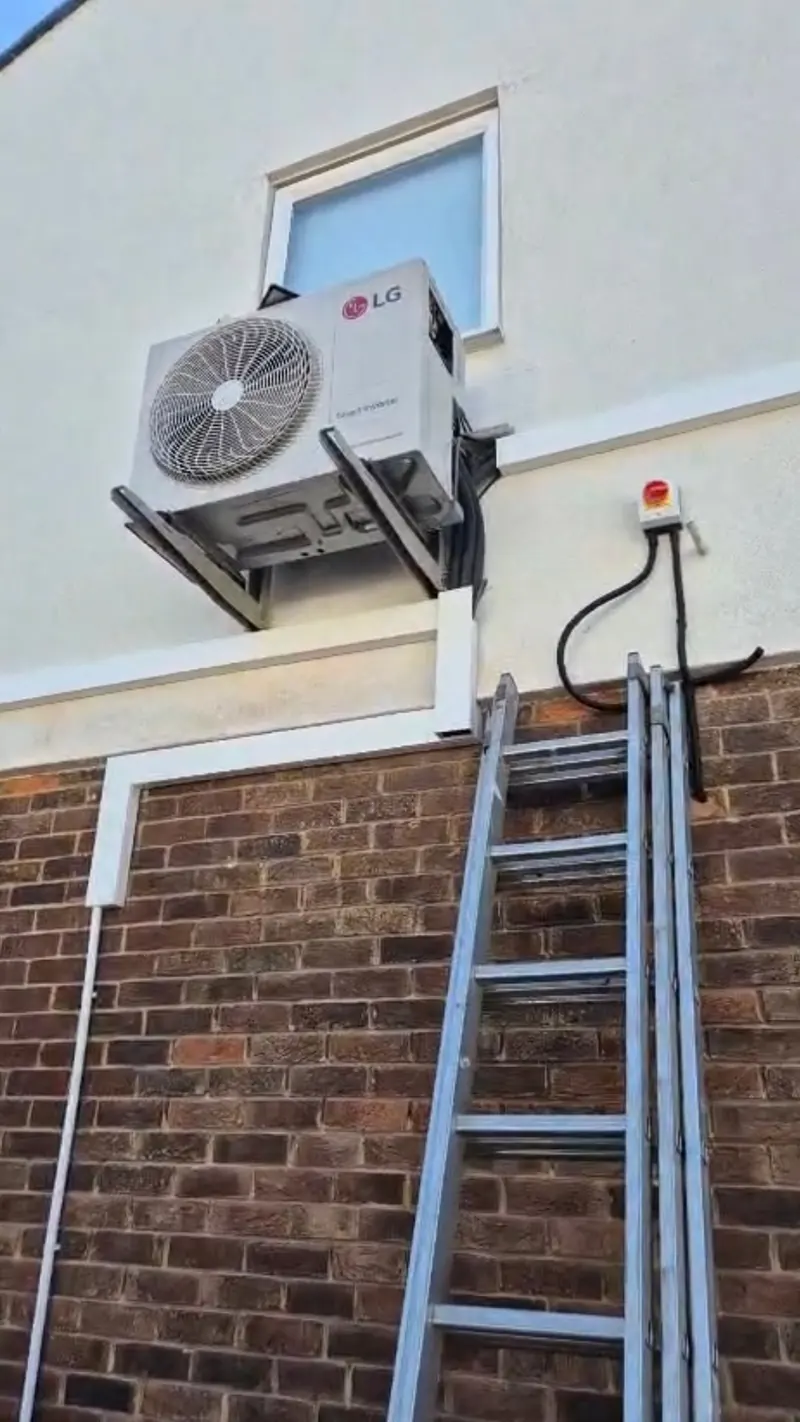
Outdoor unit on wall brackets
Above brick, isolator and cabling run tidy
Air conditioning
Outdoor unit on wall brackets
Above brick, isolator and cabling run tidy
 Air conditioning
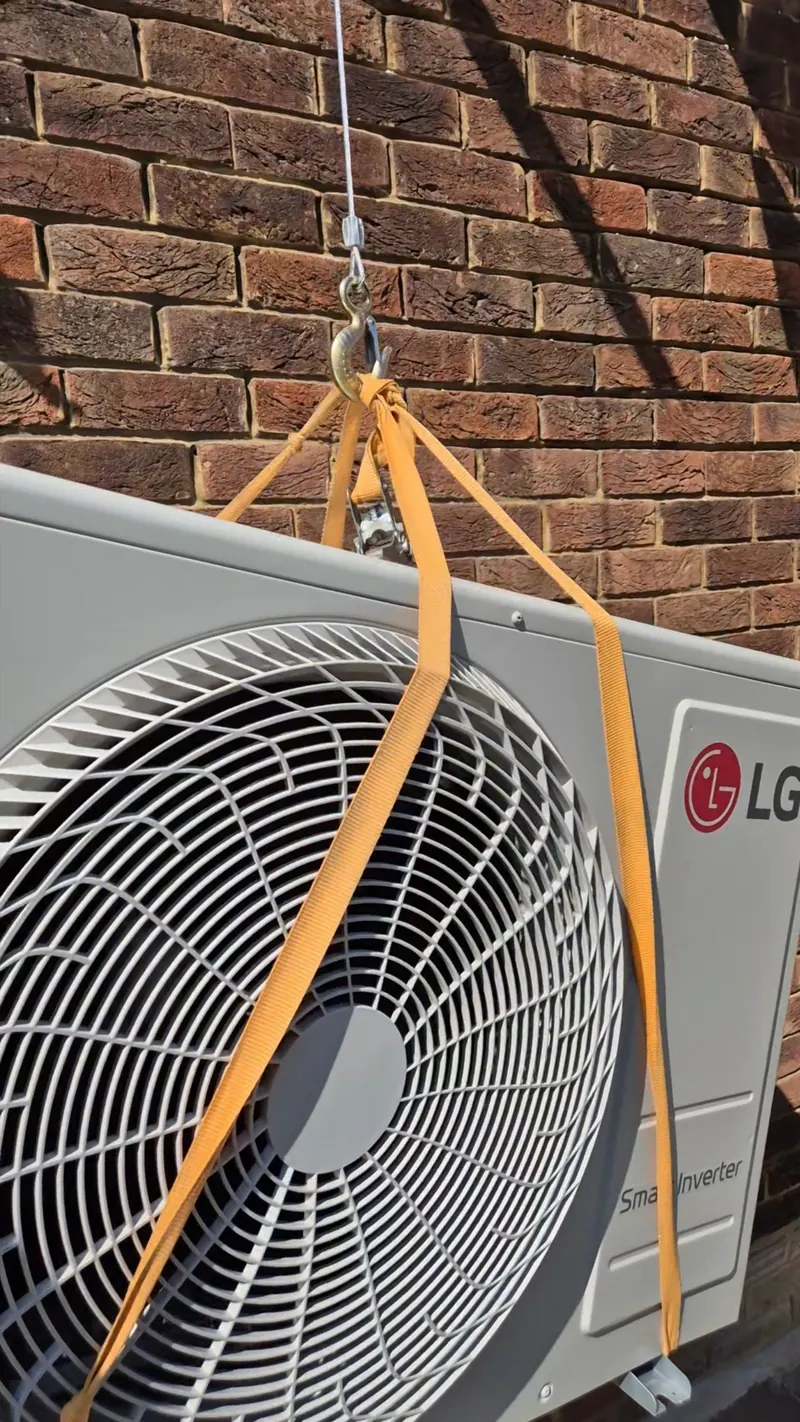
Condenser going up on straps
Lifted into a wall position, no scaffold
Air conditioning
Condenser going up on straps
Lifted into a wall position, no scaffold
 Air conditioning
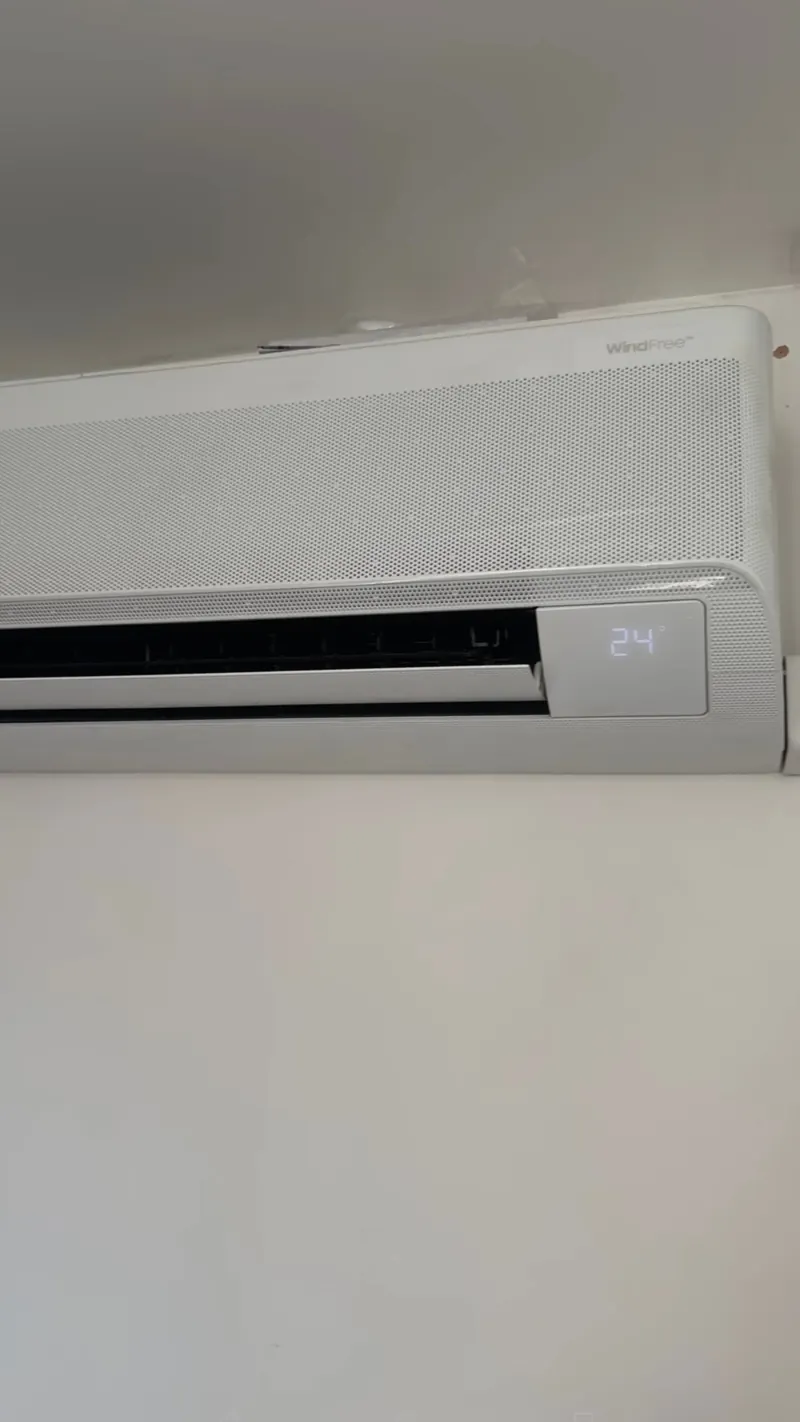
Wall unit, commissioned
Set to 24 degrees and handed over
Air conditioning
Wall unit, commissioned
Set to 24 degrees and handed over
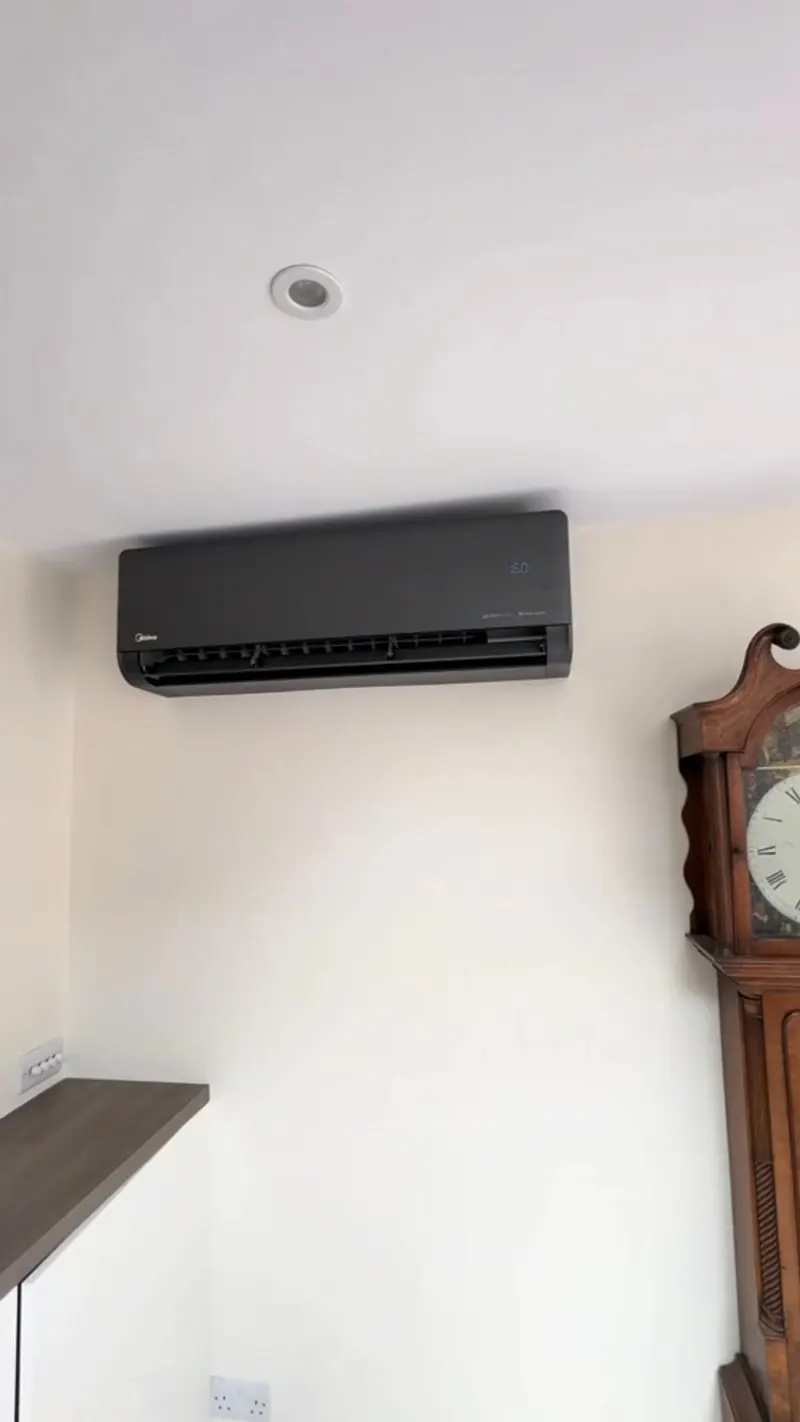 Air conditioning
Black wall unit in a sitting room
Chosen to sit with the room, not against it
Air conditioning
Black wall unit in a sitting room
Chosen to sit with the room, not against it
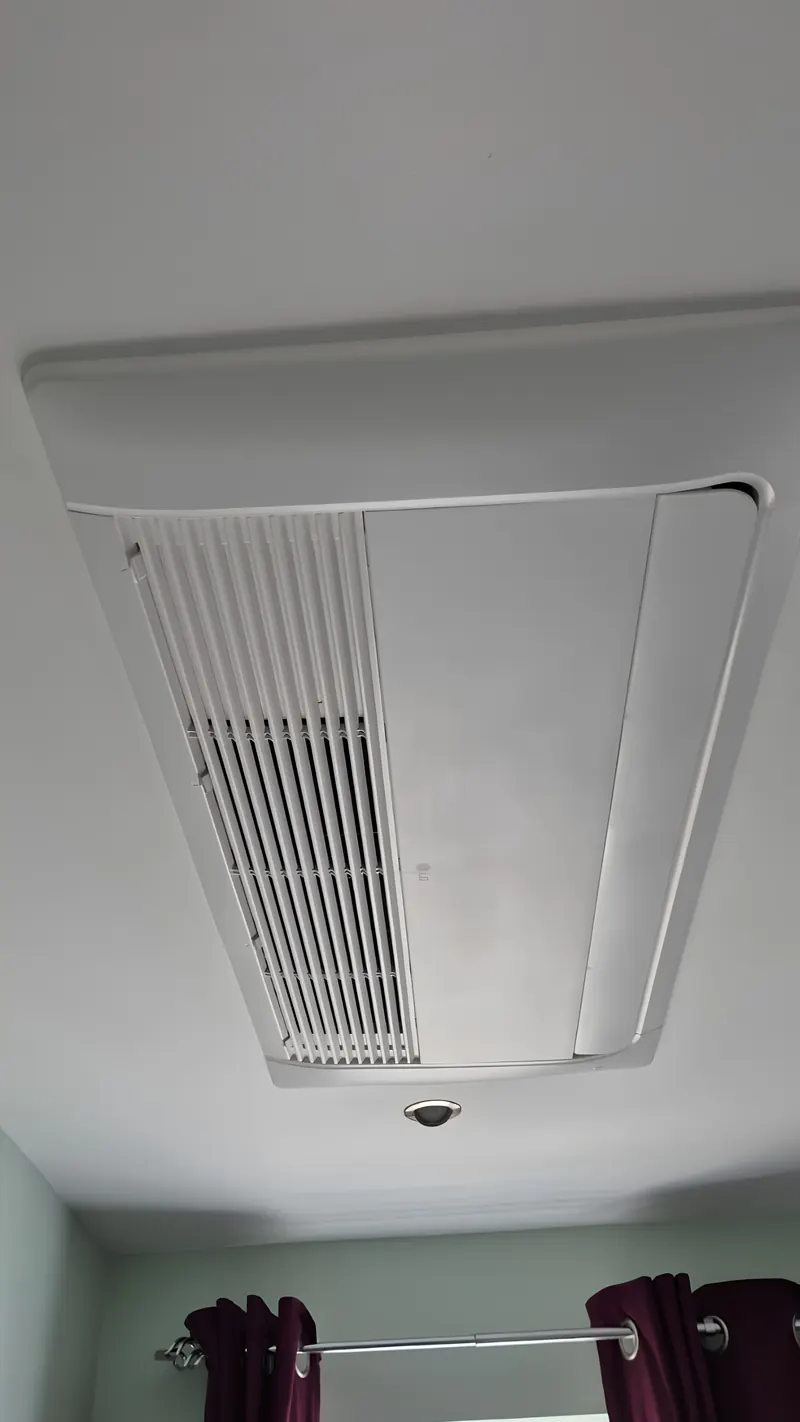 Air conditioning
Ceiling cassette
Recessed flush into the ceiling
Air conditioning
Ceiling cassette
Recessed flush into the ceiling
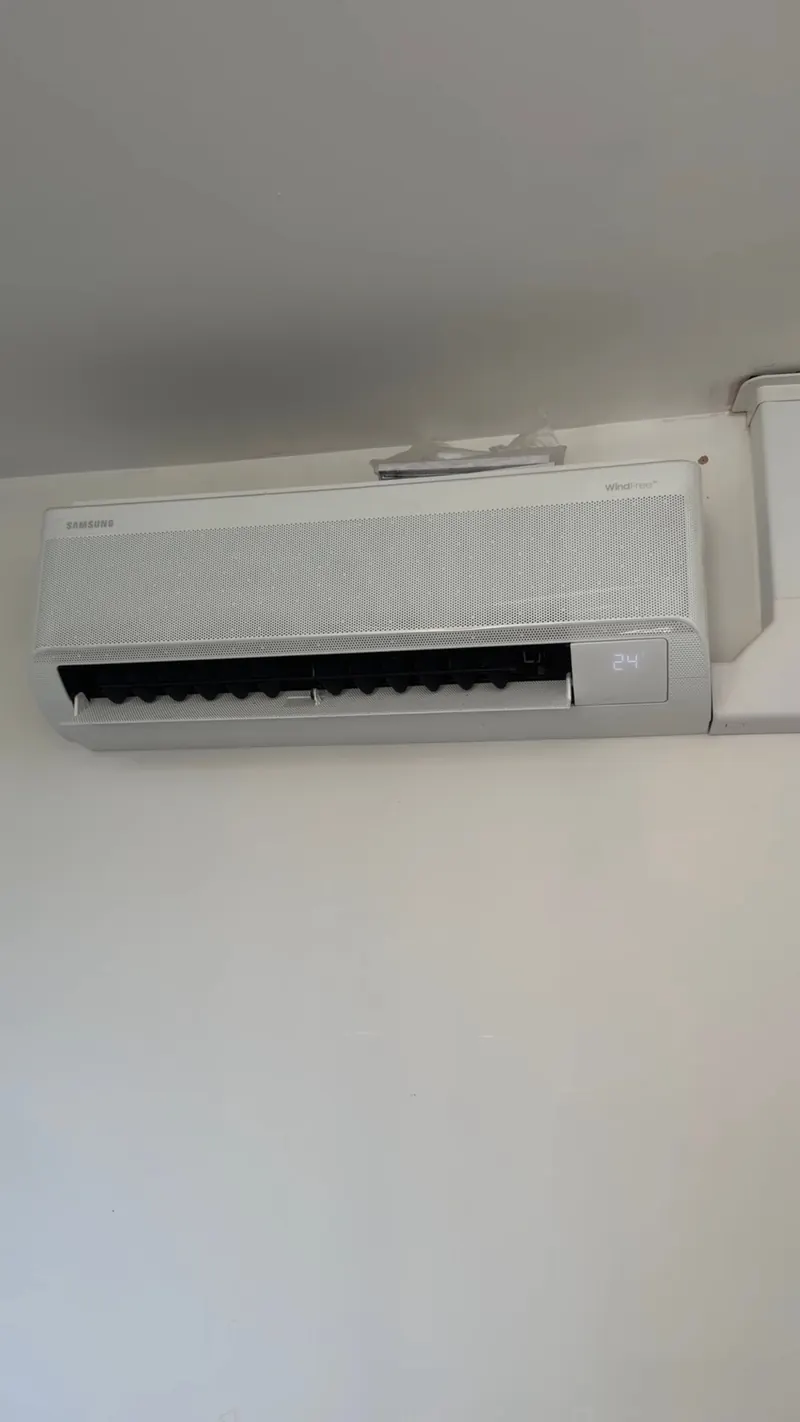 Air conditioning
Samsung Wind-Free
Cooling without a draught on the room
Air conditioning
Samsung Wind-Free
Cooling without a draught on the room
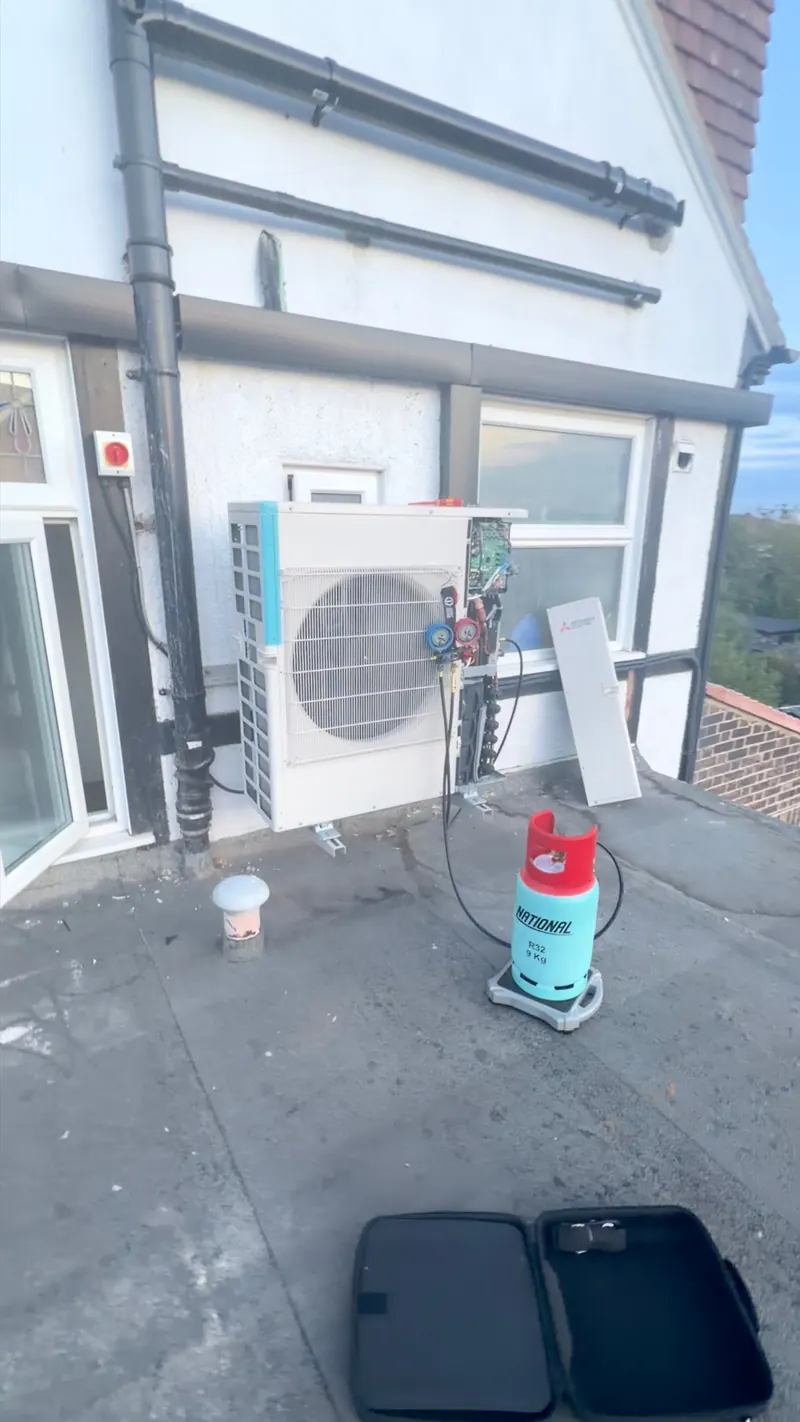 Air conditioning
Rooftop commissioning
Pressure tested and charged on gauges
Air conditioning
Rooftop commissioning
Pressure tested and charged on gauges
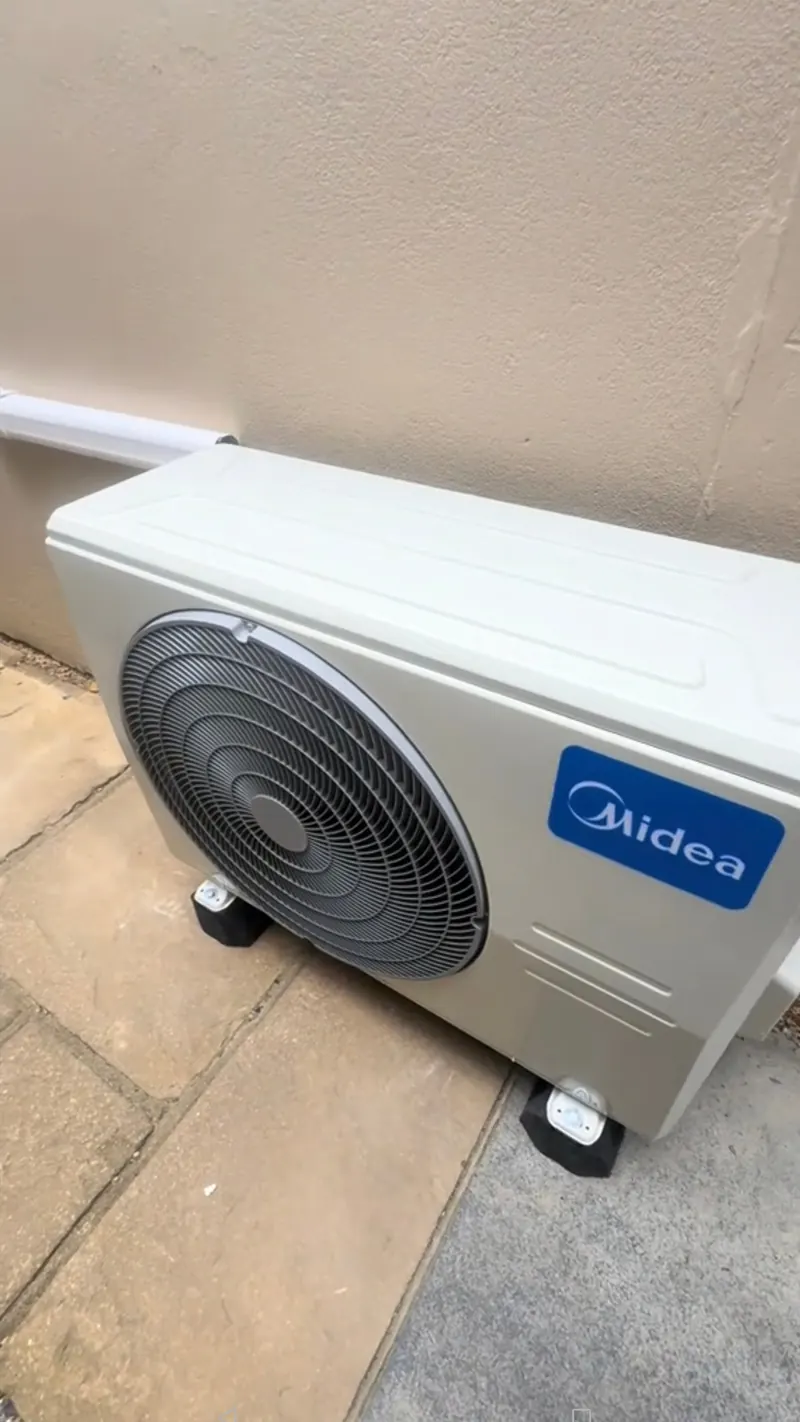 Air conditioning
Outdoor unit at ground level
On paving beside the house, easy to service
Air conditioning
Outdoor unit at ground level
On paving beside the house, easy to service
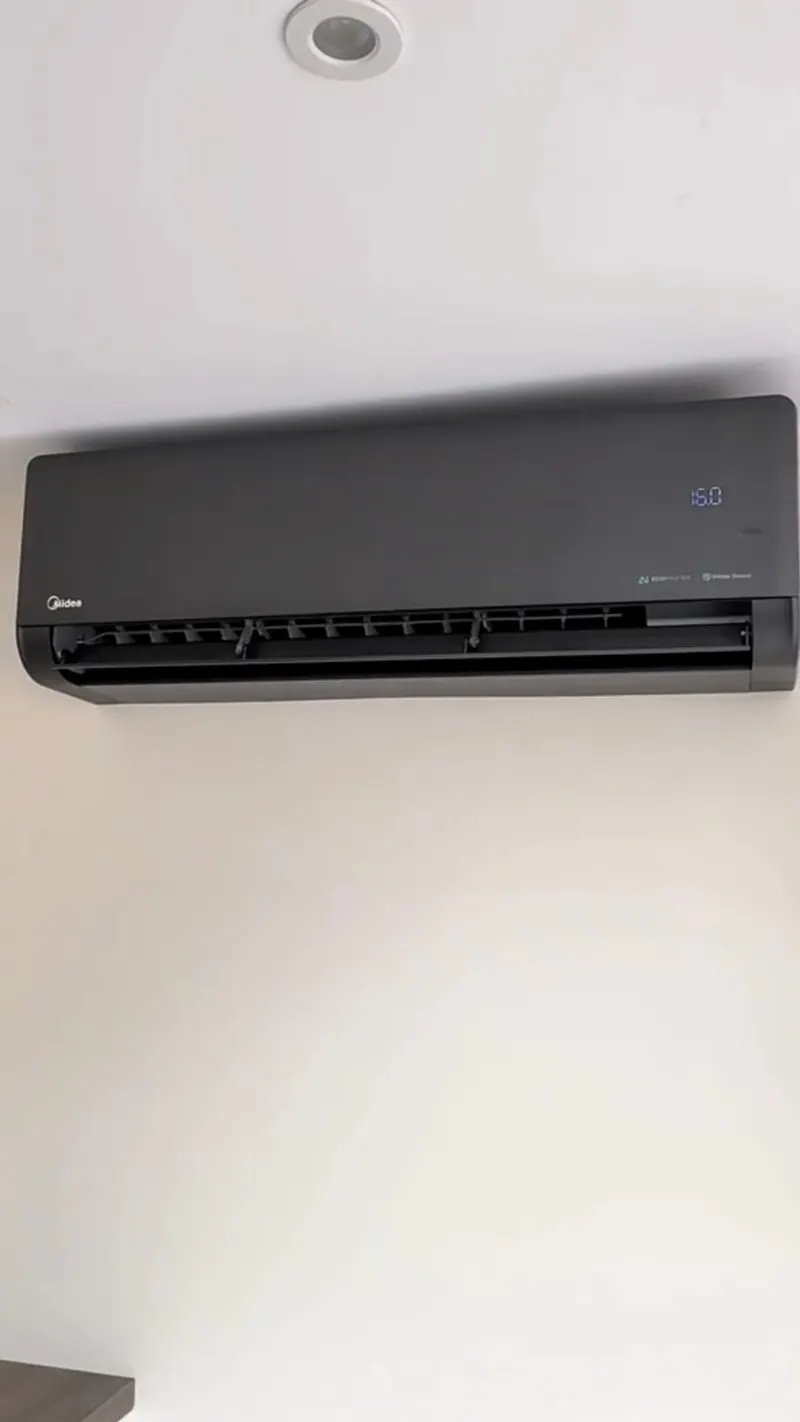 Air conditioning
Black wall unit, running
Quiet enough for a bedroom
Air conditioning
Black wall unit, running
Quiet enough for a bedroom
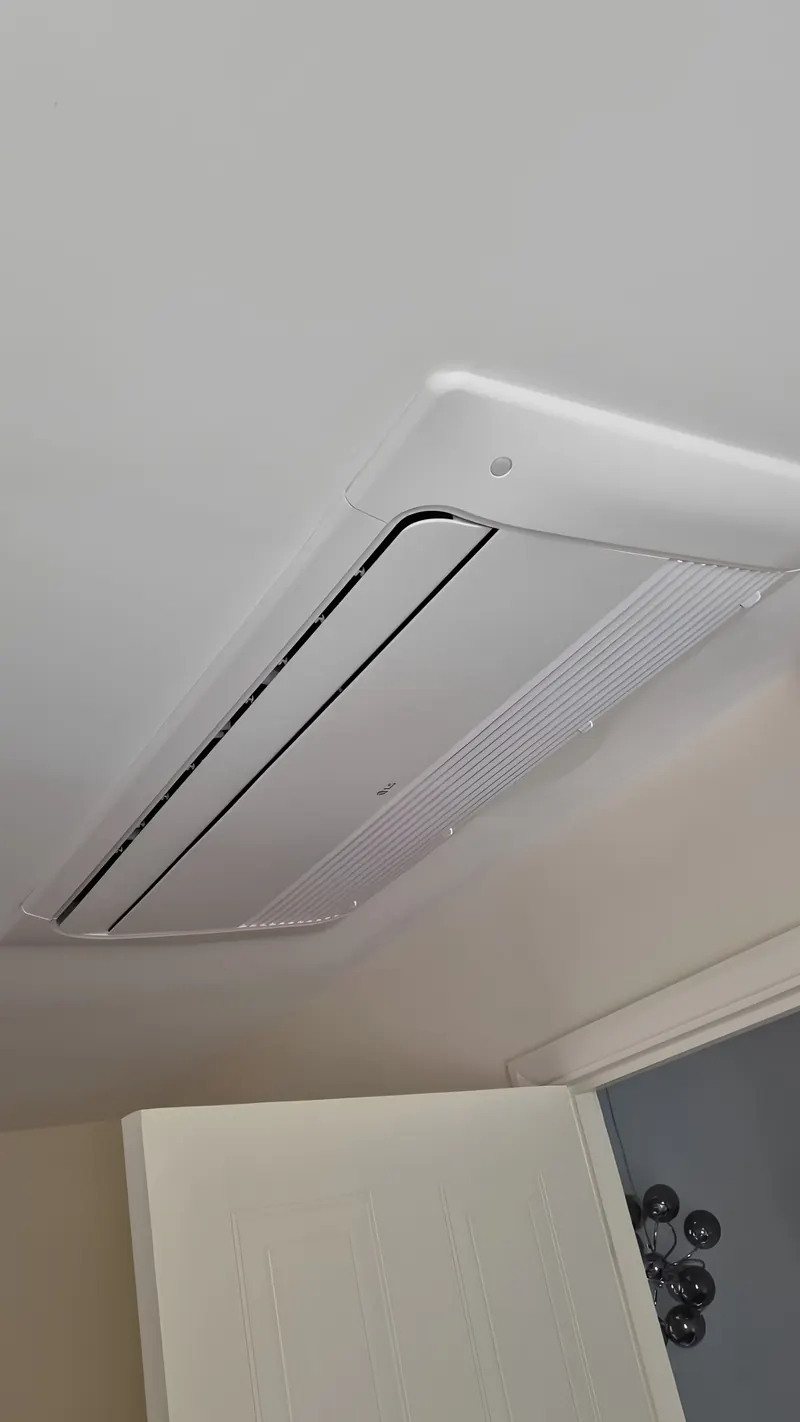 Air conditioning
One-way ceiling cassette
Only the grille shows
Air conditioning
One-way ceiling cassette
Only the grille shows
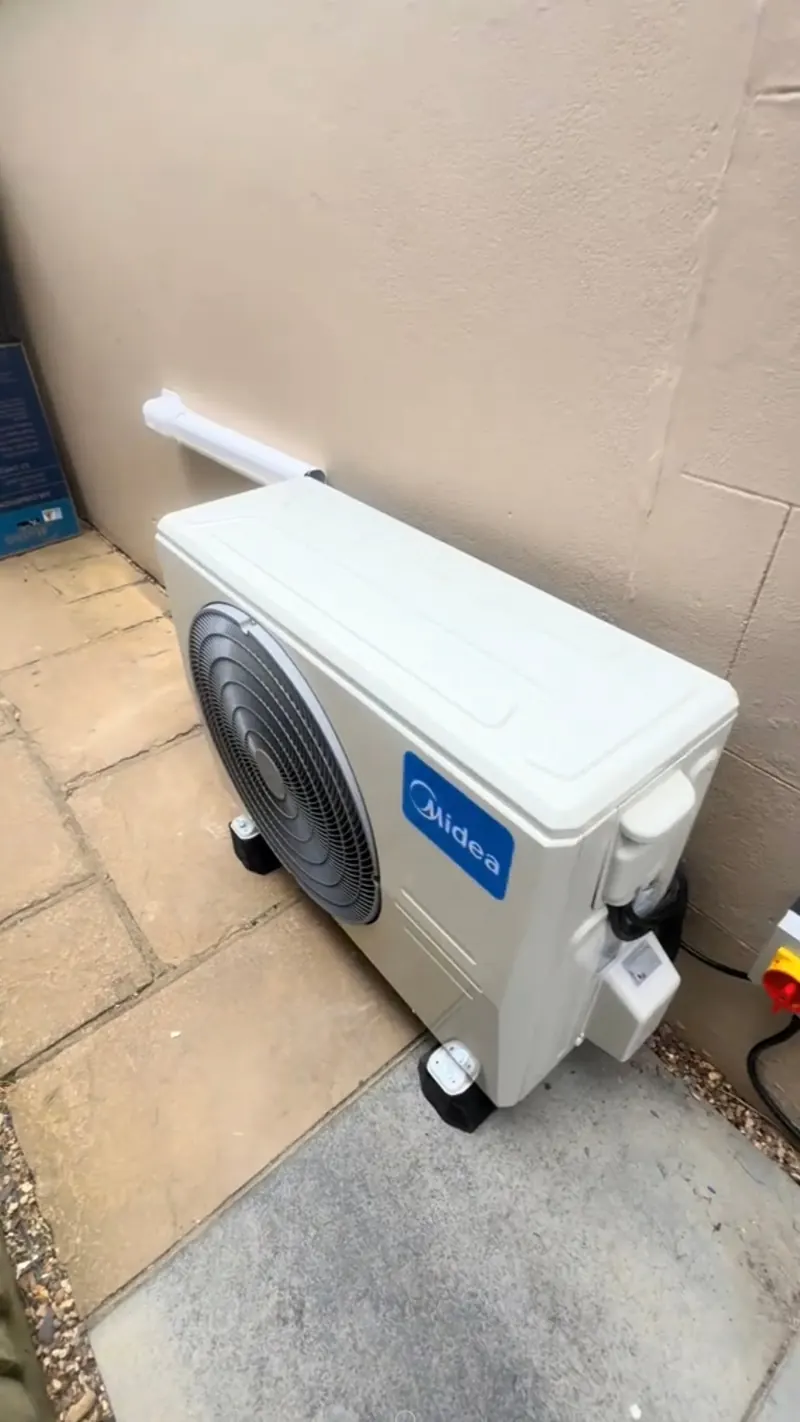 Air conditioning
Outdoor unit on paving
Against render, clear of the boundary
Air conditioning
Outdoor unit on paving
Against render, clear of the boundary
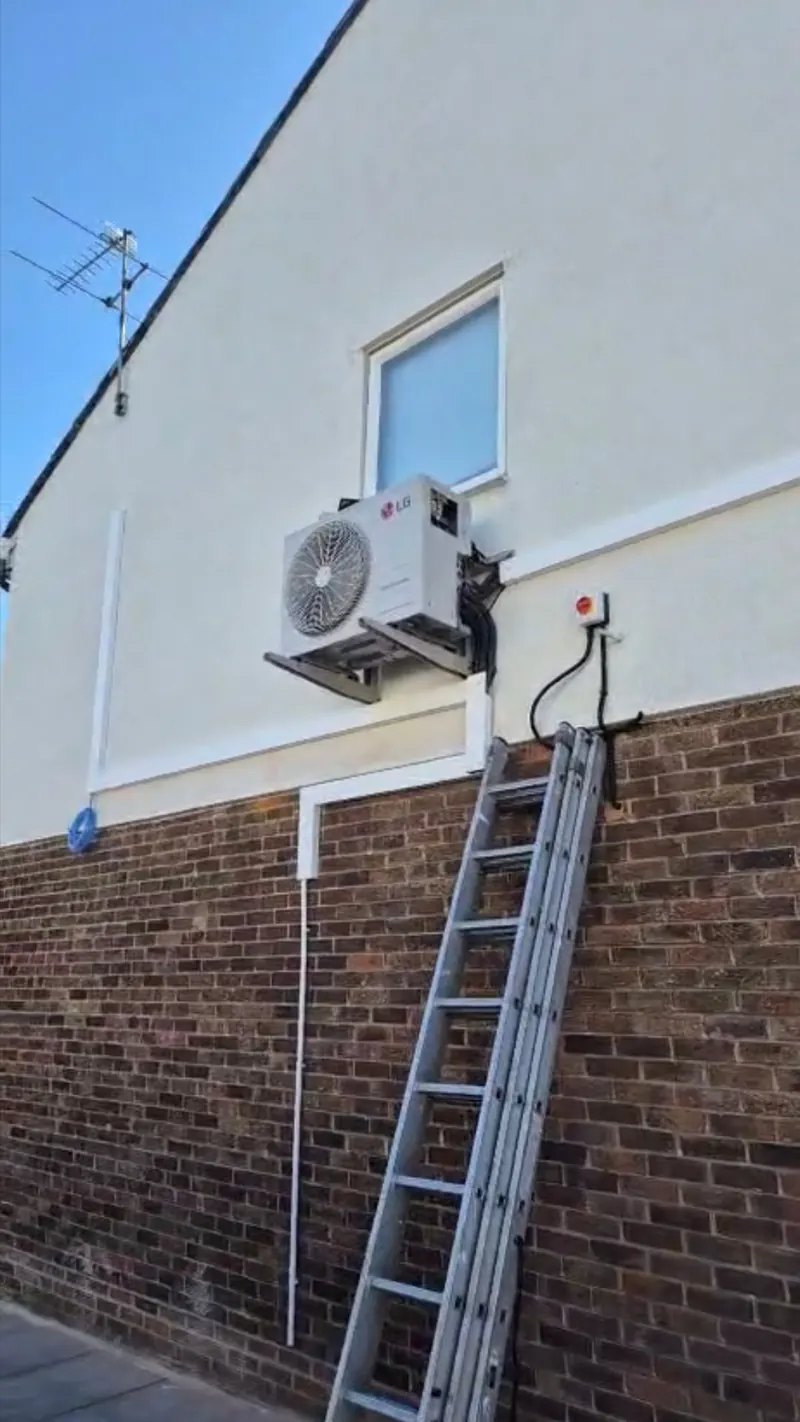 Air conditioning
Condenser high on a wall
On brackets where the ground was not an option
Air conditioning
Condenser high on a wall
On brackets where the ground was not an option
We price maintenance per unit rather than per site, so a two-unit salon does not pay an office rate. Contracts start from 95 pounds plus VAT per unit per visit and include the F-Gas leak check and log where the system is over the threshold.
We will survey an existing installation and tell you what condition it is in before you commit to anything.
Read the full guide: 6 sections, about 3 minutes
What a contract is actually for
| Source | What it contributes | Why it matters |
|---|---|---|
| The legal duty | F-Gas leak checking and five years of records, on the operator | That duty is yours, not your installer's |
| The August failure | Coils, filters and drains fail in the heat, not in the spring | A hot Saturday lost costs more than the contract |
| Warranty | Manufacturers ask for a service history when you claim | Most businesses cannot produce one |
| Running cost | A coated coil costs real money every day it runs | The service pays for part of itself |
| Knowing the site | The same engineers, who have seen it before | Faster diagnosis, fewer return visits |
The F-Gas duty sits with you, and it is the reason most people call
Systems containing 5 tonnes of CO2 equivalent or more must be leak checked at least every twelve months, every six months from 50 tonnes, and quarterly from 500 tonnes with permanent leak detection fitted. Records must be kept for five years and they have to include the refrigerant type and quantity, anything added, the leak check results, any recovery, and who did the work.
If you fit automatic leak detection you can double the interval, which on a larger system frequently pays for itself in reduced visits alone.
The duty falls on the operator of the equipment, which is the business occupying the building, not on whoever installed it. Most office VRF systems are comfortably over the first threshold and a lot of the people responsible for them do not know the duty exists.
Why per unit and not per site
Because a site is not a unit of work. A salon with two cassettes and an office floor with fourteen take completely different amounts of time, and a per-site price means one of them is subsidising the other.
Per unit also makes the quote checkable. You can count your own indoor units, multiply, and see whether the number makes sense, which is not true of a site price somebody arrived at by looking at your building.
What we do before quoting a contract
Survey what is there. We are not going to take on a contract for equipment we have never seen and then discover in month two that three units need work that should have been done before the contract started.
So the first visit establishes condition, and if something needs putting right it is quoted separately and honestly, including where the right answer is replacement rather than another year of patching. That conversation is much easier to have before a contract than during one.
The three contracts
Priced per indoor unit per visit. The right one depends on how much a failure costs you rather than on how many units you have.
| Scope | Usual system | Indicative price |
|---|---|---|
| Basic | One visit a year | Full service, F-Gas check and log where required |
| Standard | Two visits a year | As basic, plus priority response and no call-out fee |
| Critical | Four visits a year | As standard, plus an agreed response time and consumables |
| Per unit, per visit | Any contract | From £95 plus VAT |
| Condition survey first | Before any contract starts | So nothing is inherited unseen |
Every figure on this site is an estimate built from the quotations we issued in 2026 and our own installation experience. It is not a quotation. The price you are given after the free survey is the price you pay.
Other commercial work
Offices
The heat in an office does not mostly come through the windows.
OfficesShops and retail
A retail unit has a problem no office has: the door is open, deliberately, because a shut door costs footfall.
Shops and retailRestaurants and cafés
The single most expensive mistake in hospitality cooling is treating the dining room and the kitchen as one problem.
Restaurants and cafésAll commercial work
How commercial jobs are priced, the F-Gas and TM44 duties, and maintenance contracts.
Commercial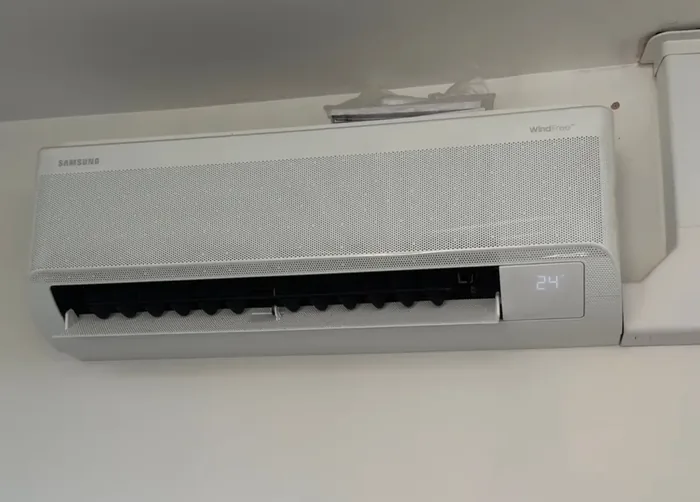
Your estimate
£95to£95
Per visit, plus VAT. 95 pounds is 114 pounds including VAT.
Send this on WhatsAppPrice a service visit
A contract is priced from the visit. This is what one visit costs; a contract fixes it annually and adds priority response.
Last step: where do we send your written price?
Every figure on this site is an estimate built from the quotations we issued in 2026 and our own installation experience. It is not a quotation. The price you are given after the free survey is the price you pay.
Maintenance contracts: common questions
Do we legally have to have a maintenance contract?
No. What you legally have to have is the leak checking and the records, if your system is at 5 tonnes CO2 equivalent or more, and those duties sit with your business rather than with your installer. A contract is simply the usual way of making sure they happen and that somebody is keeping the log.
There is more on all of the commercial duties, including TM44, on the commercial page.
How often should commercial air conditioning be serviced?
Once a year for a normal office or shop, twice for anything in hospitality or a gym, and more for units near a commercial kitchen pass. Cooking aerosols and high occupancy coat a coil far faster than office dust does.
That is engineering rather than an upsell: a coated coil loses output, then ices, then drips, and the sequence takes about one season.
Will you take on systems you did not install?
Yes, and most of the contracts we hold are for equipment somebody else fitted, including systems from companies no longer trading.
We survey it first and tell you honestly what condition it is in. If there is work needed before a contract makes sense, you get that as a separate quote rather than discovering it in month two.
What happens if something breaks between visits?
On a basic contract you are quoted as normal. On standard and critical you get priority response and no call-out fee, and on critical there is an agreed response time in the contract.
Which of those is worth paying for is a commercial question rather than a technical one: what does a day without this system actually cost the business.
Free survey and heat load calculation
Free on jobs over 5,000 pounds. You get a design drawing, a fixed price split into plant, installation, electrics and builders work, and a programme with the out-of-hours windows agreed before anyone starts.
Monday to Friday 9am to 7pm, Saturday 10am to 3pm, Sunday closed
Page updated