Air conditioning
run on your own solar
Cooling demand peaks within an hour of solar generation. One survey, one price, both systems fitted together.
Accredited, and fitting the brands you know











- Same hourCooling demand and solar peak
- £2,400From, one room of cooling
- 0%VAT on the solar side
- MCSCertified, NIC-601634
Our own jobs, photographed on the day
Finished jobs, photographed on the day. Tap any one for the full story.
 Heat pump and solar
N21
Winchmore Hill
Air source heat pump with roof-mounted solar
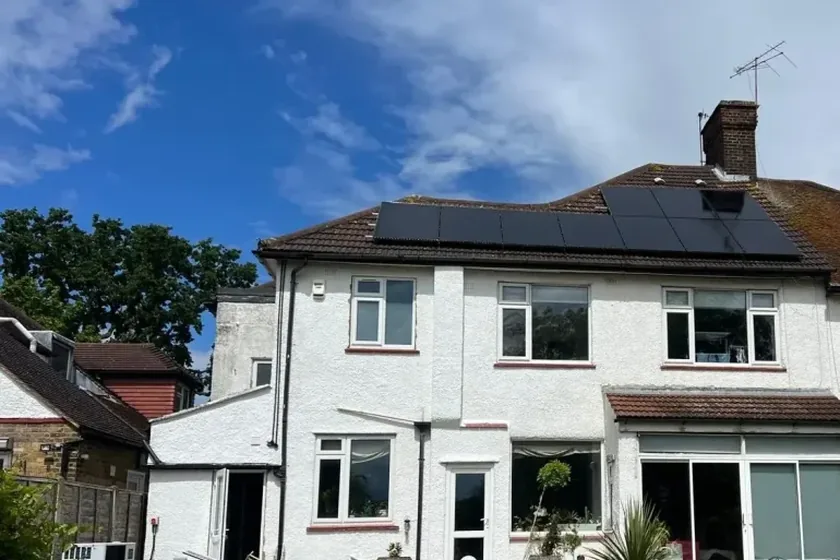
The panels sit across the rear pitch and the heat pump at the side of the house, which is the pairing that lets the pump run on its own generation through the middle of the day.
View the project
Heat pump and solar
N21
Winchmore Hill
Air source heat pump with roof-mounted solar
The panels sit across the rear pitch and the heat pump at the side of the house, which is the pairing that lets the pump run on its own generation through the middle of the day.
View the project
 Heat pump, solar and battery
N15
Tottenham
Air source heat pump with solar and battery storage
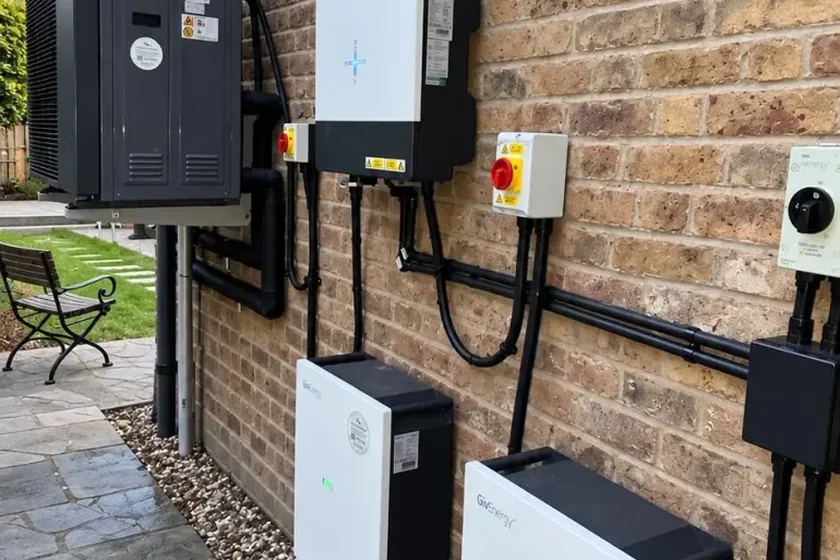
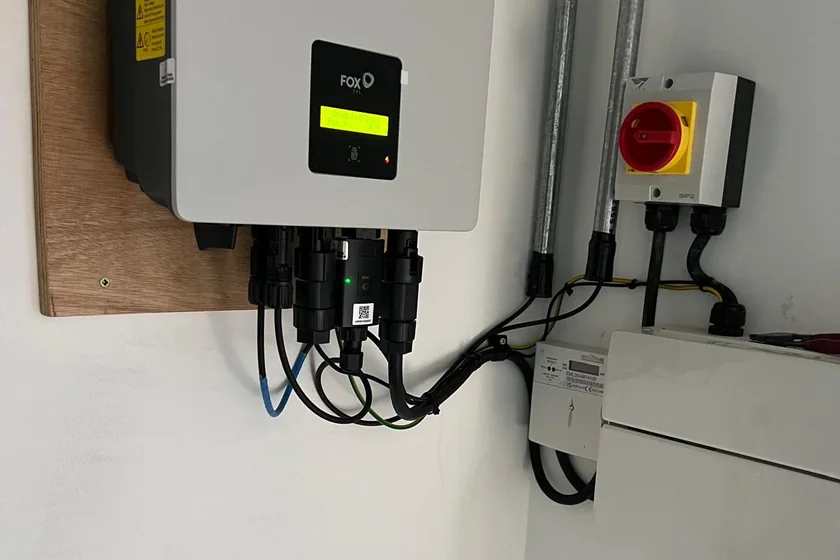
The whole electrical side on one wall: inverter, battery modules and every isolator in reach, with the conduit dressed in straight runs so a fault years from now can be traced without stripping the wall.
View the project
Heat pump, solar and battery
N15
Tottenham
Air source heat pump with solar and battery storage
The whole electrical side on one wall: inverter, battery modules and every isolator in reach, with the conduit dressed in straight runs so a fault years from now can be traced without stripping the wall.
View the project
 Solar
TW8
Brentford
Roof-mounted solar array
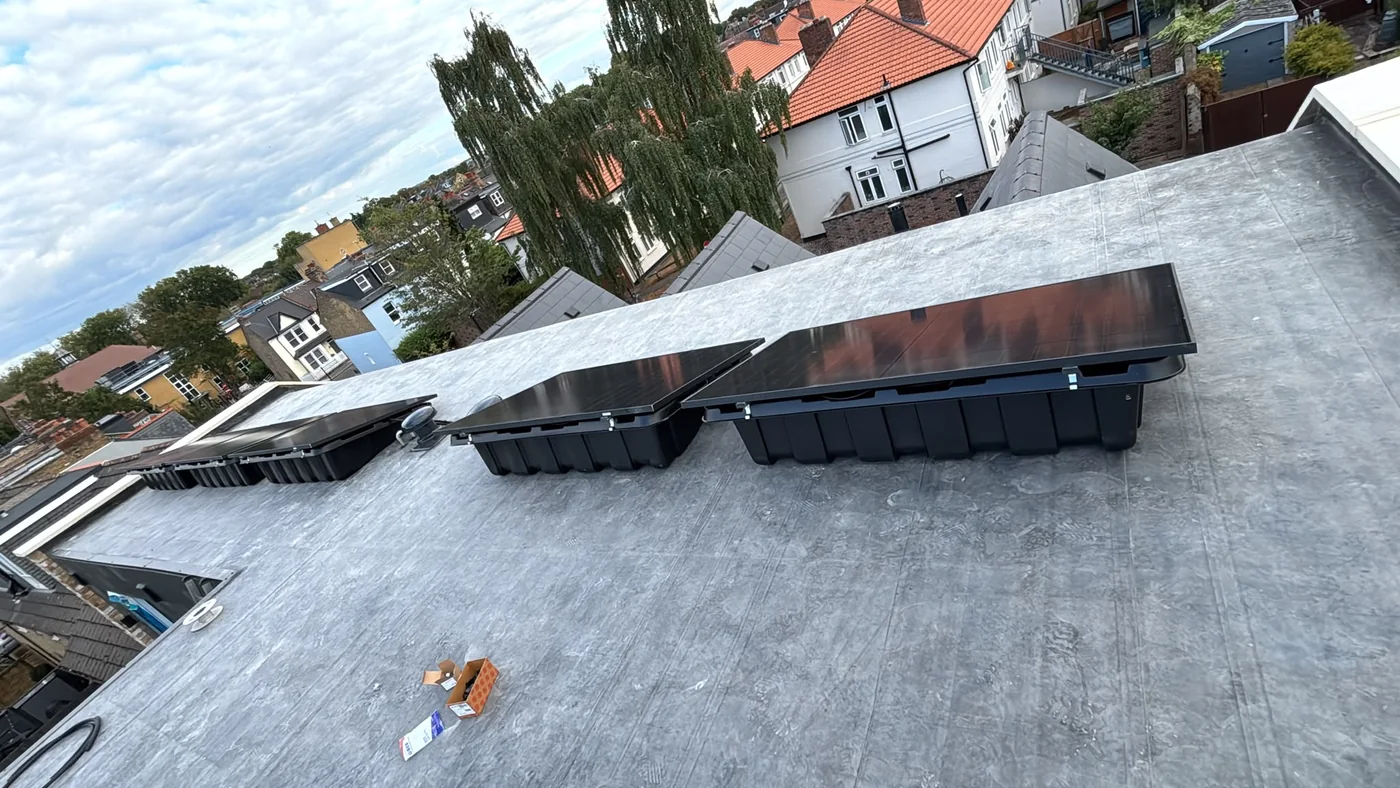
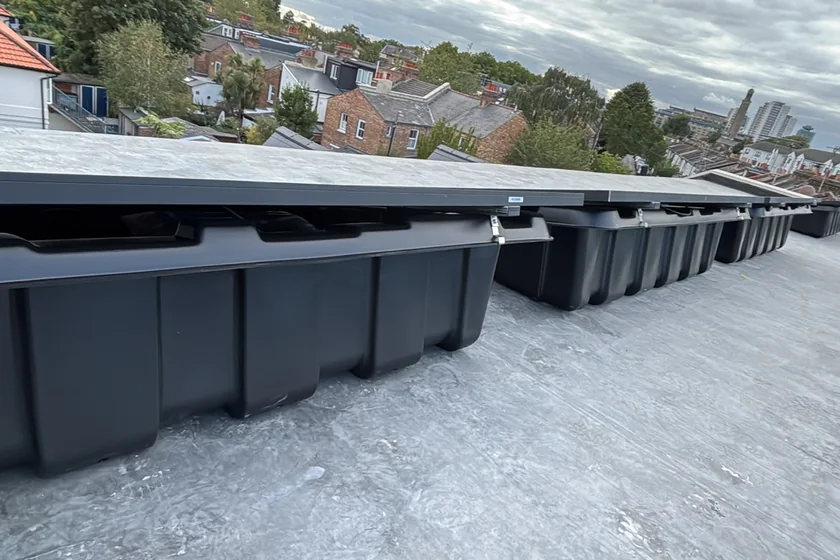
Panels on a flat roof carried on tilted frames rather than laid flat, which is what brings a London flat roof close to the yield of a south-facing pitch.
View the project
Solar
TW8
Brentford
Roof-mounted solar array
Panels on a flat roof carried on tilted frames rather than laid flat, which is what brings a London flat roof close to the yield of a south-facing pitch.
View the project
 Heat pump, solar and battery
N4
Finsbury Park
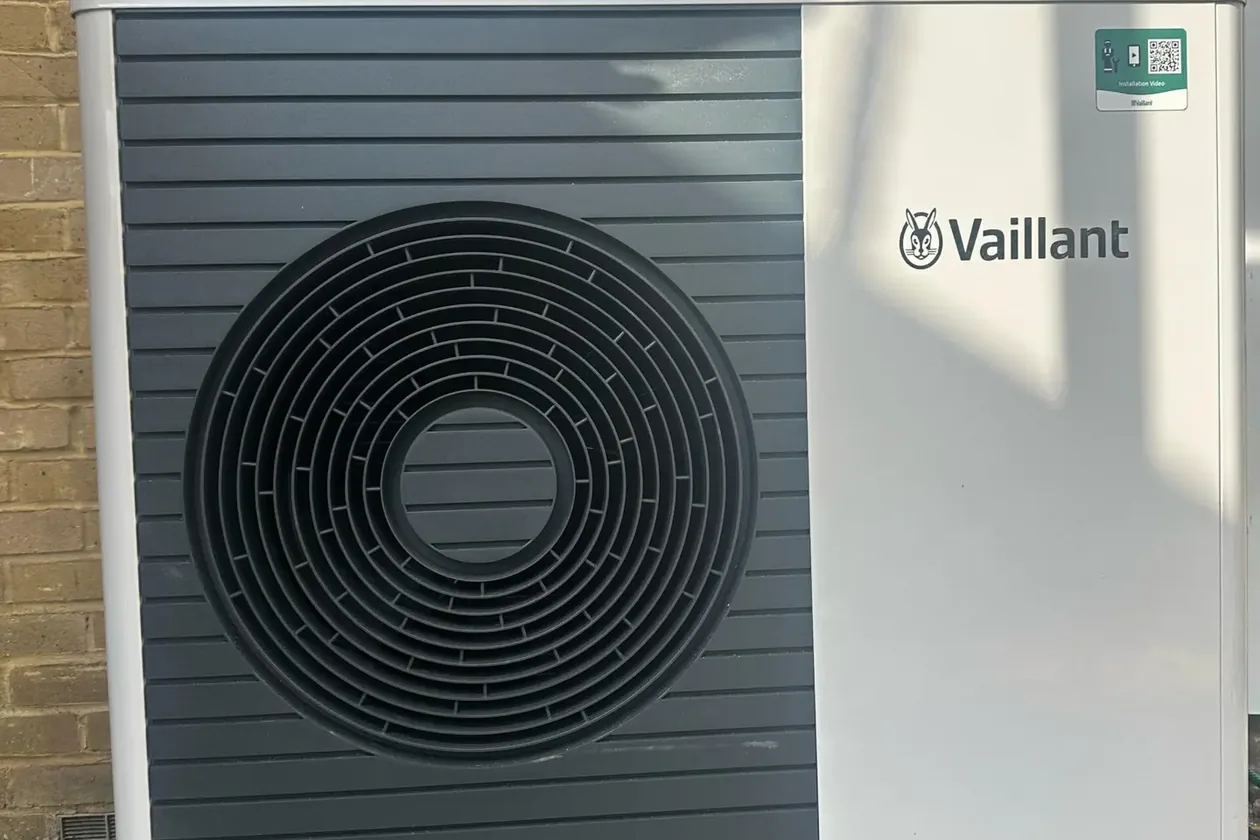
Vaillant air source heat pump with solar panels and a battery
The panels on the roof run the heat pump through the day and the battery carries it into the evening, so the house buys far less from the grid. The unit sits on raised feet against the rear wall.
View the project
Heat pump, solar and battery
N4
Finsbury Park
Vaillant air source heat pump with solar panels and a battery
The panels on the roof run the heat pump through the day and the battery carries it into the evening, so the house buys far less from the grid. The unit sits on raised feet against the rear wall.
View the project
Both systems in three steps
-
1
One survey
The rooms, the roof and the fuse board, on the same visit.
-
2
One price
Cooling and solar on one written quotation.
-
3
Fitted together
The panels feed the house, and the house is where the cooling is.
What is in the price
- The air conditioningUnits, 25 metres of pipework and the electrics.
- The panelsPriced per panel, pitched roof or flat.
- The inverterString, or hybrid if there is a battery.
- ScaffoldingIn the figure, not added later.
- MCS certificateIssued under NIC-601634.
- A battery, if you want oneIt moves the afternoon into the evening.
Your estimate
£3,900to£5,050
Supplied, fitted and commissioned, MCS certified under registration NIC-601634. 0 per cent VAT until 31 March 2027. Scaffolding is included; a roof we can reach safely off a ladder comes in under this.
Send this on WhatsAppPrice the solar side
Panels, inverter, scaffolding and MCS certification, from our own rate card. The cooling is priced separately.
Last step: where do we send your written price?
Every figure on this site is an estimate built from the quotations we issued in 2026 and our own installation experience. It is not a quotation. The price you are given after the free survey is the price you pay.
The full guide: why the timing works, and what it looks like on a London roof
Yes. A 5 kW living room air conditioner draws about 1.2 kW while it is cooling, and a 5.1 kWp array in London is producing three to four kW on the afternoons you want it. The generation and the demand arrive at the same hour.
Running that unit for 6 hours on a hot day costs about £2 off the grid at 26p per kWh. Off your own roof it costs nothing, and on the days it is not hot the same panels are cutting the rest of the bill.
Why the timing works
This is the whole argument, in one table.
| Time | What the roof is doing | What the cooling is doing |
|---|---|---|
| 9am | Ramping up, about 1.5 kW | Off, or barely on |
| 12pm | Near peak, 3 to 4 kW | Starting, about 1 kW |
| 2pm to 5pm | Peak, 3 to 4 kW | Peak, 1 to 2 kW |
| 7pm | Falling, under 1 kW | Still running |
| 10pm | Nothing | Bedroom unit, about 0.6 kW |
The two rows in bold are why this pairing is worth doing. Everything from 7pm onwards is the argument for a battery rather than an argument against solar.
What it looks like on a London roof
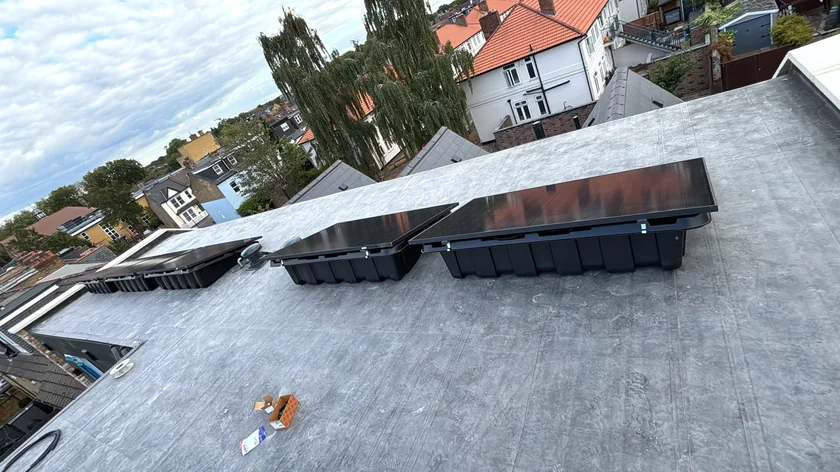
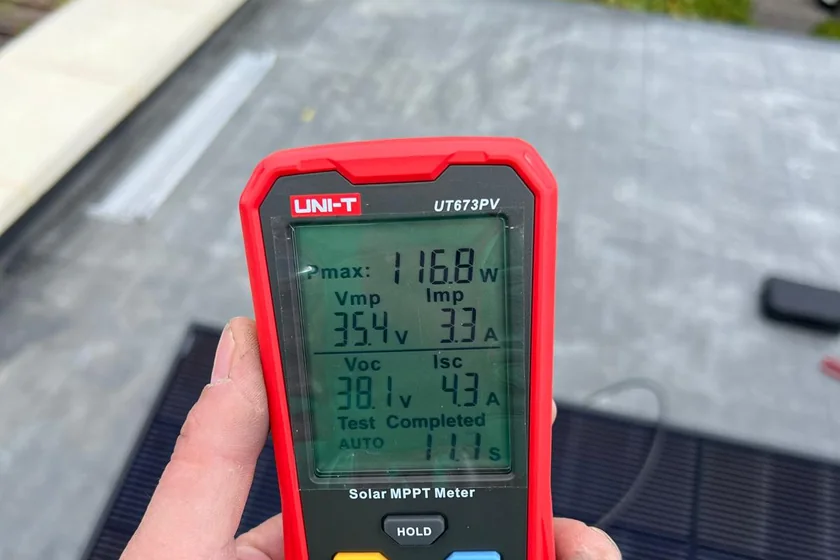
Most of what we fit is a flat roof on tilted ballasted frames, which needs no penetration of the roof covering at all.
Running cooling on your own generation
Can solar panels really run air conditioning?
A 2.5 kW bedroom unit draws about 0.6 kW while it is cooling and a 5 kW living room unit about 1.2 kW. A 5.1 kWp array on a clear June afternoon is producing three to four kW. So yes, comfortably, and with generation left over.
The reason it works so well is timing rather than size. The hottest part of the day is the sunniest part of the day, which means the load and the generation arrive together without any storage at all.
What about the evening, when it is still hot?
That is what a battery is for, and cooling is the load that justifies one fastest. Generation collapses around six in the evening; a west-facing bedroom is still warm at ten.
A 5 kWh battery adds £2,040 to £2,335 and covers roughly four to eight hours of one unit running.
Does it work in winter, when the heating matters?
Less well, and it is worth being straight about that. A London array in December produces perhaps a fifth of what it produces in June, at exactly the time heating demand is highest.
So the honest position is that solar makes cooling nearly free and makes heating cheaper rather than free. Both are worth having; only one of them is a headline.
Do I need a special inverter or a special air conditioner?
No. The panels feed the house's electricity supply and the air conditioning draws from it like anything else. There is no direct connection between them and nothing bespoke to buy.
The one specification decision worth making early is a hybrid inverter rather than a string inverter, so a battery can be added later without replacing it.
One survey, both systems, one price
If you want both, doing them together saves a second set of scaffolding, a second electrical isolation and a second visit. We survey for both at once.
Monday to Friday 9am to 7pm, Saturday 10am to 3pm, Sunday closed
Page updated