Home battery storage
London
Store cheap overnight electricity and run the house on it through the expensive hours, or keep the solar you generate instead of exporting most of it. Fitted with or without panels, with 0 percent VAT.
- 5kWh battery from £4,515 installed
- 0 percent VAT on home batteries, until 31 March 2027
- Works with or without solar panels
Accredited, and fitting the brands you know











- £4,500From, with the hybrid inverter
- 5 kWhPer battery, stackable to 15
- 0%VAT until March 2027
- MCSCertified, NIC-601634
Our own jobs, photographed on the day
Finished jobs, photographed on the day. Tap any one for the full story.
 Heat pump, solar and battery
N15
Tottenham
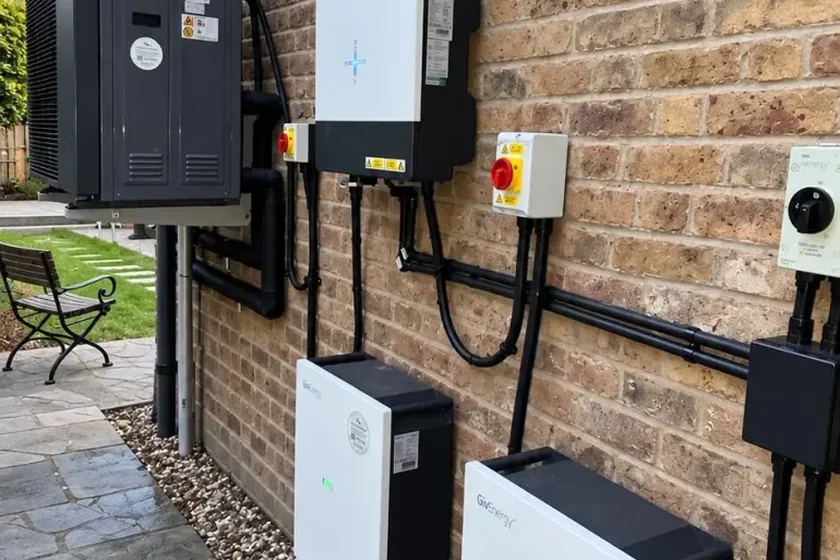
Air source heat pump with solar and battery storage
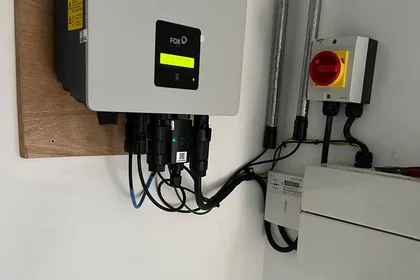
The whole electrical side on one wall: inverter, battery modules and every isolator in reach, with the conduit dressed in straight runs so a fault years from now can be traced without stripping the wall.
View the project
Heat pump, solar and battery
N15
Tottenham
Air source heat pump with solar and battery storage
The whole electrical side on one wall: inverter, battery modules and every isolator in reach, with the conduit dressed in straight runs so a fault years from now can be traced without stripping the wall.
View the project
 Heat pump and battery
HP1
Hemel Hempstead
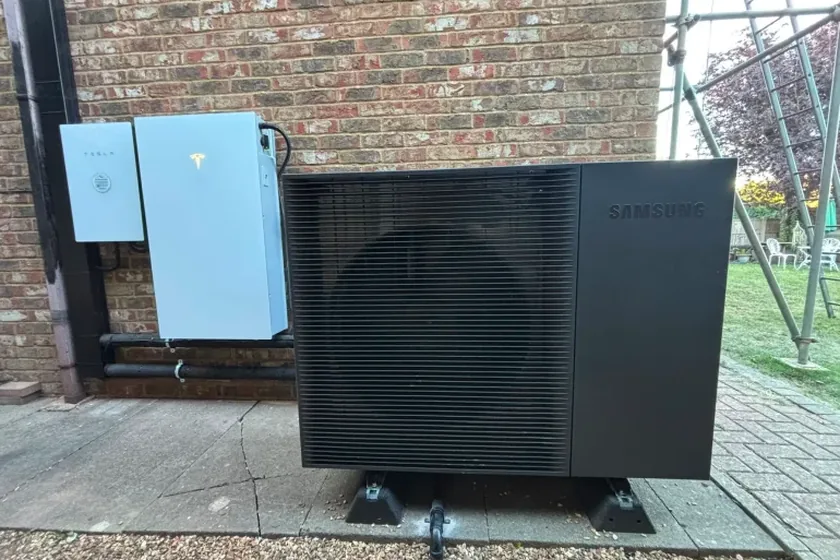
Samsung heat pump with Tesla Powerwall
Heat pump and battery on the same elevation, so the pump can be run off stored generation through the evening peak instead of off the most expensive electricity of the day.
View the project
Heat pump and battery
HP1
Hemel Hempstead
Samsung heat pump with Tesla Powerwall
Heat pump and battery on the same elevation, so the pump can be run off stored generation through the evening peak instead of off the most expensive electricity of the day.
View the project
 Heat pump, solar and battery
N4
Finsbury Park
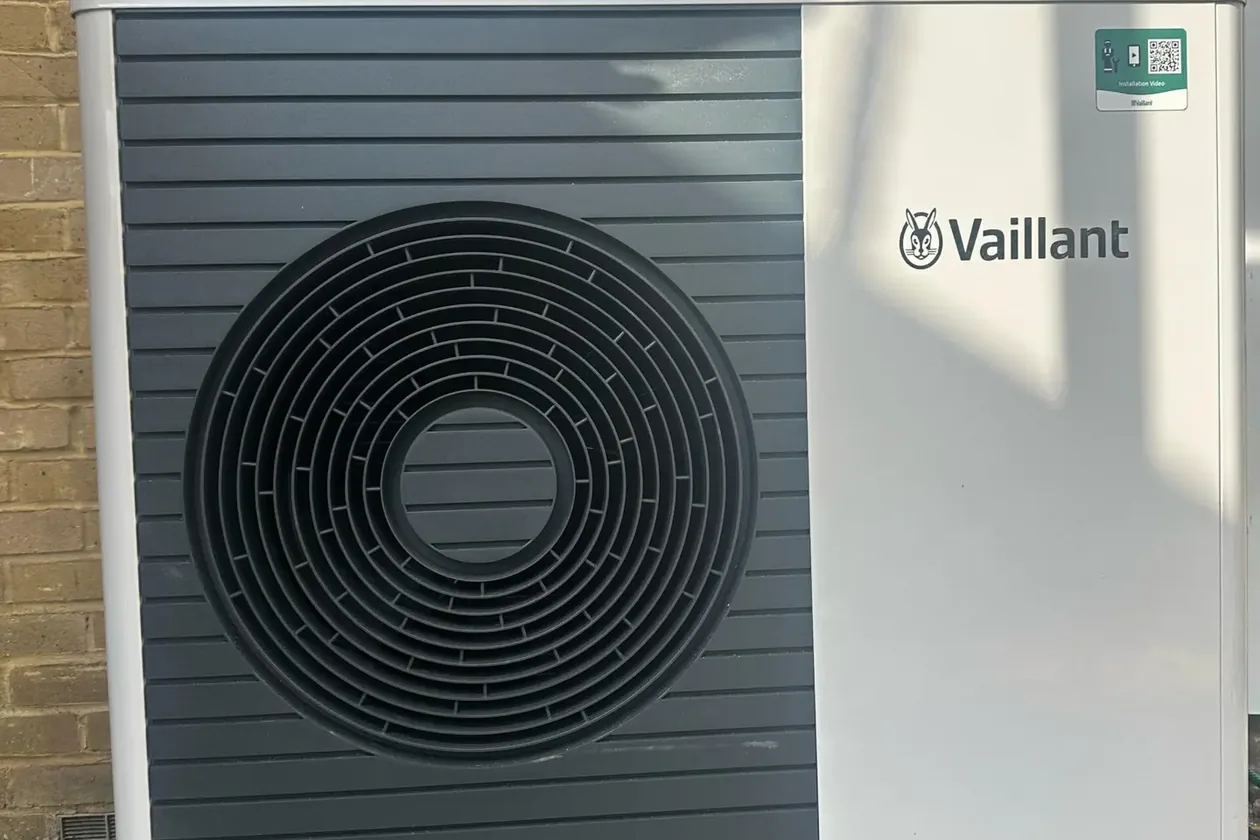
Vaillant air source heat pump with solar panels and a battery
The panels on the roof run the heat pump through the day and the battery carries it into the evening, so the house buys far less from the grid. The unit sits on raised feet against the rear wall.
View the project
Heat pump, solar and battery
N4
Finsbury Park
Vaillant air source heat pump with solar panels and a battery
The panels on the roof run the heat pump through the day and the battery carries it into the evening, so the house buys far less from the grid. The unit sits on raised feet against the rear wall.
View the project
A battery in three steps
-
1
Look at your usage
Your bills and tariff decide the size, so we start there.
-
2
A fixed price
Battery, hybrid inverter and certificate, itemised.
-
3
Fitted and certified
Installed, commissioned, registered with the network and certified.
What is in the price
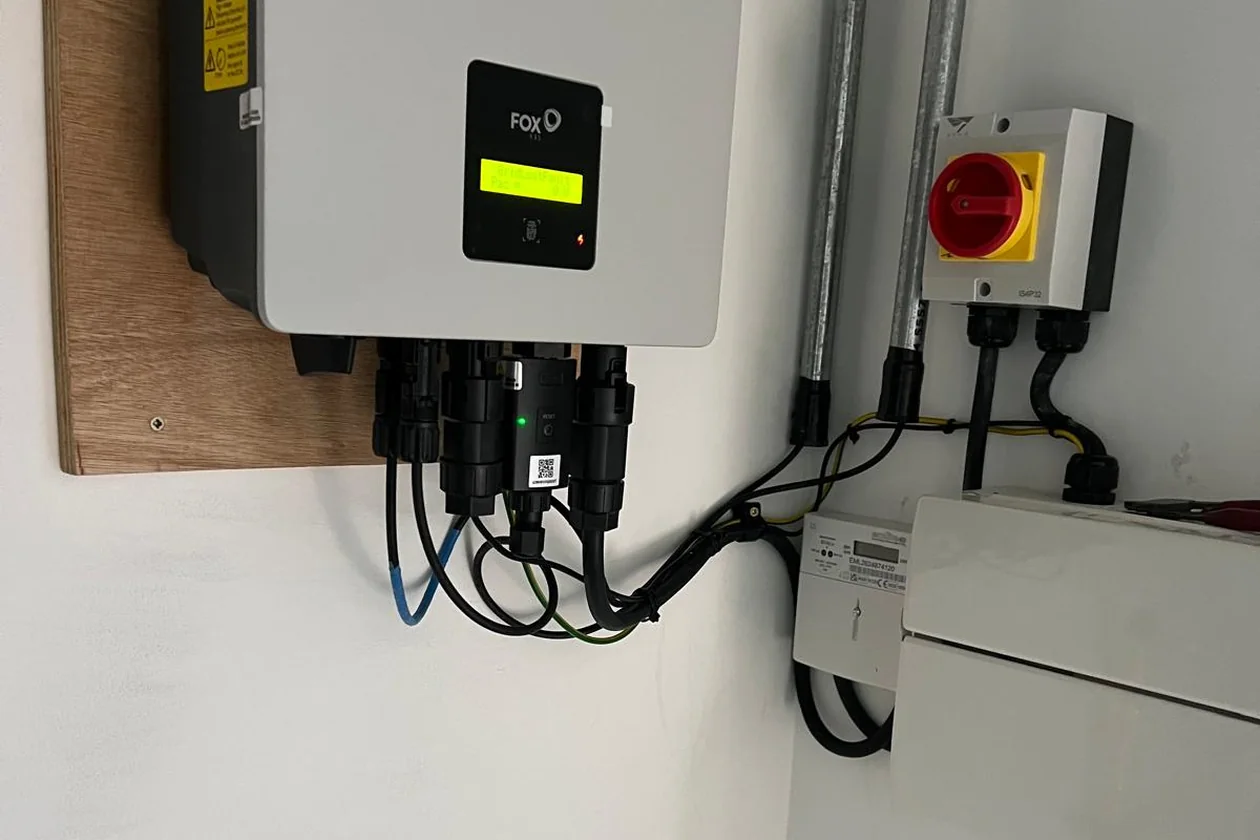
- Fox ESS EP5 battery5 kWh a unit, with a warming function for a garage or an outside wall.
- The hybrid inverterThe part most quotations leave out. In ours it is a line of its own.
- InstallationMounted, wired, isolated and commissioned.
- MCS certificateIssued under NIC-601634.
- Network notificationThe form your electricity network needs, done for you.
- Works with what you haveWith panels you already own, or on its own on a cheap overnight tariff.
Your estimate
£4,500to£5,350
Supplied, fitted and commissioned, including the hybrid inverter and MCS certification. 0 per cent VAT until 31 March 2027.
Send this on WhatsAppPrice a battery
One unit is 5 kWh. Above three of them it stops being a size you pick off a list and becomes a design, so it is not on here.
Last step: where do we send your written price?
Every figure on this site is an estimate built from the quotations we issued in 2026 and our own installation experience. It is not a quotation. The price you are given after the free survey is the price you pay.
The full guide: sizes, costs and when a battery is not worth it
A home battery costs £4,515 to £5,349 for 5kWh and £6,555 to £7,684 for 10kWh installed, with 0 percent VAT, and it is worth fitting even without solar panels if you are on a time-of-use tariff.
The 0 per cent rate on installing energy saving materials runs until 31 March 2027, after which it is due to return to 5 per cent unless the government extends it. Air conditioning is not on that list and is charged at 20 per cent either way.
Battery sizes and what they cost
| Capacity | Installed cost | Covers | Suits |
|---|---|---|---|
| 5 kWh | £4,515 to £5,349 | An evening and overnight for a small household | Flat or 2 bed house, no heat pump |
| 10 kWh | £6,555 to £7,684 | Most of a day for a typical family | 3 to 4 bed house, the common answer |
| 15 kWh | £8,595 to £10,019 | A full day including a heat pump in winter | Heat pump or EV in the house |
| 20 kWh and above | From £10,635 | Multi-day or high load | Large house, or a business |
Includes battery, hybrid or AC coupled inverter, electrical installation, DNO notification, commissioning and 0 percent VAT. Backup power in an outage is a separate specification and adds cost, so say if you want it.
The two ways a battery makes money
1. Storing your own solar
Without a battery, a London house typically uses only 40 to 50 percent of what its panels generate, because the panels produce most at midday when nobody is home. The rest is exported for a few pence and bought back later at four or five times the price. A battery flips that: self-consumption rises to roughly 70 to 85 percent.
2. Time shifting on a cheap tariff, with no panels at all
This is the case nobody explains properly. On a time-of-use tariff with a cheap overnight rate, you charge the battery at night and run the house on it through the expensive daytime and evening rates. There is no generation involved. The saving is purely the difference between the two prices, multiplied by the kilowatt hours you shift.
For a house with an air conditioning system running through July afternoons, or a heat pump running through a February, that difference adds up quickly, because those are exactly the loads that fall in the expensive hours.
Sizing it from your real usage
Most battery quotes are sized from the number of bedrooms, which tells you almost nothing. The right method is to look at your half-hourly consumption data, which your supplier can provide if you have a smart meter, and size the battery to cover the expensive window rather than the whole day.
- Typical London household, no heat pump or EV: 5 to 8 kWh used between 4pm and 8am. A 5 to 10kWh battery covers it.
- With a heat pump: winter overnight use can double. 10 to 15kWh.
- With an EV: the car is usually better charged directly on the cheap rate than through the battery, because putting energy through the battery twice loses some of it both ways.
- With air conditioning: the load falls in the afternoon peak, which is the most expensive part of most tariffs and the best case for storage.
What we fit and why
We use lithium iron phosphate batteries rather than older lithium chemistries, because they are more thermally stable, tolerate daily cycling better and hold capacity longer, which matters a lot when the battery is cycling every night on a time-of-use tariff rather than only when the sun shines.
Everything we install is notified to the distribution network operator and commissioned properly, with the certificates issued to you. A battery installed without DNO notification is a problem you inherit when you sell the house.
Battery storage questions
How much does home battery storage cost?
A 5kWh battery installed is typically £4,515 to £5,349, 10kWh is £6,555 to £7,684 and 15kWh is £8,595 to £10,019. Those figures include the hybrid inverter the battery has to talk to, the electrical installation, MCS certification and 0 percent VAT.
Retrofitting a battery to an existing solar system usually costs a little more than fitting both together, because an existing string inverter often needs an AC coupled battery inverter alongside it.
Is a battery worth it without solar panels?
It can be, and this is the part most installers skip. On a time-of-use tariff you charge the battery overnight at the cheap rate and discharge it through the expensive daytime hours. The saving comes from the price difference rather than from generation.
Whether it pays depends on the spread between your night and day rates and on how much electricity you actually use. For a house with a heat pump, an EV or air conditioning, the numbers are usually good. For a low-usage flat, often they are not, and we will say so.
What size battery do I need?
Look at your overnight and evening usage rather than your total. A typical London household without a heat pump or EV uses 5 to 8 kWh between 4pm and 8am, which is what a 5 to 10kWh battery is sized to cover.
Add a heat pump and that rises sharply in winter. Add an EV charging at home and the answer changes completely, because the car is usually better charged directly on the cheap rate than through the battery.
Will a battery keep my house running in a power cut?
Only if it is specified for it. A standard grid-tied battery shuts down in a power cut for safety, so that engineers working on the network are not exposed to your system backfeeding it.
Backup requires a battery and inverter that support an islanded mode, plus a changeover arrangement and usually a dedicated backup circuit. It adds cost and it has to be designed in from the start, so tell us at survey stage if it matters to you.
How long does a home battery last?
Modern lithium iron phosphate batteries are typically warranted for 10 years or a stated number of cycles, with around 70 to 80 percent of original capacity remaining at the end of the warranty period. In practice they carry on working past that with reduced capacity.
Cycle life is what matters if you are charging and discharging daily on a time-of-use tariff, because that is 365 cycles a year rather than the 200 or so a solar-only system does.
We will tell you if a battery is not worth it
Send your annual usage and your tariff. If the numbers do not work for your house we will say so, because a battery that never pays back is a bad advert for us.
Monday to Friday 9am to 7pm, Saturday 10am to 3pm, Sunday closed
Page updated