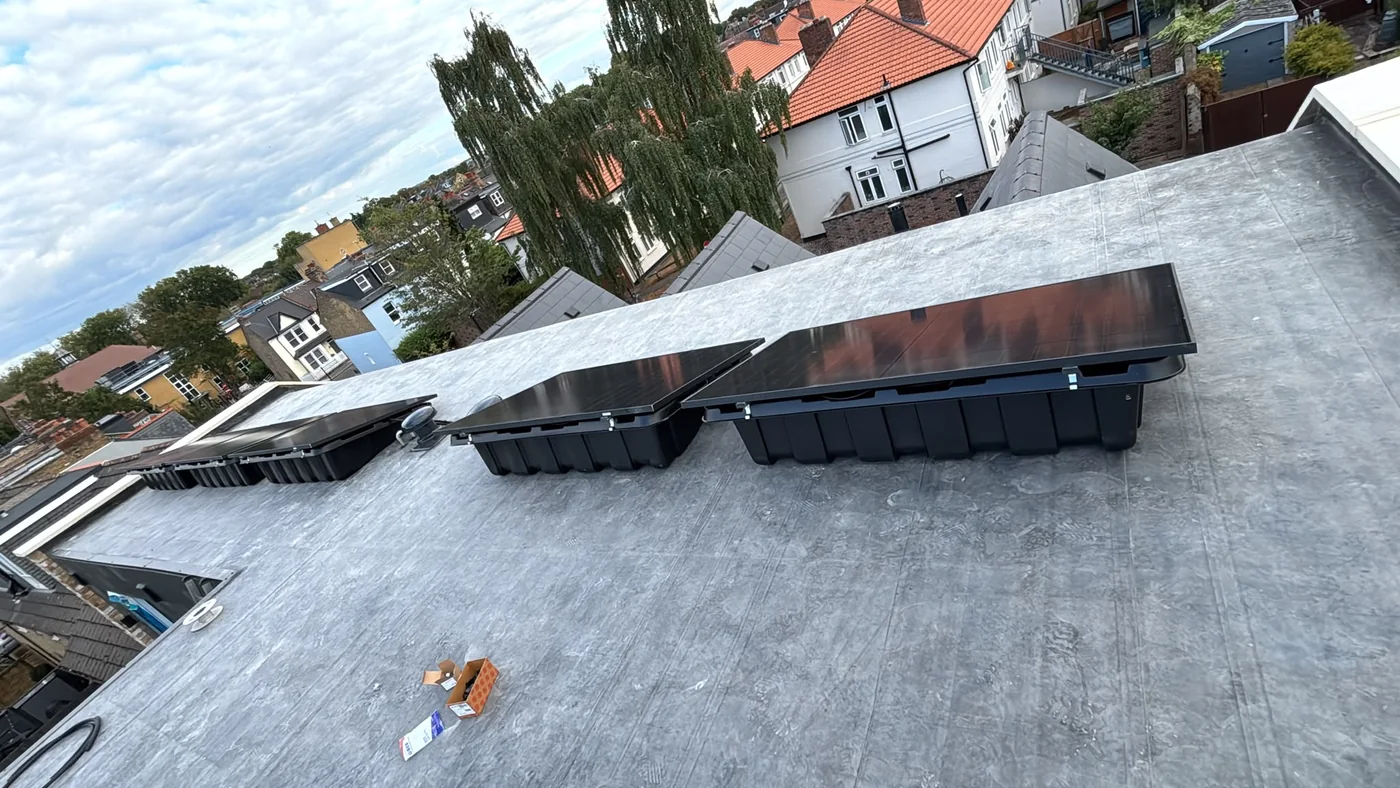
Solar panels, priced per panel.
Scaffolding included.
Pitched roofs and London flat roofs, with or without a battery. Price your roof in a minute: the scaffolding and the MCS certificate are already in the figure.
- 0%VAT until March 2027
- £3,900From, five panels fitted
- 1 to 2 daysTo fit most home systems
- No drillingOn a flat roof, frames held by weight
Accredited, and fitting the brands you know











Solar panel cost calculator: what will it cost on your roof?
Four quick questions, then an indicative price built from the panel, inverter and battery rates on our own quotations.
- 0%VAT until March 2027
- £3,900From, five panels fitted
- 1 to 2 daysTo fit most home systems
- MCSCertified, NIC-601634
Our own jobs, photographed on the day
Finished jobs, photographed on the day. Tap any one for the full story.
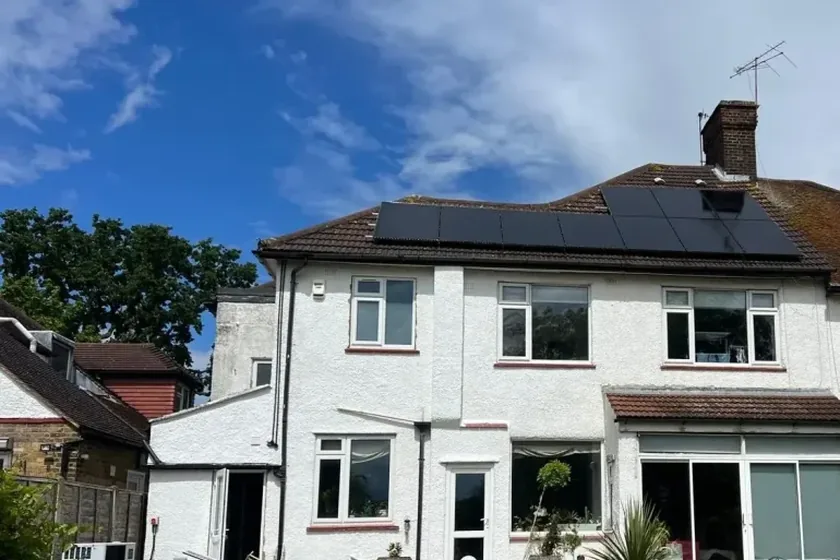 Heat pump and solar
N21
Winchmore Hill
Air source heat pump with roof-mounted solar
The panels sit across the rear pitch and the heat pump at the side of the house, which is the pairing that lets the pump run on its own generation through the middle of the day.
View the project
Heat pump and solar
N21
Winchmore Hill
Air source heat pump with roof-mounted solar
The panels sit across the rear pitch and the heat pump at the side of the house, which is the pairing that lets the pump run on its own generation through the middle of the day.
View the project
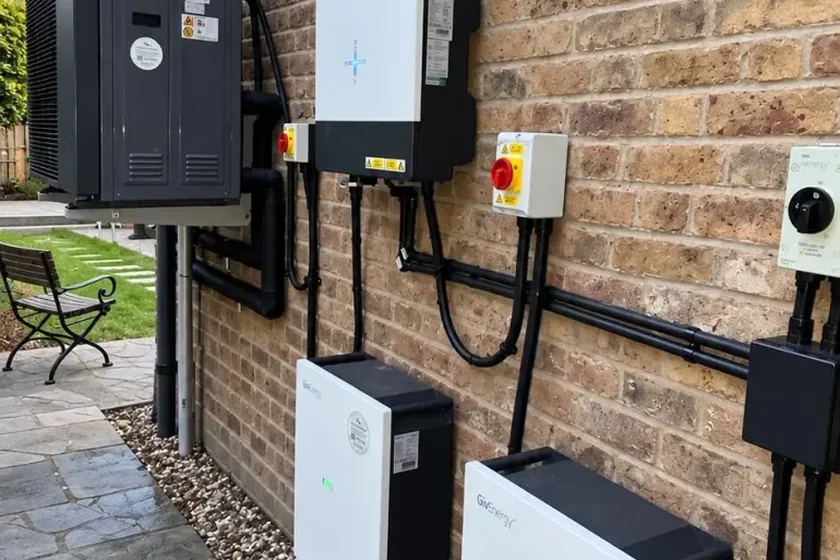 Heat pump, solar and battery
N15
Tottenham
Air source heat pump with solar and battery storage
The whole electrical side on one wall: inverter, battery modules and every isolator in reach, with the conduit dressed in straight runs so a fault years from now can be traced without stripping the wall.
View the project
Heat pump, solar and battery
N15
Tottenham
Air source heat pump with solar and battery storage
The whole electrical side on one wall: inverter, battery modules and every isolator in reach, with the conduit dressed in straight runs so a fault years from now can be traced without stripping the wall.
View the project
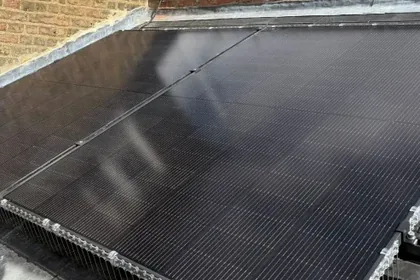 Solar
TW8
Brentford
Roof-mounted solar array
Panels on a flat roof carried on tilted frames rather than laid flat, which is what brings a London flat roof close to the yield of a south-facing pitch.
View the project
Solar
TW8
Brentford
Roof-mounted solar array
Panels on a flat roof carried on tilted frames rather than laid flat, which is what brings a London flat roof close to the yield of a south-facing pitch.
View the project
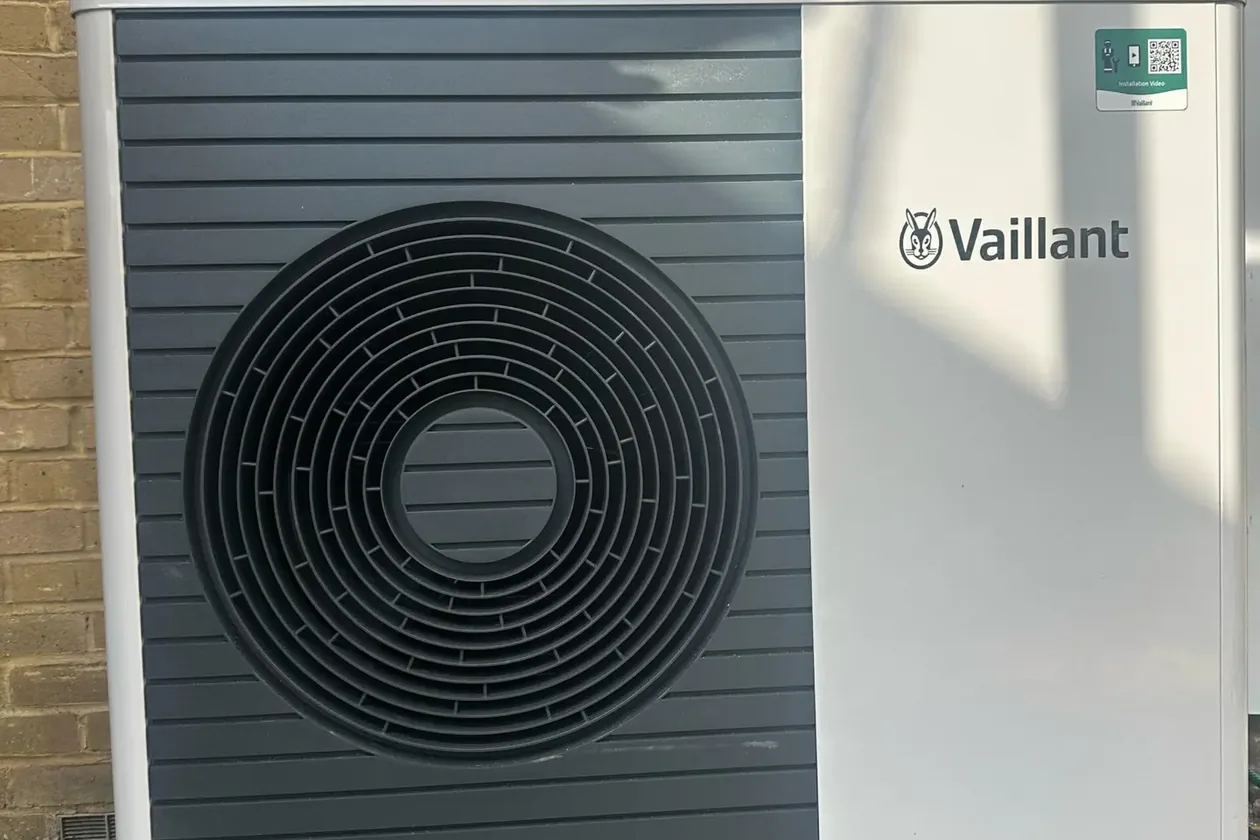 Heat pump, solar and battery
N4
Finsbury Park
Vaillant air source heat pump with solar panels and a battery
The panels on the roof run the heat pump through the day and the battery carries it into the evening, so the house buys far less from the grid. The unit sits on raised feet against the rear wall.
View the project
Heat pump, solar and battery
N4
Finsbury Park
Vaillant air source heat pump with solar panels and a battery
The panels on the roof run the heat pump through the day and the battery carries it into the evening, so the house buys far less from the grid. The unit sits on raised feet against the rear wall.
View the project
Solar on your roof in three steps
-
1
Roof survey
Shading, the roof itself and the fuse board, checked on one visit.
-
2
Priced per panel
Panels, inverter, scaffolding and certificate, each a line of its own.
-
3
Fitted in one to two days
Scaffold up, panels on, inverter in, commissioned and certified.
What is in the price
- The panels, fittedPriced per panel, on a pitched roof or on tilted frames on a flat one.
- The inverterA string inverter, or a hybrid when there is a battery.
- ScaffoldingIn the figure. On a London terrace it is almost always needed.
- MCS certificateIssued under NIC-601634, which makes the export tariff claimable.
- Network notificationThe form your electricity network needs, done for you.
- No drilling on a flat roofFrames held down by weight, so the roof is not penetrated.
The full guide: what a London system costs, generation and payback
Solar panels for a typical London three-bedroom house cost £4,950 to £6,350 installed for a 5.1 kWp system, with 0 percent VAT.
The 0 per cent rate on installing energy saving materials runs until 31 March 2027, after which it is due to return to 5 per cent unless the government extends it. Air conditioning is not on that list and is charged at 20 per cent either way.
What a London system costs
| System size | Panels | Installed cost | Annual generation |
|---|---|---|---|
| 2.3kWp | 5 panels | £3,900 to £5,050 | about 1,955 kWh |
| 3.7kWp | 8 panels | £4,450 to £5,700 | about 3,145 kWh |
| 5.1kWp | 11 panels | £4,950 to £6,350 | about 4,335 kWh |
| 6.4kWp | 14 panels | £5,450 to £6,950 | about 5,440 kWh |
| Add 5kWh battery | +£2,040 to £2,335 | raises self-use to about 75 percent | |
| Add 10kWh, two units | +£4,080 to £4,670 | raises self-use to about 85 percent |
Includes panels, inverter, optimisers where shading requires them, mounting, DC and AC electrical work, scaffolding, DNO notification, MCS certification and 0 percent VAT. Generation figures are modelled for a south facing London roof at 35 degrees with no significant shading, and your survey gives the number for your actual roof.
Shading is the whole game in London
A suburban roof in the Home Counties is a straightforward solar job. A London roof usually is not, because there is nearly always something in the way: a neighbour's chimney stack, a street tree, a rear extension, a taller building on the south side. Shade on one panel can drag down the output of every panel wired in the same string, which is how systems end up producing a fraction of what the sales estimate promised.
The fix is a design decision, not a product. Where a roof has partial shading we use power optimisers or micro inverters so each panel works independently, and we model the shading across the year rather than at one moment. It costs a few hundred pounds more and it is the difference between a system that meets its estimate and one that does not.
Which roofs are worth it, honestly
| Orientation | Output vs south | Verdict |
|---|---|---|
| South | 100 percent | Best case |
| South east or south west | 95 percent | Very good |
| East or west | 80 to 85 percent | Usually worth it |
| East and west split array | 80 to 85 percent | Good, flatter output through the day |
| Flat roof, ballasted frames | 90 to 95 percent | Good if the roof can take the load |
| North | 60 percent or less | Not on its own |
| Heavily shaded, any aspect | Varies wildly | Only with optimisers, and only after a survey |
Planning permission for solar
Roof panels on a house are normally permitted development. The conditions are short: the panels must not project more than 200mm from the roof plane, must not sit above the highest part of the roof excluding the chimney, and must be removed when no longer needed.
In a conservation area, panels must not go on a wall or roof slope that fronts a highway. On a listed building, listed building consent is required whatever the panels look like. Both of those are common enough in London that we check before quoting, and the same check we run for air conditioning covers it.
Solar with a heat pump or air conditioning
Solar pairs better with cooling than most people realise, because the sun is at its strongest in exactly the hours your air conditioning is working hardest. A July afternoon is when a London roof generates most and when the cooling load peaks, so a large share of the cooling runs on generation rather than on imported electricity.
With a heat pump the pairing is different: the heat pump uses most electricity in winter, when solar generates least. That combination is still worth doing, but the honest reason is the annual bill rather than a neat winter match, and a battery does more of the work.
Solar questions
How much do solar panels cost in London?
A typical London three-bedroom house takes a 5.1kWp system, which is £4,950 to £6,350 installed with 0 percent VAT. Adding two batteries takes the total to roughly £9,450 to £11,750.
Scaffolding is the item that varies most in London, because a three-storey terrace with no rear access costs considerably more to scaffold than a suburban semi.
Is my roof any good for solar in London?
South facing is best, but east and west facing roofs in London produce about 80 to 85 percent of a south facing roof and are usually still worth doing. A north facing roof alone is not.
What actually kills a London roof for solar is shading: a neighbour's chimney, a large tree or a taller building next door. Shading on one panel drags down a whole string unless the system is designed with optimisers, which is why we look at the roof before quoting rather than after.
Do solar panels need planning permission?
Usually no. Roof-mounted panels on a house are normally permitted development provided they do not project more than 200mm from the roof plane, do not sit above the highest part of the roof, and are removed when no longer needed.
In a conservation area they must not be on a wall or roof slope facing a highway. On a listed building you need listed building consent regardless. Flat roof and ground mounted arrays have their own conditions.
How much will solar actually save me?
A 4kWp London system generates roughly 3,400 to 3,800 kWh a year. Without a battery you will typically use about 40 to 50 percent of that yourself and export the rest, which at current rates is usually 600 to 900 pounds a year of value.
With a battery, self-consumption rises to around 70 to 85 percent, which is what moves the payback from roughly nine years to roughly seven. The honest version is that solar in London is a sound long-term investment rather than a quick win.
Do I get paid for the electricity I export?
Yes, through the Smart Export Guarantee. Every large energy supplier must offer an export tariff, and rates vary a lot between them, so it is worth shopping for the export tariff rather than accepting whatever your current supplier offers.
You need an export meter, which for most homes means a smart meter, and an MCS certificate for the installation. We issue the MCS certificate as part of the job.
Find out what your roof will actually produce
Free survey with a real shading assessment and a written generation estimate for your roof, not a brochure figure for a roof somewhere else.
Monday to Friday 9am to 7pm, Saturday 10am to 3pm, Sunday closed
Page updated