Air conditioning
planning permission
In most cases you do not need it. The exceptions are specific, they are written down, and London hits more of them than anywhere else in the country. Here is every condition in one table, and a check that gives you an answer for your own address.
- Most houses: permitted development, no application needed
- Flats: planning permission is normally required
- Conservation areas: not on an elevation fronting a highway
Accredited, and fitting the brands you know











Check your address before you read all of this
Three questions and you get the short answer on permission, freeholder consent and where the outdoor unit can go. Everything below is the long answer.
Air conditioning we have fitted
Our own jobs, photographed on site. Real rooms, real outdoor positions, nothing from a catalogue.
 Air conditioning
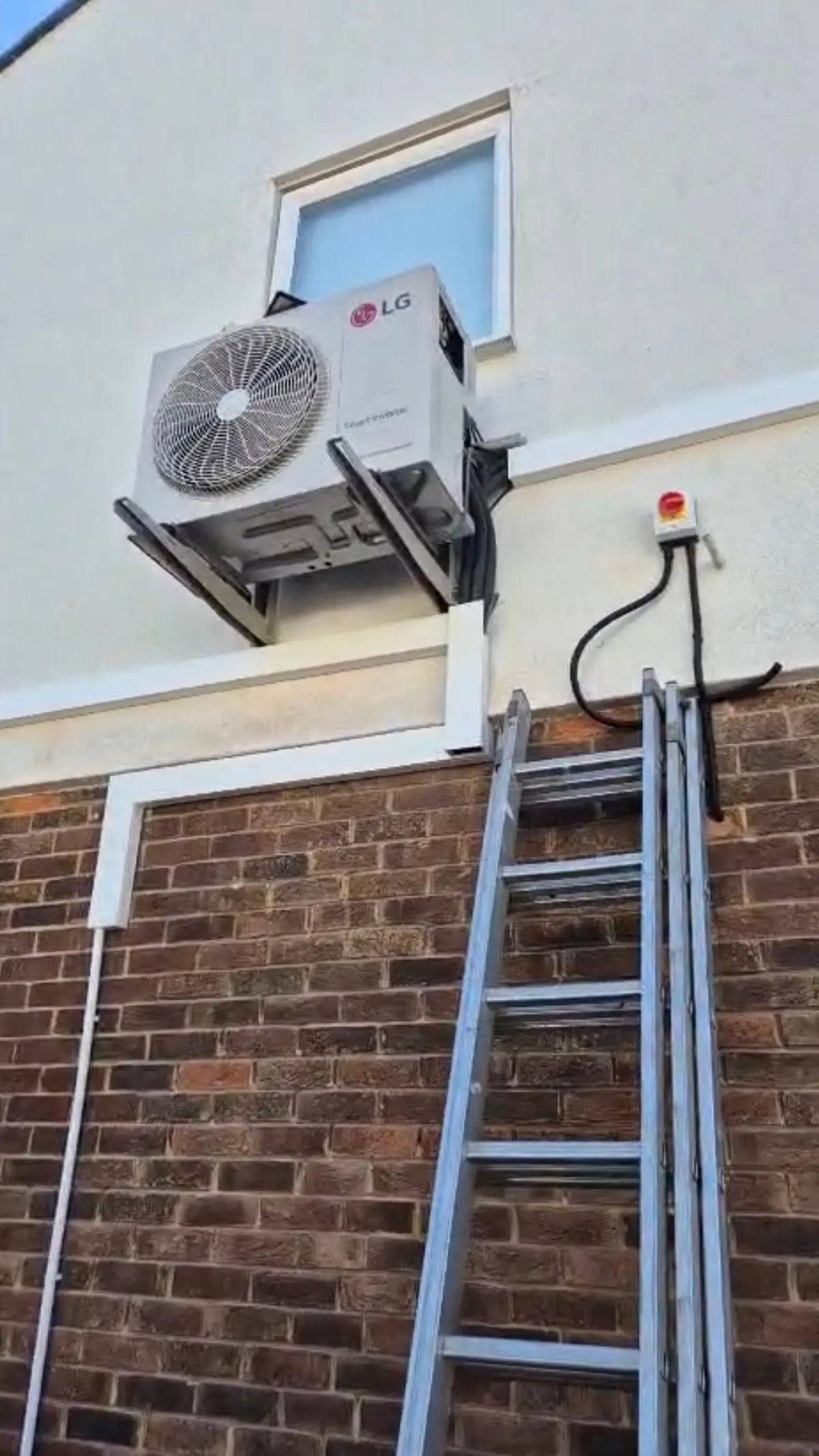
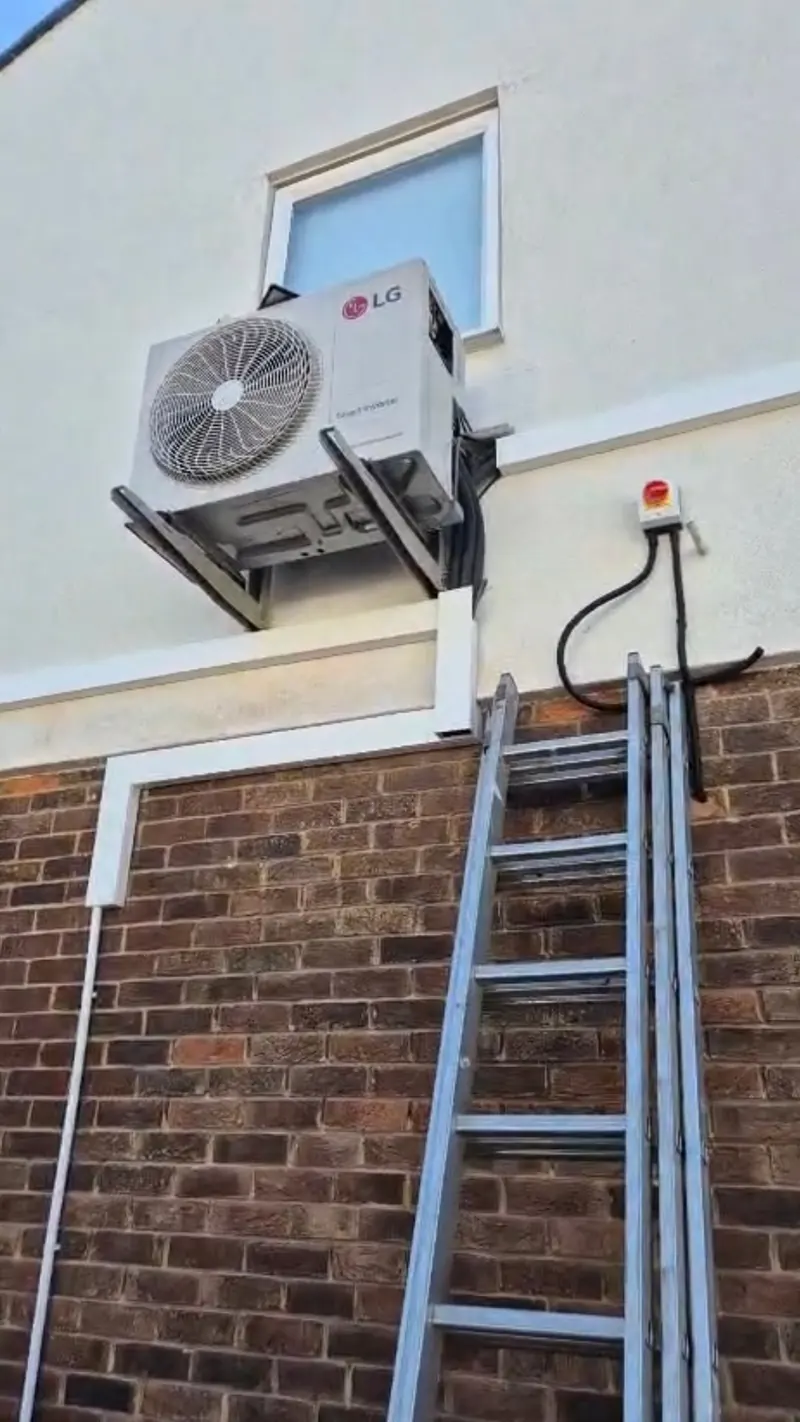
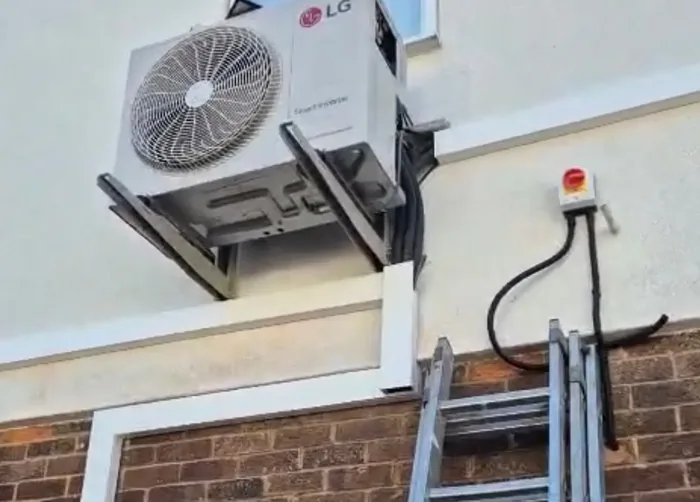
Outdoor unit on wall brackets
Above brick, isolator and cabling run tidy
Air conditioning
Outdoor unit on wall brackets
Above brick, isolator and cabling run tidy
 Air conditioning
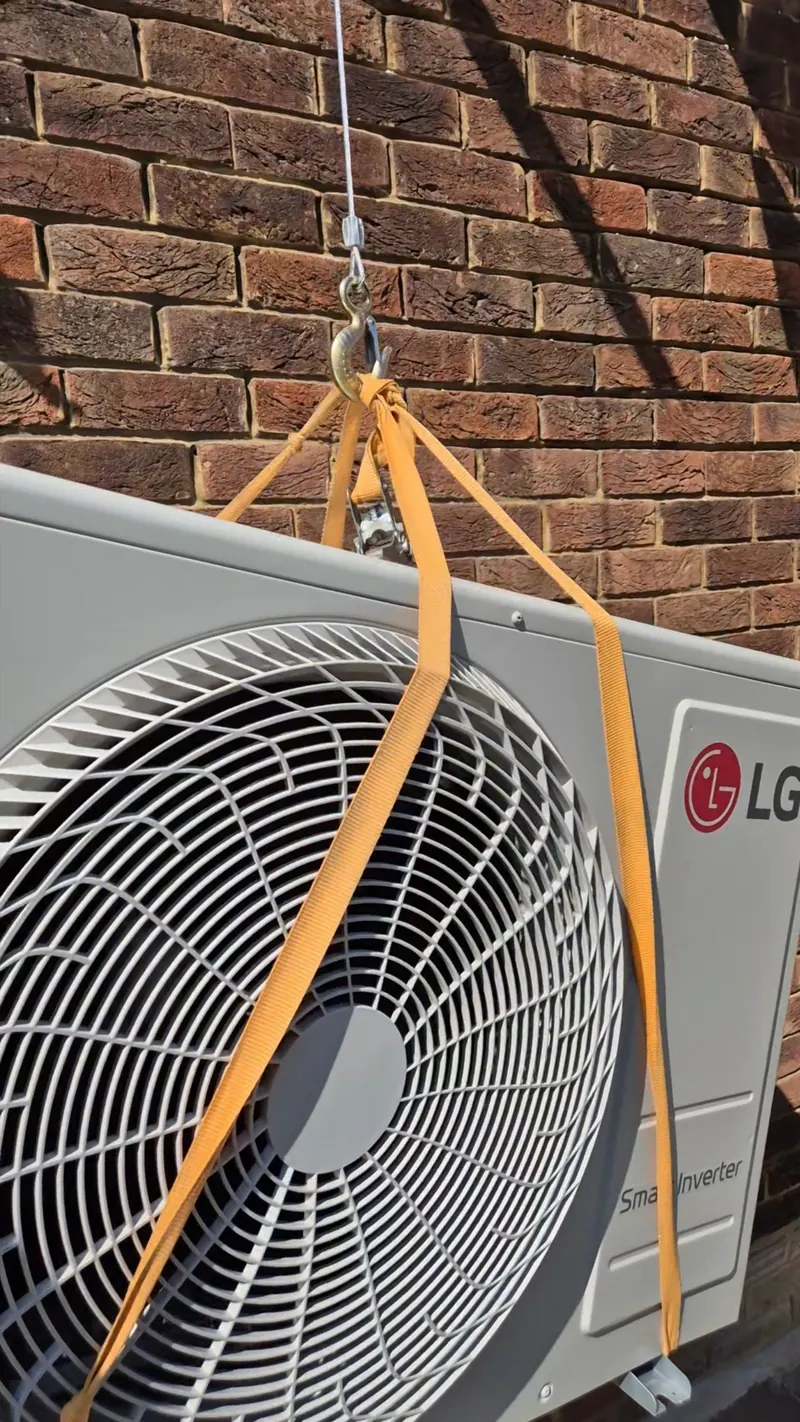
Condenser going up on straps
Lifted into a wall position, no scaffold
Air conditioning
Condenser going up on straps
Lifted into a wall position, no scaffold
 Air conditioning
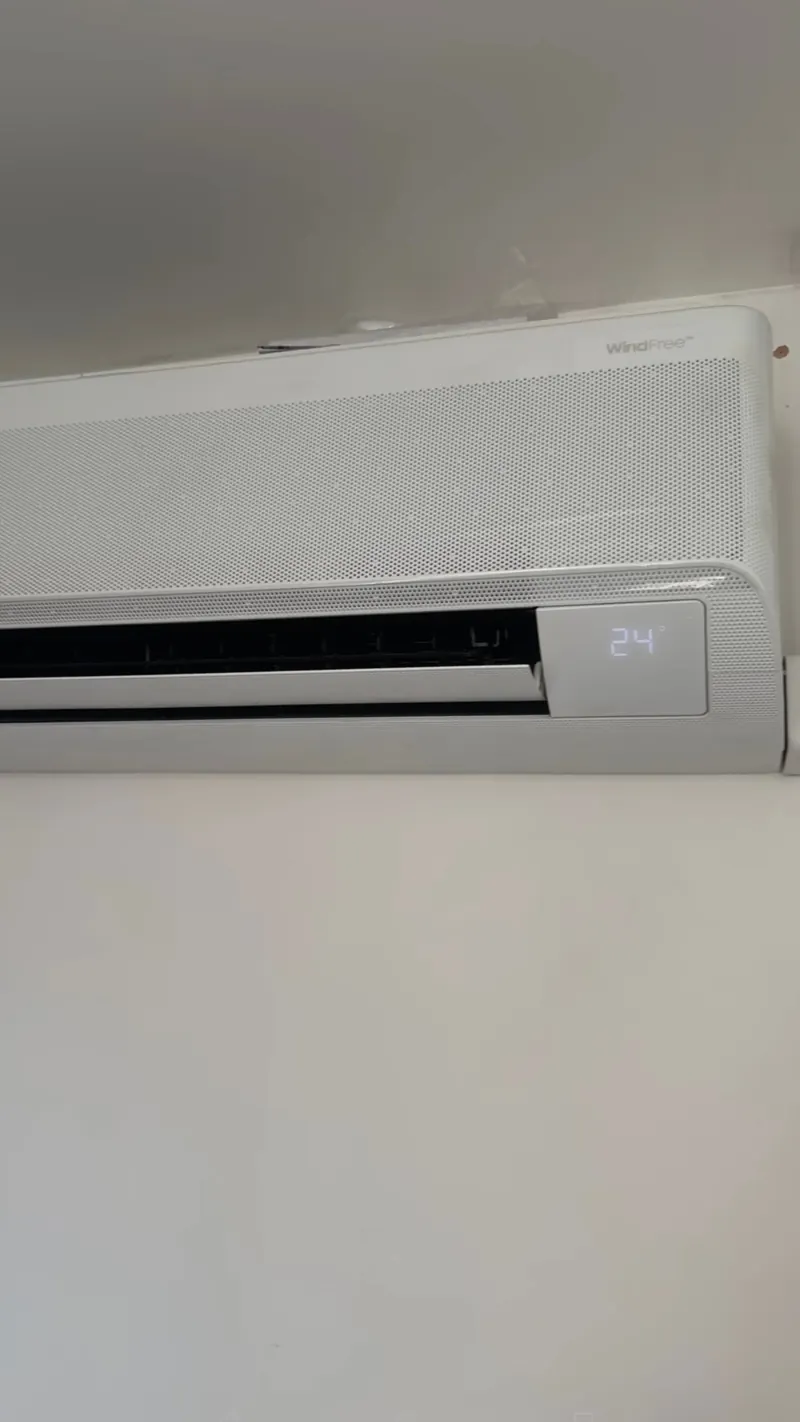
Wall unit, commissioned
Set to 24 degrees and handed over
Air conditioning
Wall unit, commissioned
Set to 24 degrees and handed over
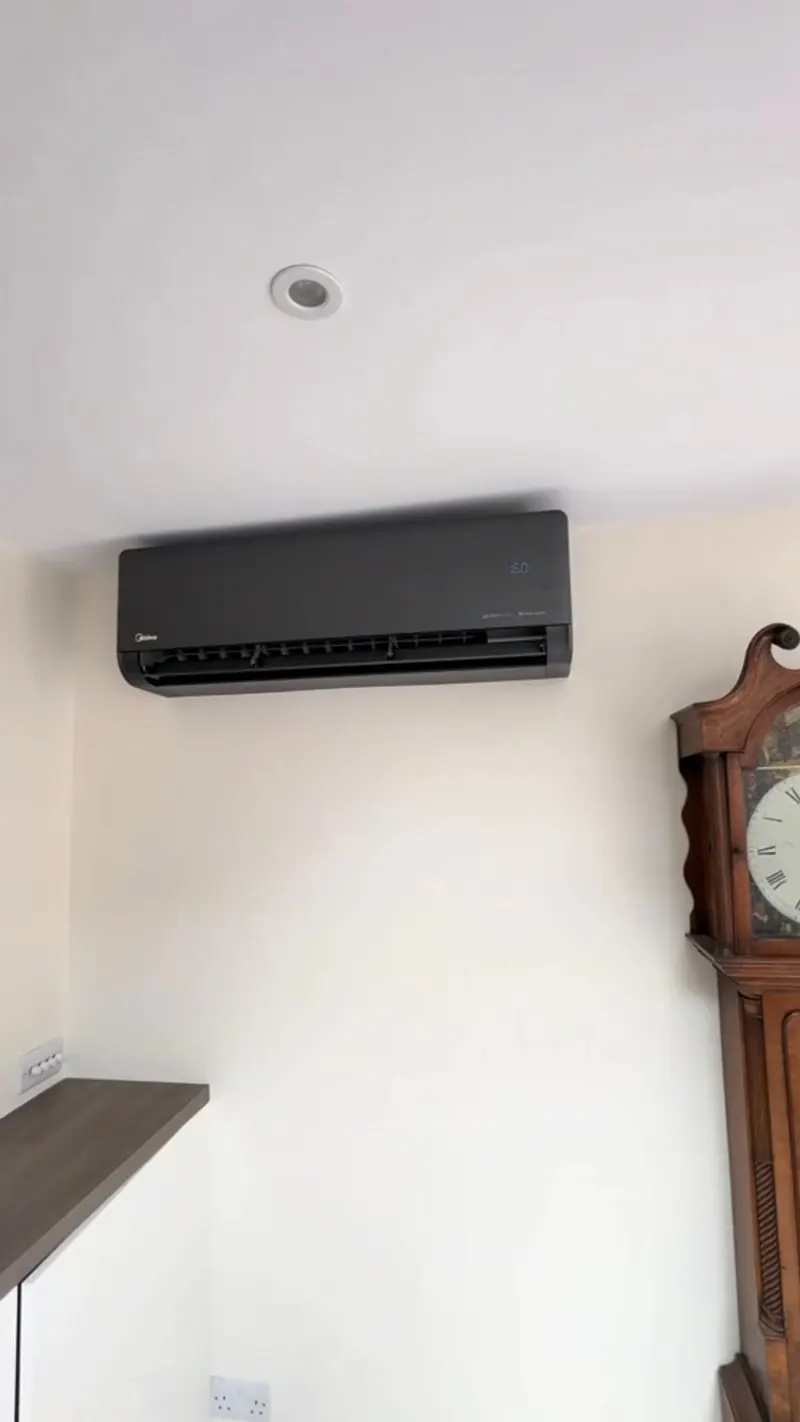 Air conditioning
Black wall unit in a sitting room
Chosen to sit with the room, not against it
Air conditioning
Black wall unit in a sitting room
Chosen to sit with the room, not against it
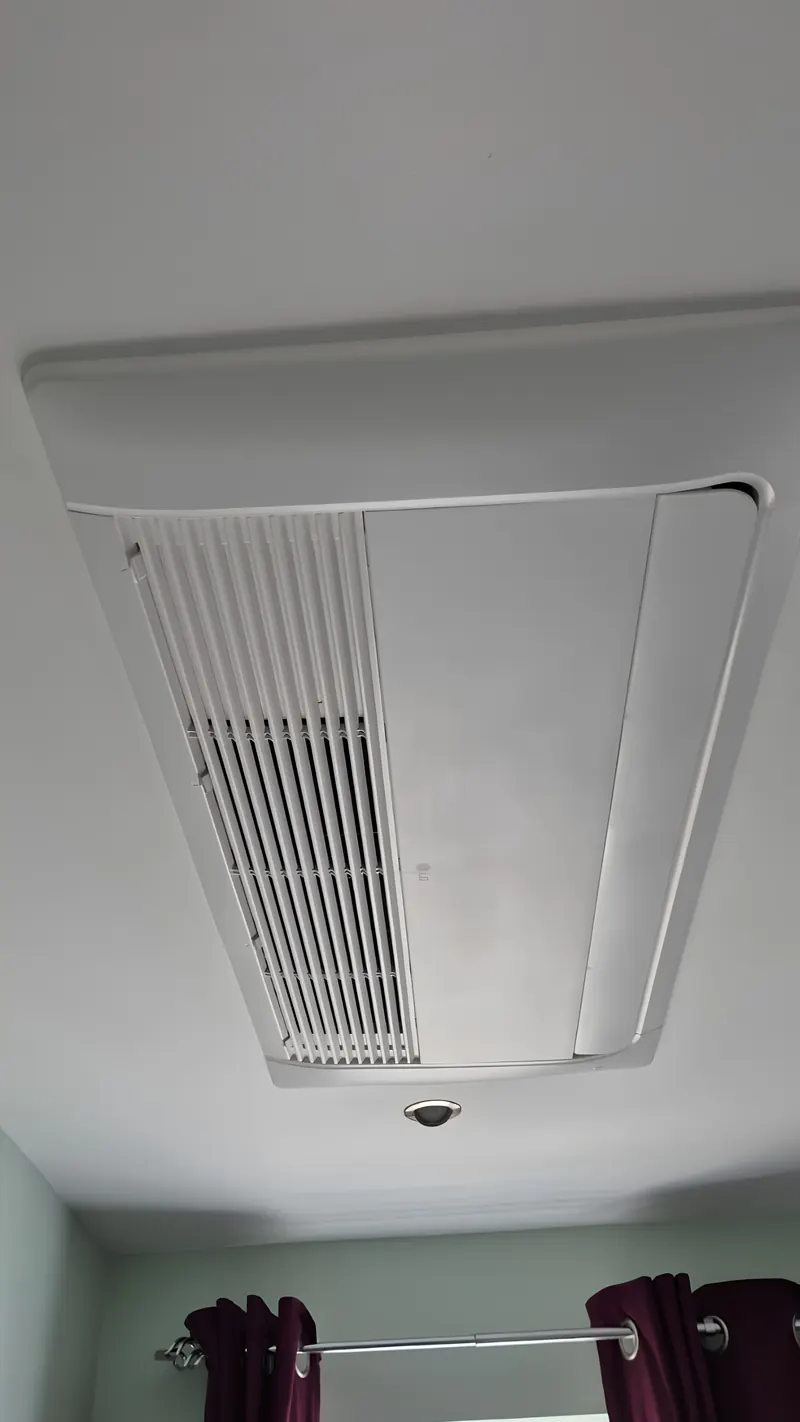 Air conditioning
Ceiling cassette
Recessed flush into the ceiling
Air conditioning
Ceiling cassette
Recessed flush into the ceiling
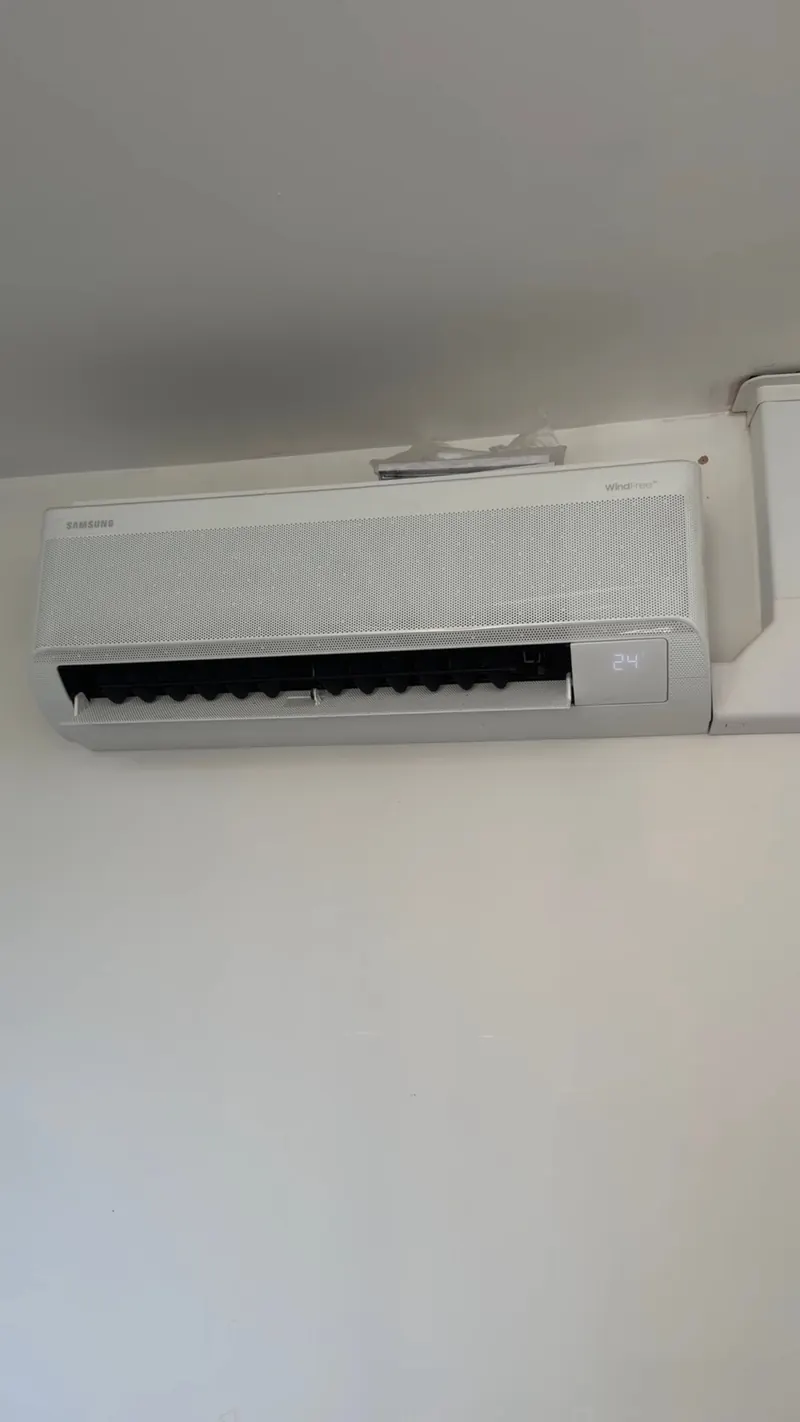 Air conditioning
Samsung Wind-Free
Cooling without a draught on the room
Air conditioning
Samsung Wind-Free
Cooling without a draught on the room
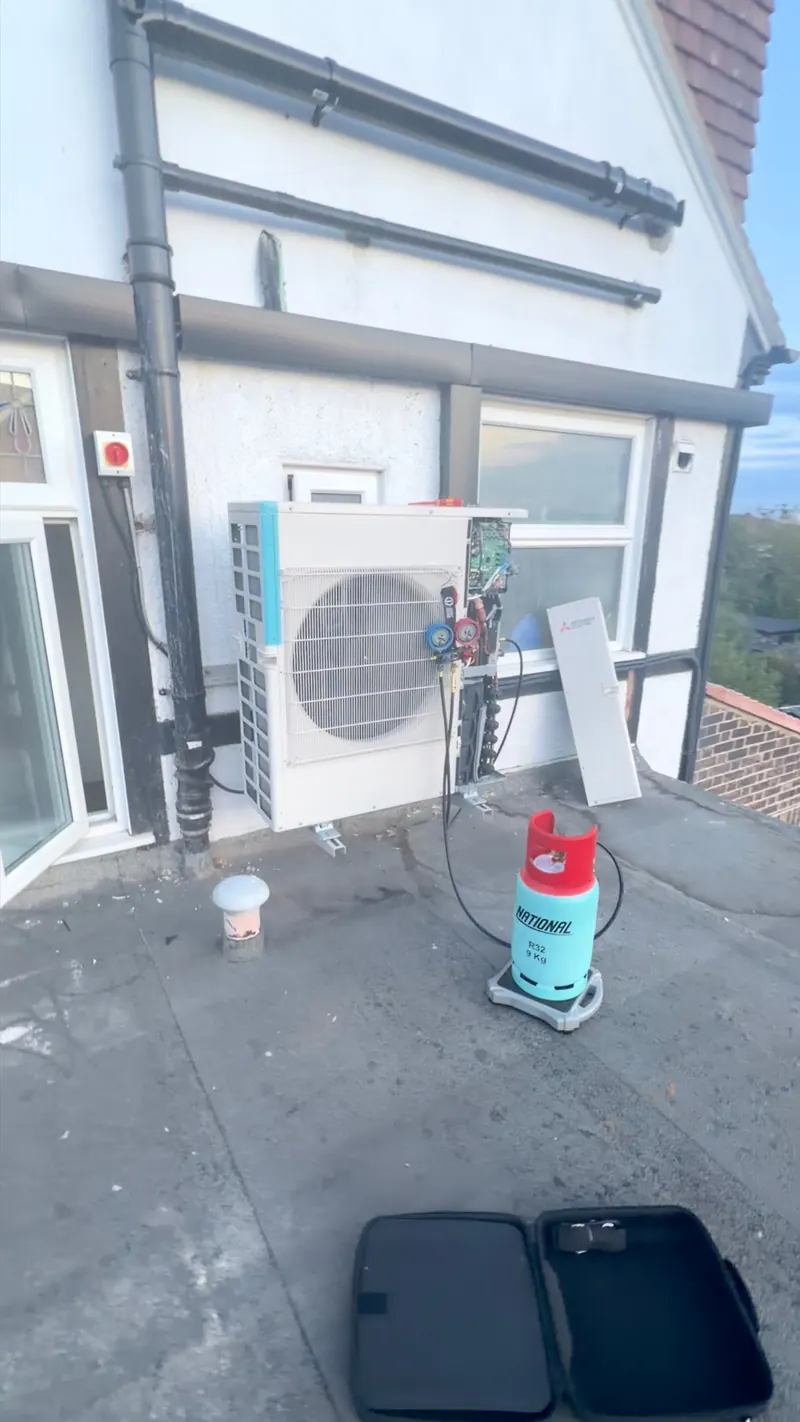 Air conditioning
Rooftop commissioning
Pressure tested and charged on gauges
Air conditioning
Rooftop commissioning
Pressure tested and charged on gauges
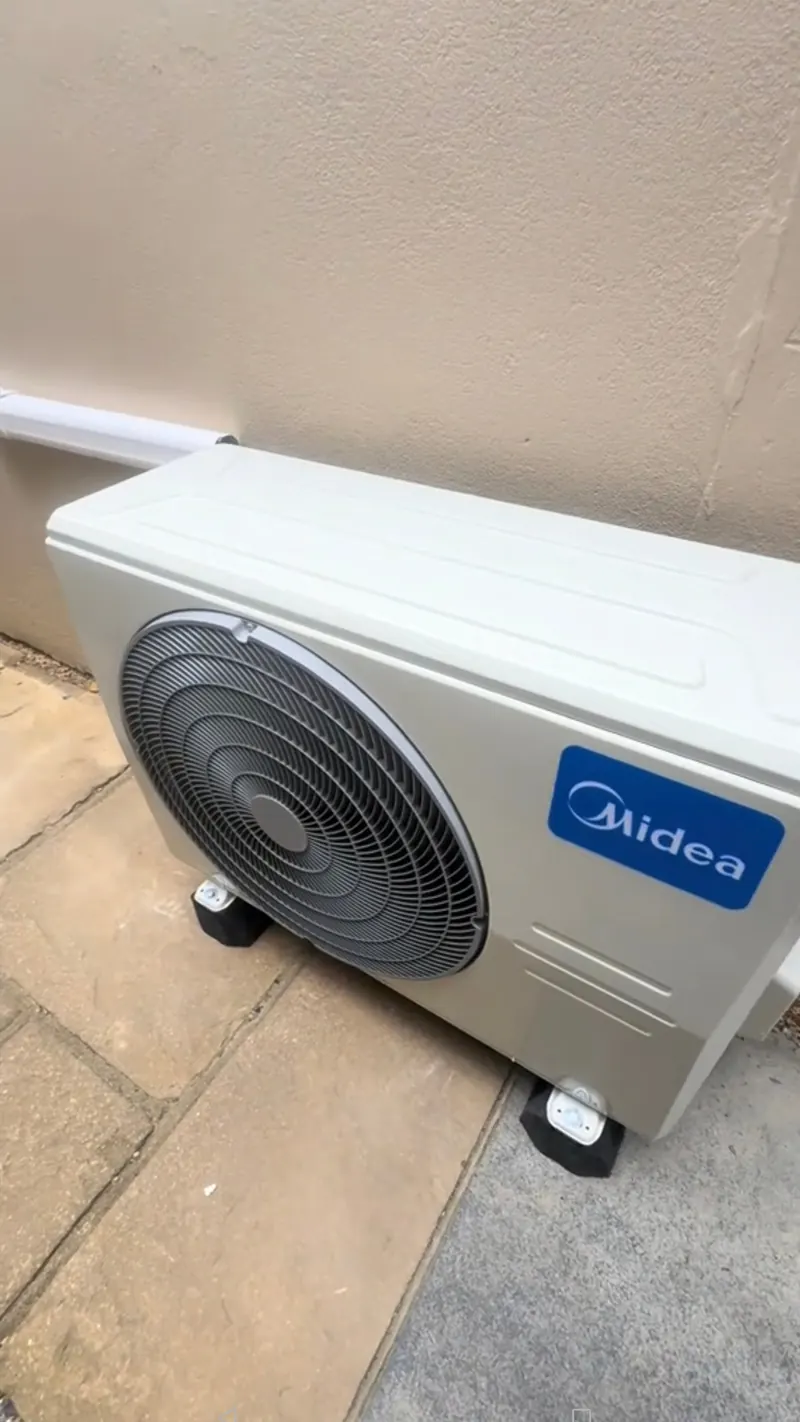 Air conditioning
Outdoor unit at ground level
On paving beside the house, easy to service
Air conditioning
Outdoor unit at ground level
On paving beside the house, easy to service
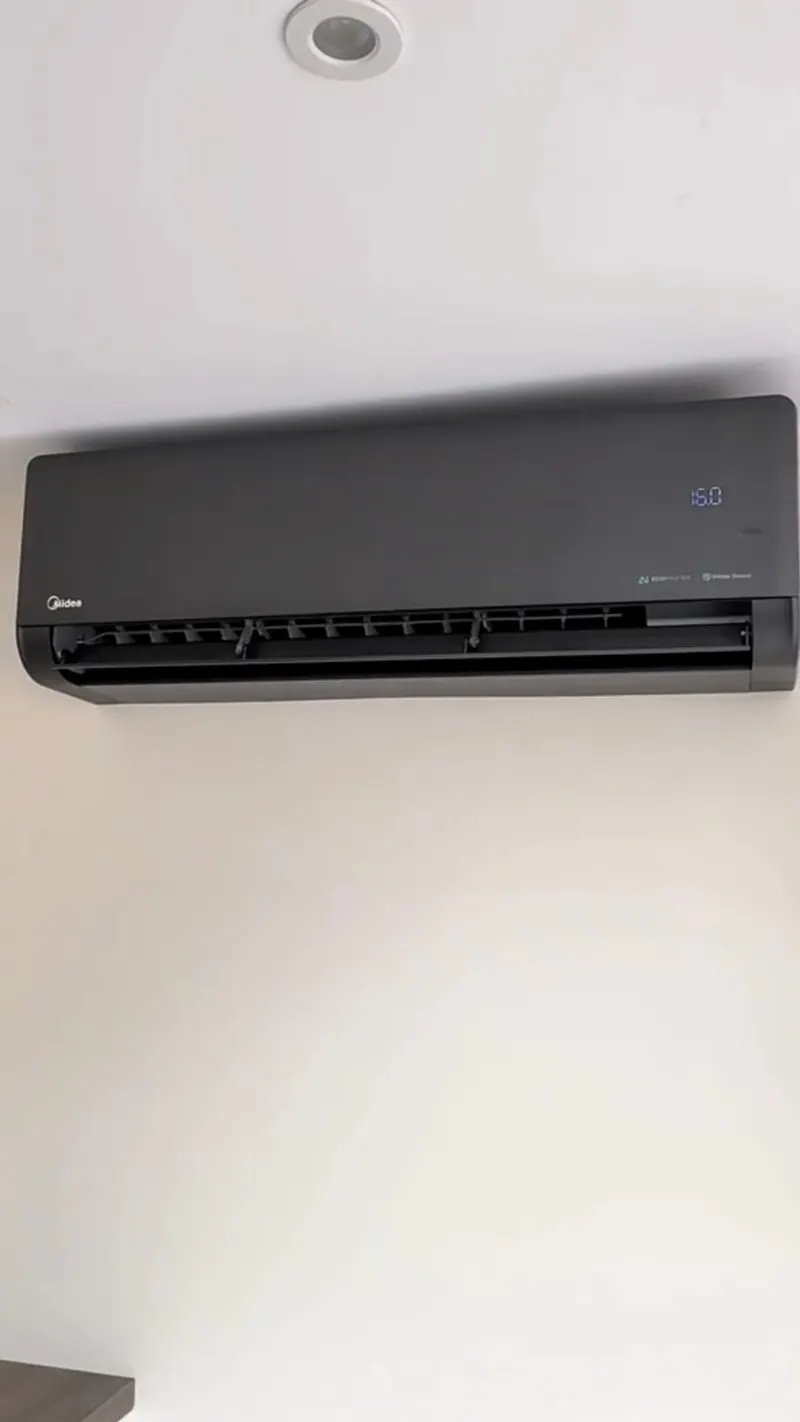 Air conditioning
Black wall unit, running
Quiet enough for a bedroom
Air conditioning
Black wall unit, running
Quiet enough for a bedroom
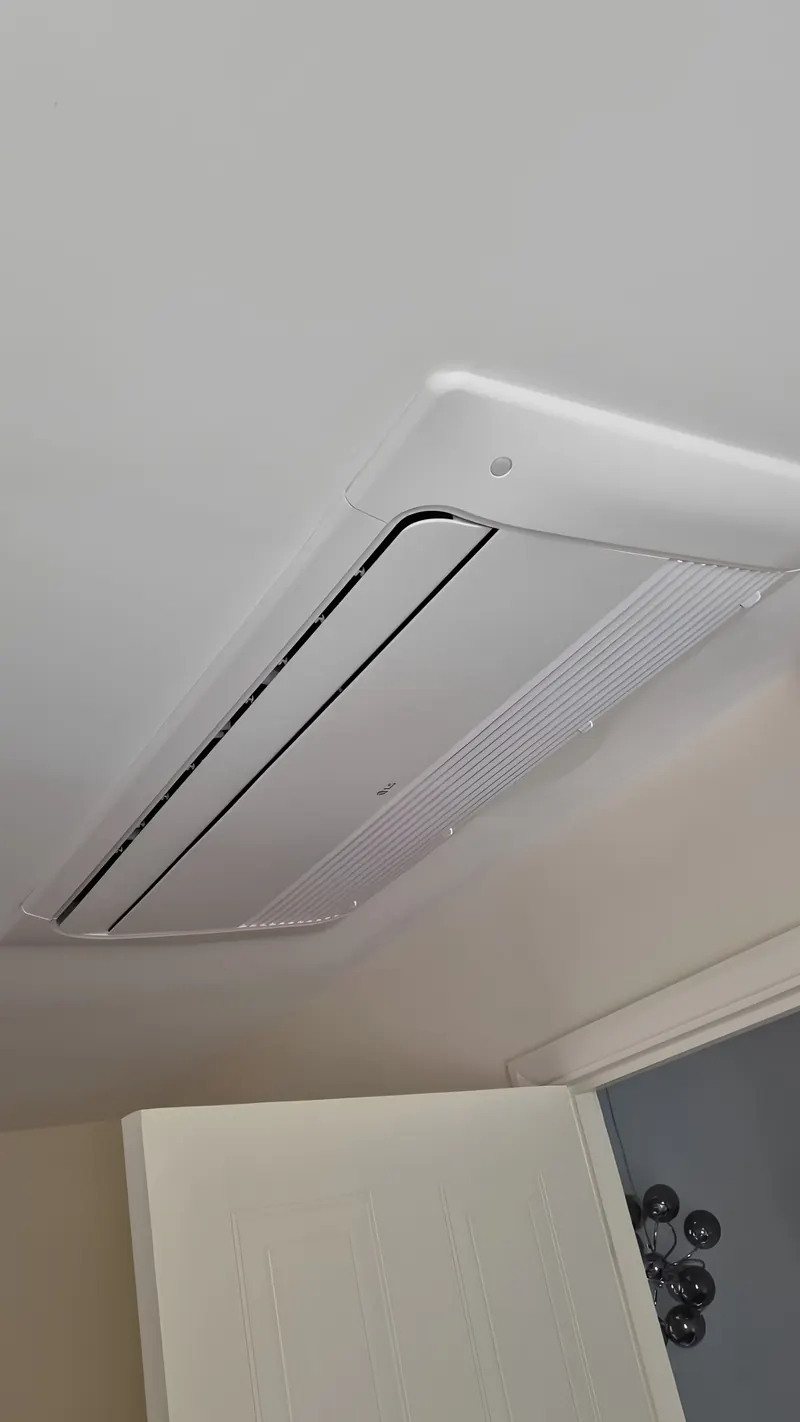 Air conditioning
One-way ceiling cassette
Only the grille shows
Air conditioning
One-way ceiling cassette
Only the grille shows
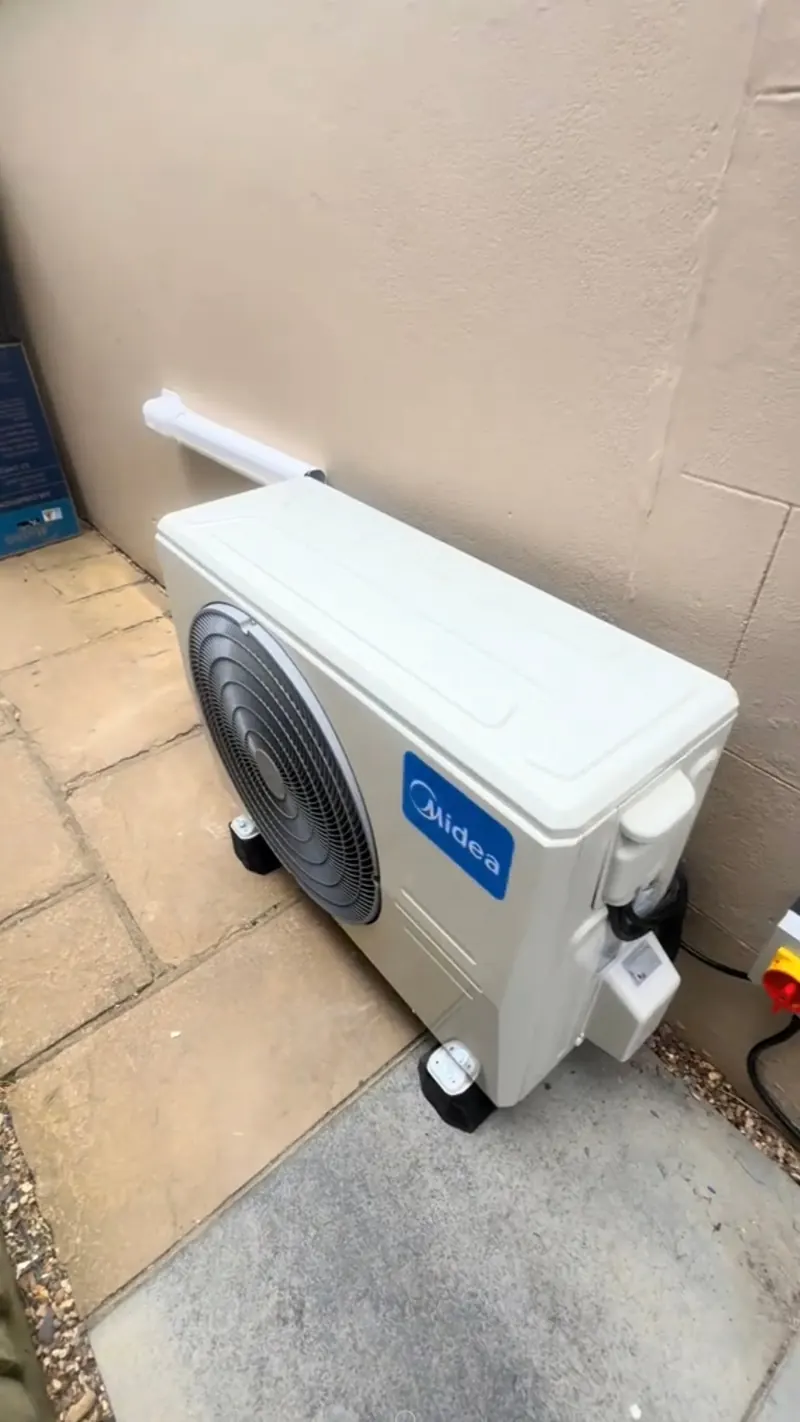 Air conditioning
Outdoor unit on paving
Against render, clear of the boundary
Air conditioning
Outdoor unit on paving
Against render, clear of the boundary
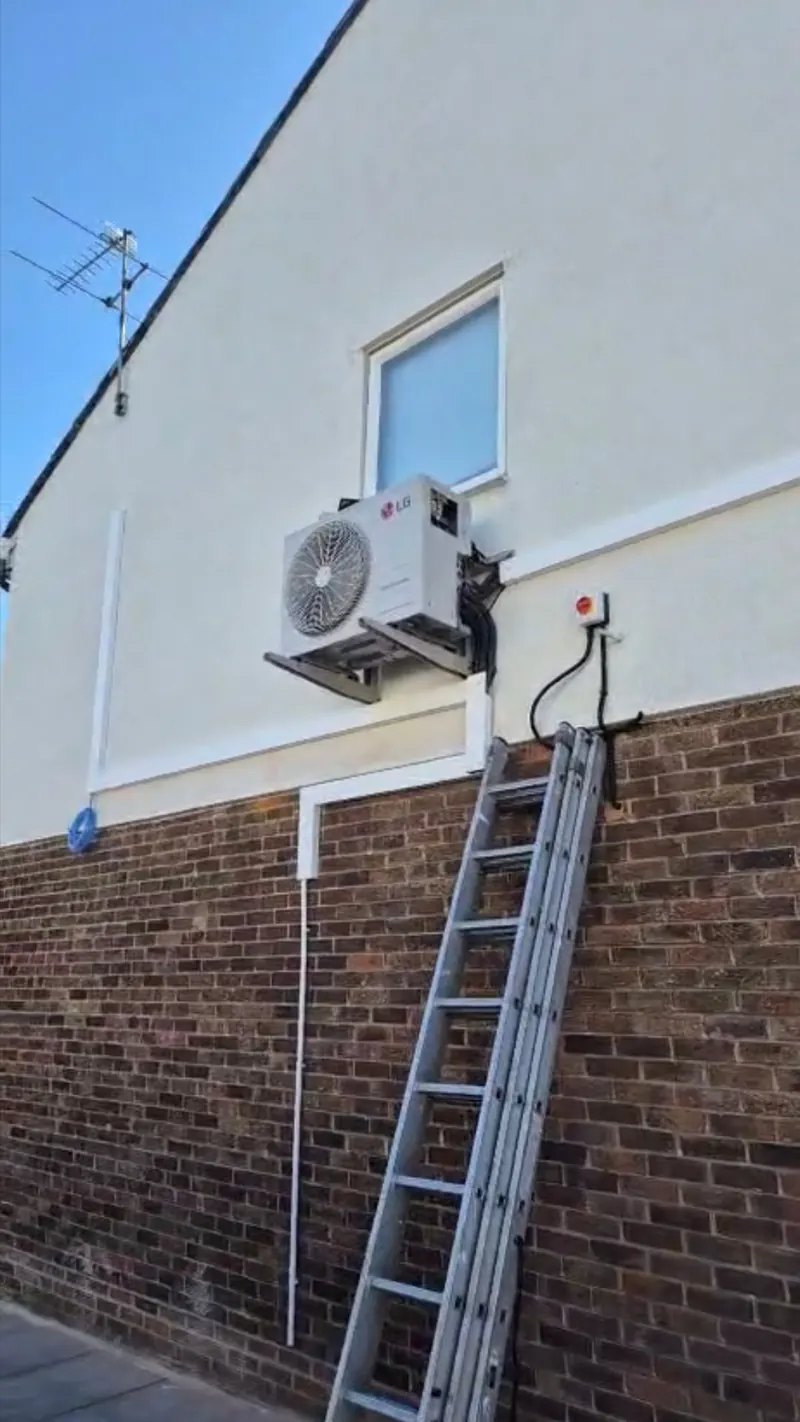 Air conditioning
Condenser high on a wall
On brackets where the ground was not an option
Air conditioning
Condenser high on a wall
On brackets where the ground was not an option
Installing air conditioning on a house in England is normally permitted development, which means no planning application, provided it meets all eight conditions of Class G of the General Permitted Development Order.
Flats and maisonettes are excluded from Class G, so they normally do need planning permission. Listed buildings always need listed building consent. Conservation areas keep permitted development but cannot have a unit on an elevation fronting a highway.
Read the full guide: 6 sections, about 4 minutes
The eight conditions, in full
These come from the Town and Country Planning (General Permitted Development) (England) Order 2015, Schedule 2, Part 14, Class G. If your installation meets every one of them, you do not need a planning application. Break one and you do.
| Condition | What it means in practice |
|---|---|
| One unit only | One outdoor unit per building under permitted development. A second one needs an application |
| Not fronting a highway in a conservation area | In a conservation area or World Heritage Site, the unit cannot go on a wall or roof slope that faces a road |
| Not on a pitched roof | Flat roofs are fine, pitched roofs are not |
| 1 metre from a flat roof edge | Where it is on a flat roof, it must sit at least one metre in from the external edge |
| 1 metre from the boundary | Where it is on a wall facing a boundary, at least one metre from that boundary |
| Not above the highest part of the roof | Excluding the chimney. This rules out most roof-ridge mounting |
| Meets MCS Planning Standards | MCS 020: 42 decibels at the nearest neighbouring habitable room window |
| Removed when no longer needed | The unit comes off when it stops being used |
This is the position in England. Scotland, Wales and Northern Ireland have their own equivalent rules. Class G covers houses, not flats.
When you definitely do need permission
| Situation | What you need | Typical time |
|---|---|---|
| Flat or maisonette | Planning permission, plus freeholder consent | 8 weeks plus |
| Listed building | Listed building consent, always | 8 to 12 weeks |
| Conservation area, unit facing a road | Full planning permission | 8 weeks |
| Second outdoor unit on the same house | Full planning permission | 8 weeks |
| Article 4 direction on your street | Planning permission, even for normally permitted work | 8 weeks |
| Unit above the roof ridge | Full planning permission | 8 weeks |
A householder planning application in England costs 258 pounds and is normally determined in eight weeks. Listed building consent has no fee but takes longer.
The noise condition, which is the one that gets missed
MCS 020 is the standard the permitted development rules point at, and it is not a rule about how loud the unit is. It is a rule about the sound level at the nearest habitable room window of a neighbouring property, with a limit of 42 decibels.
That matters because it means the answer depends on your neighbour's window, not your unit. The same machine passes easily at the end of a long garden and fails on a narrow terrace where the outdoor unit would sit four metres from next door's bedroom. Distance, direction of discharge and any solid barrier between the two do most of the work.
We assess this on the survey rather than assuming it, because a unit that has to move after a complaint costs far more than a unit positioned correctly first time.
Conservation areas and Article 4
Being in a conservation area does not remove your permitted development rights. It adds one restriction: the unit cannot be on a wall or roof slope fronting a highway. For a mid-terrace that usually pushes the unit to the rear, which is where it was going anyway.
An Article 4 direction is different and more serious. It is a formal direction by the council that removes specified permitted development rights in a defined area, and where one applies you need planning permission for work that would otherwise be automatic. Article 4 directions are common in London and are mapped street by street on each council's own website.
The boroughs we cover
The proportion of a borough sitting inside a conservation area is the single best predictor of whether your street will be a straightforward job or a conversation with the council. This is where each borough sits.
| Borough | Conservation area coverage | Main postcodes | Council position |
|---|---|---|---|
| Enfield | Low | EN1, EN2, EN3, N9 | Checked before we quote |
| Barnet | Medium | EN4, EN5, N2, N3 | Checked before we quote |
| Haringey | Medium | N4, N6, N8, N10 | Checked before we quote |
| Camden | High | NW1, NW3, NW5, WC1 | Checked before we quote |
| Islington | High | N1, N5, N7, N19 | Checked before we quote |
| Hackney | High | E5, E8, E9, N1 | Checked before we quote |
| Harrow | Low | HA1, HA2, HA3, HA5 | Checked before we quote |
| Waltham Forest | Medium | E4, E10, E11, E17 | Checked before we quote |
| Brent | Medium | HA0, HA9, NW2, NW6 | Checked before we quote |
| Westminster | High | W1, W2, W9, SW1 | Checked before we quote |
| Kensington and Chelsea | High | SW3, SW5, SW7, SW10 | Checked before we quote |
| Hillingdon | Medium | HA4, HA6, UB3, UB4 | Checked before we quote |
| Ealing | Medium | W3, W5, W7, W13 | Checked before we quote |
| Hounslow | Medium | W4, TW3, TW4, TW5 | Checked before we quote |
| Hammersmith and Fulham | High | W6, W12, W14, SW6 | Checked before we quote |
| City of London | High | EC1, EC2, EC3, EC4 | Checked before we quote |
| Tower Hamlets | Medium | E1, E1W, E2, E3 | Checked before we quote |
| Newham | Low | E6, E7, E12, E13 | Checked before we quote |
| Redbridge | Medium | IG1, IG2, IG3, IG4 | Checked before we quote |
| Barking and Dagenham | Low | IG11, RM6, RM8, RM9 | Checked before we quote |
| Havering | Low | RM1, RM2, RM3, RM5 | Checked before we quote |
We check the specific position for your address, including any Article 4 direction and whether your street is inside a conservation area boundary, before we quote. We do not publish a council's position here until we have read that council's own guidance, because a wrong planning answer is worse than no answer.
What we do about it
- Check your address against the conservation area map, the Article 4 map and the listed building register before we quote.
- Position the unit to stay inside permitted development wherever it is possible, because that is faster and cheaper for you than any application.
- Assess the noise position against the nearest neighbouring window under MCS 020.
- Tell you plainly if an application is needed, what it costs and how long it takes, before you commit to anything.
Your estimate
£2,400to£3,200
Supplied, fitted, commissioned and certificated. Includes VAT.
Send this on WhatsAppPrice it, position included
Where the outdoor unit goes decides both the price and whether permission comes into it at all.
Last step: where do we send your written price?
Every figure on this site is an estimate built from the quotations we issued in 2026 and our own installation experience. It is not a quotation. The price you are given after the free survey is the price you pay.
Planning permission questions
Do I need planning permission for air conditioning in the UK?
In most cases no. Installing an air conditioning outdoor unit on a house is normally permitted development under Class G of the General Permitted Development Order, which means no planning application is needed provided every condition in the class is met.
The conditions are specific and short, and if you break any one of them you need a full planning application. The table below lists all of them.
What are the permitted development conditions for air conditioning?
One unit only per building. Not on a wall or roof slope fronting a highway if the building is in a conservation area or World Heritage Site. Not on a pitched roof. On a flat roof, at least one metre from the external edge. On a wall, at least one metre from the property boundary if it faces onto a boundary. Not above the highest part of the roof. It must comply with MCS Planning Standards, which sets the noise limit. And it must be removed as soon as it is no longer needed.
Miss any of these and it becomes a planning application, which in London takes about eight weeks and costs 258 pounds for a householder application.
Do I need planning permission in a conservation area?
You may still have permitted development rights, but the unit cannot be on a wall or roof slope that fronts a highway. In practice that rules out the front of the house and often the side of a corner property.
Some conservation areas also have an Article 4 direction, which removes permitted development rights entirely for specified works. Whether one applies to your street is checked on the council's own map, and it is one of the things we confirm before quoting.
What about a listed building?
Listed building consent is required for any external alteration to a listed building, regardless of permitted development. Fixing an outdoor unit to the fabric of a listed building is an alteration.
It is not automatically refused. Conservation officers are used to these applications, and a discreet position with a sympathetic route usually gets through. It adds time, and it is not a job to start without the consent in hand.
Do I need planning permission for a flat?
Class G permitted development applies to a house, not to a flat or maisonette. That means installing an outdoor unit on a flat normally does require planning permission in addition to the freeholder's consent.
That is a genuine extra step rather than a formality, and the order in which you do it matters. There is a full sequence on the leasehold flats page.
How is the noise condition assessed?
Through the MCS Planning Standards, MCS 020. The assessment is not about how loud the unit is at your wall, it is about the sound level at the nearest habitable room window of a neighbouring property, with a limit of 42 decibels.
The distance from the unit to that window, and anything solid in between, do most of the work. It is one of the reasons the position is decided on a survey rather than on the day.
What happens if I install one without permission?
The council can serve an enforcement notice requiring it to be removed, and there is no compensation. Enforcement usually starts with a neighbour complaint rather than a council inspection, which is why noise and position matter more than most people assume.
It also becomes a problem when you sell, because a buyer's solicitor asks whether alterations had consent, and an unanswerable question delays a sale.
We check the permission position before we quote
Conservation area boundary, Article 4 direction, listed status and the noise assessment. All of it before you spend anything, and all of it in writing.
Monday to Friday 9am to 7pm, Saturday 10am to 3pm, Sunday closed
Page updated