Single split vs
multi-split
If you want more than one room cooled, this is the decision that shapes the whole installation: several small outdoor units, or one bigger one serving all of them. It is usually decided by how much outdoor wall you have rather than by cost.
- Free survey and a fixed written price
- We will tell you when the cheaper option is the right one
- No obligation and nothing to sign
Accredited, and fitting the brands you know











Air conditioning we have fitted
Our own jobs, photographed on site. Real rooms, real outdoor positions, nothing from a catalogue.
 Air conditioning
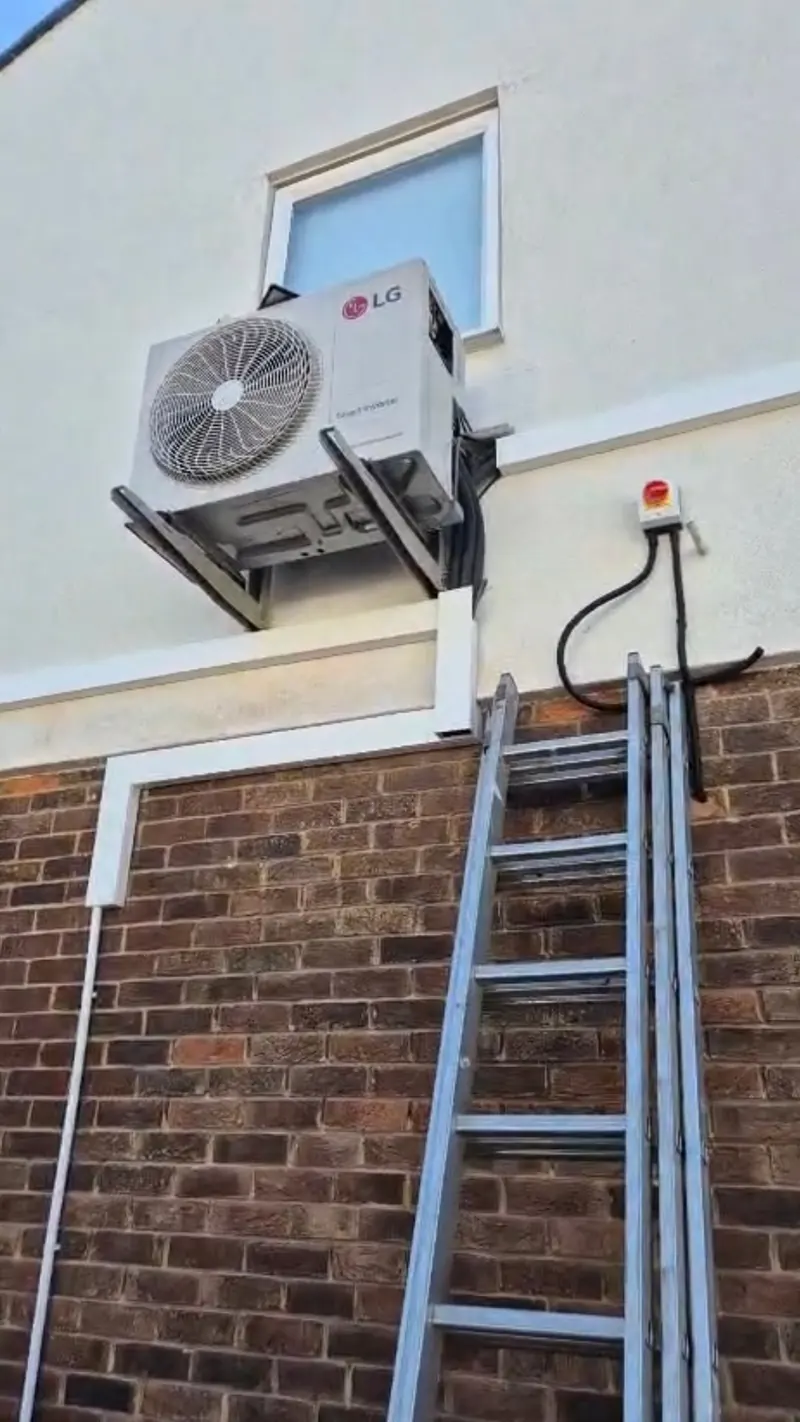
Outdoor unit on wall brackets
Above brick, isolator and cabling run tidy
Air conditioning
Outdoor unit on wall brackets
Above brick, isolator and cabling run tidy
 Air conditioning
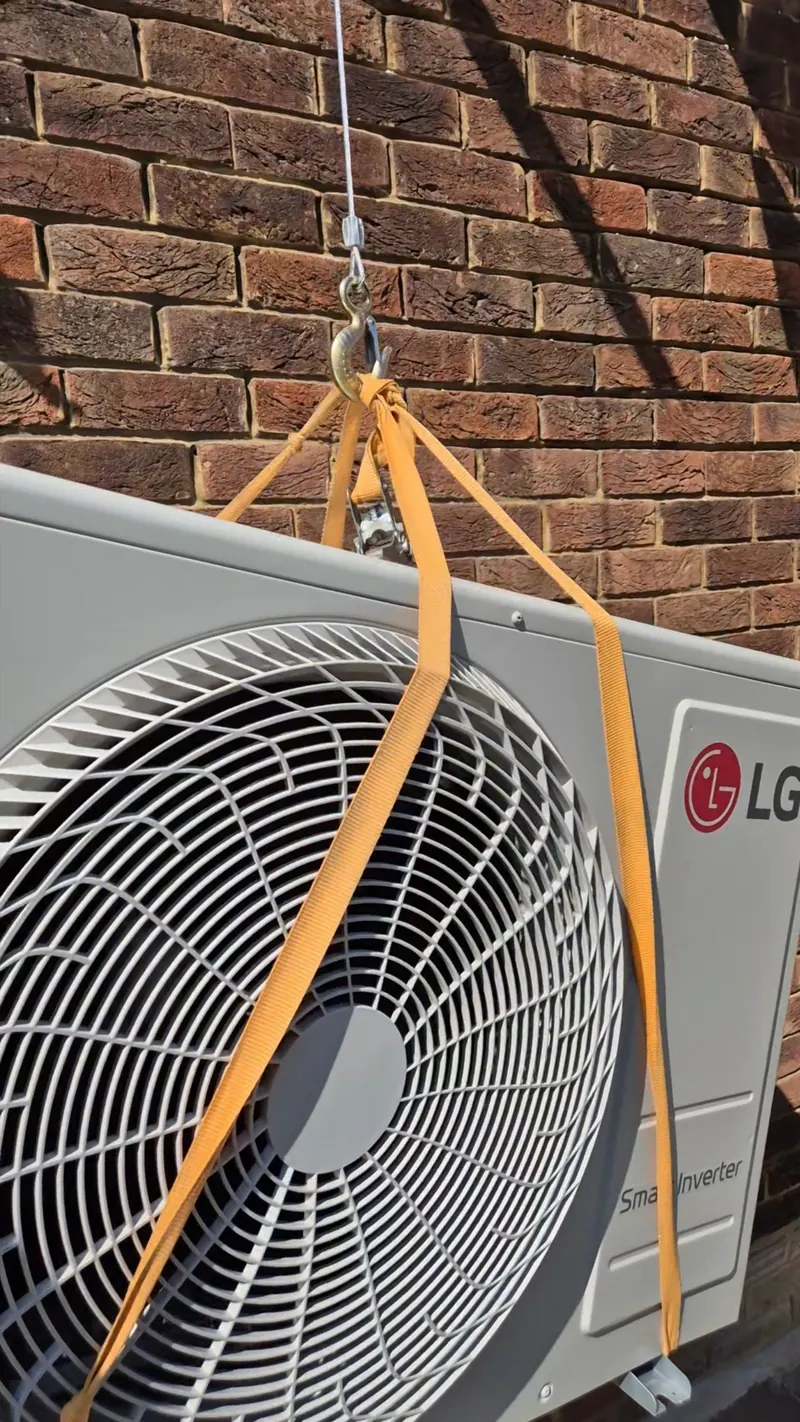
Condenser going up on straps
Lifted into a wall position, no scaffold
Air conditioning
Condenser going up on straps
Lifted into a wall position, no scaffold
 Air conditioning
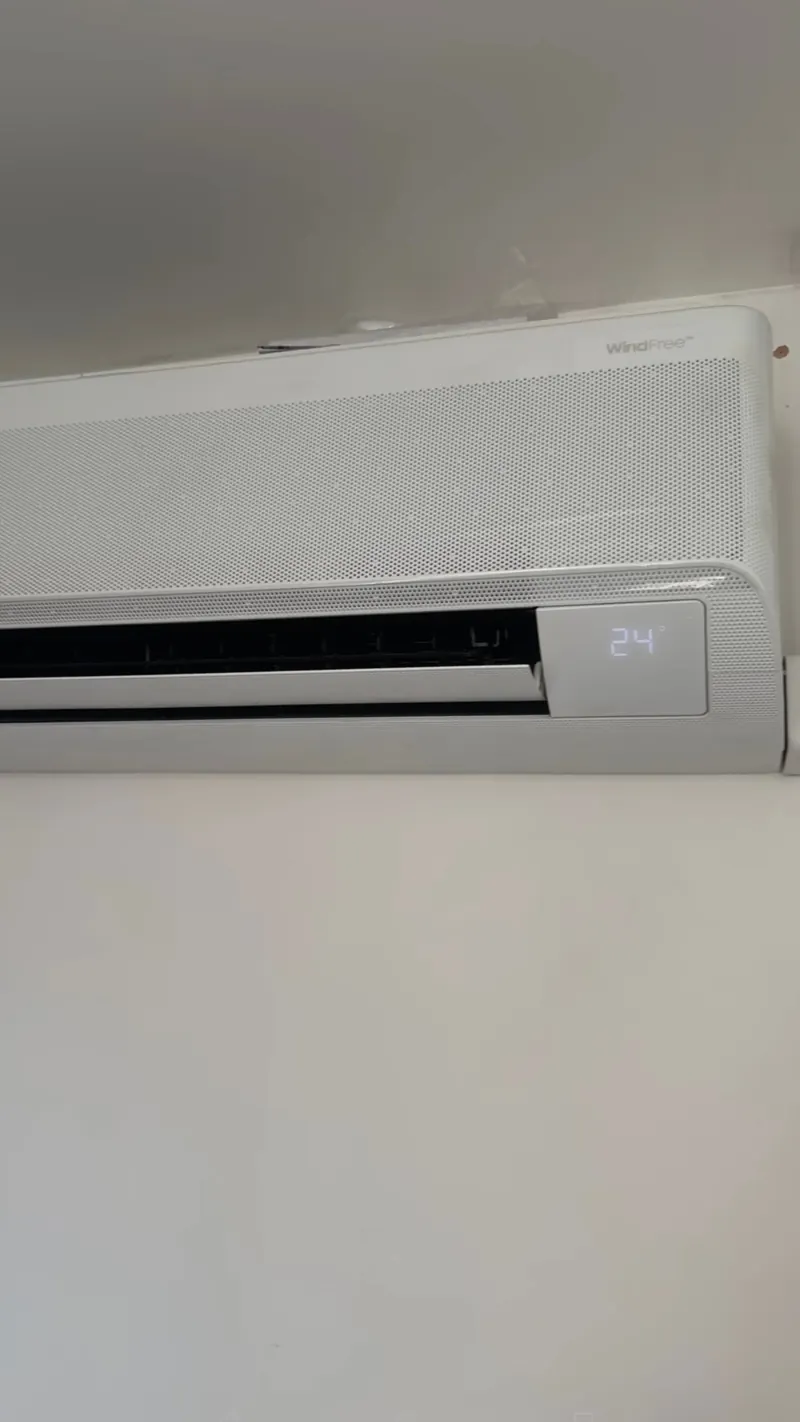
Wall unit, commissioned
Set to 24 degrees and handed over
Air conditioning
Wall unit, commissioned
Set to 24 degrees and handed over
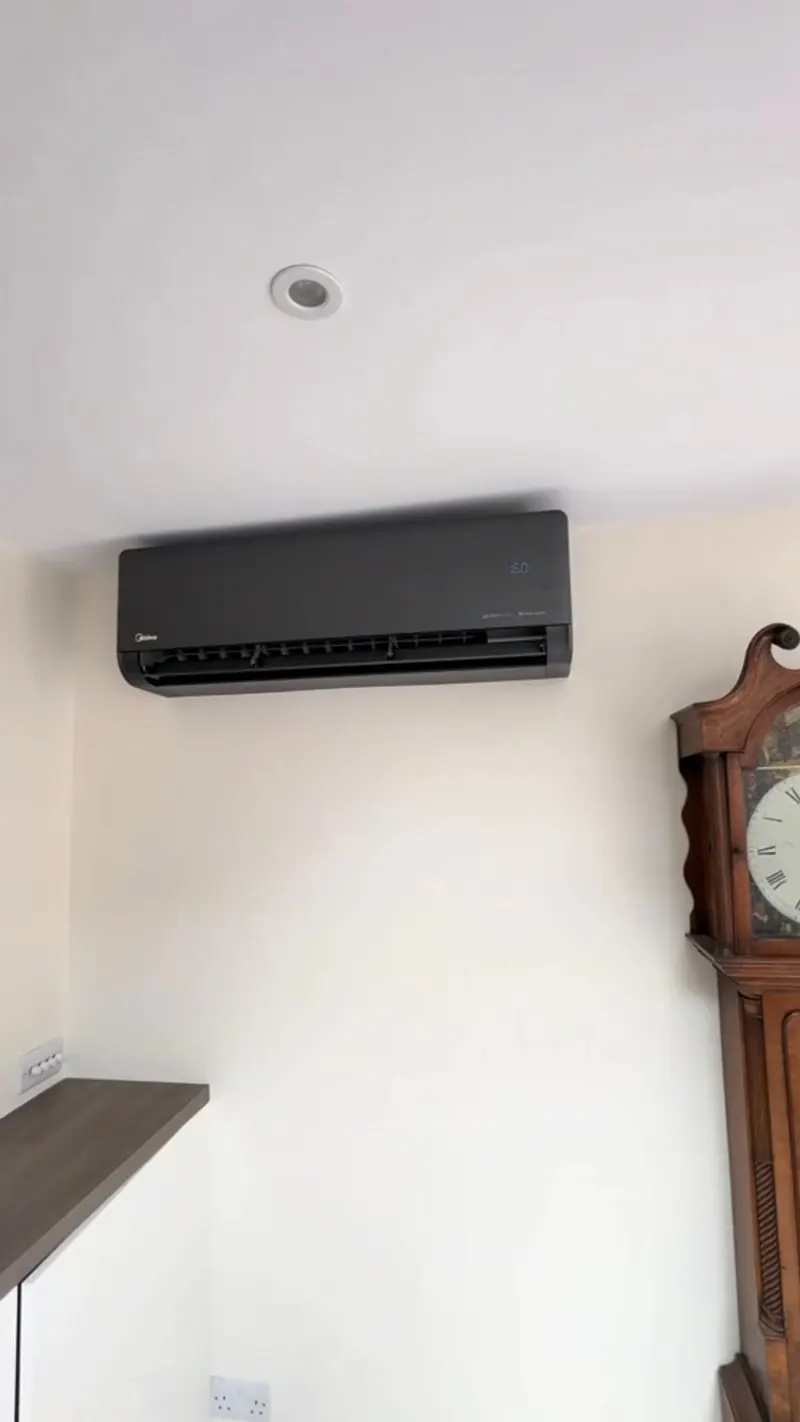 Air conditioning
Black wall unit in a sitting room
Chosen to sit with the room, not against it
Air conditioning
Black wall unit in a sitting room
Chosen to sit with the room, not against it
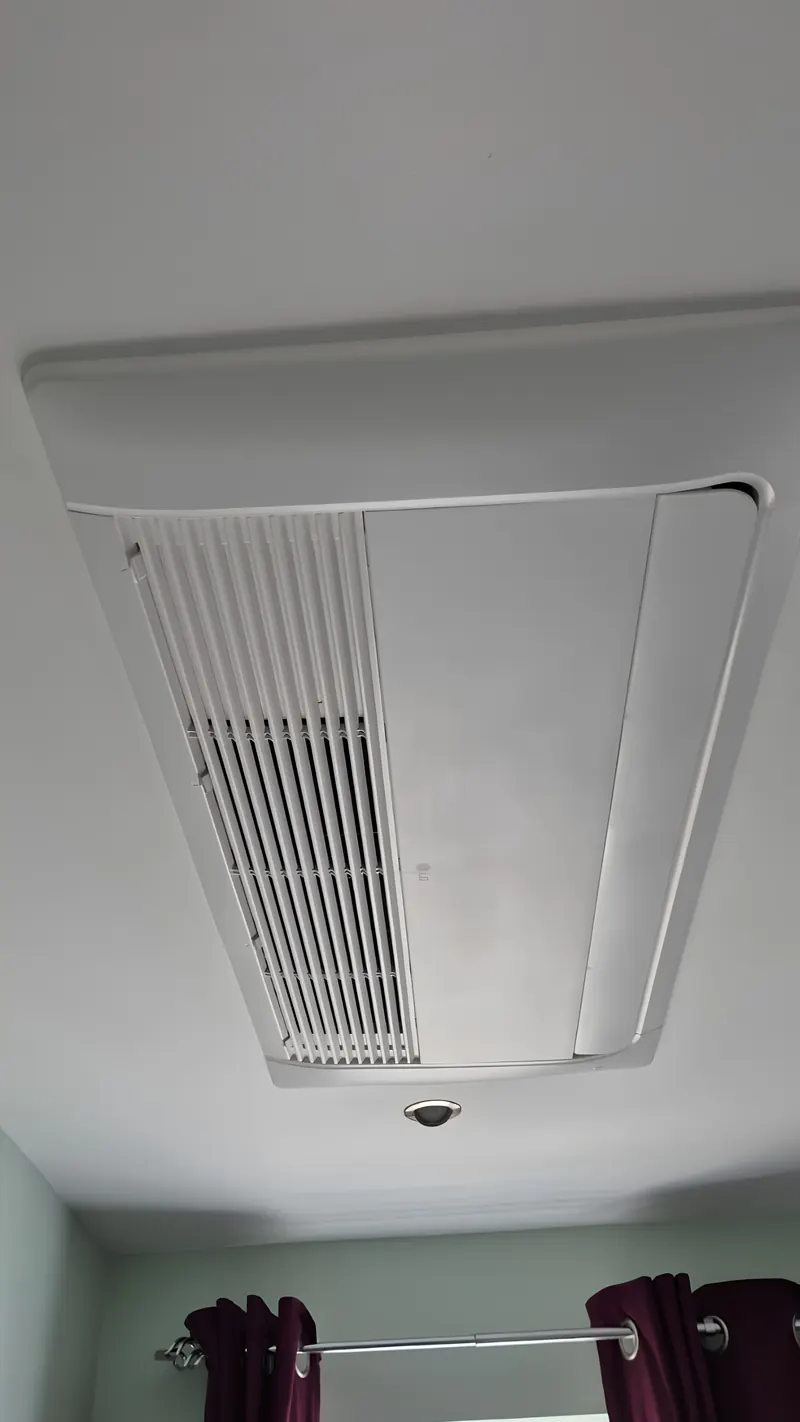 Air conditioning
Ceiling cassette
Recessed flush into the ceiling
Air conditioning
Ceiling cassette
Recessed flush into the ceiling
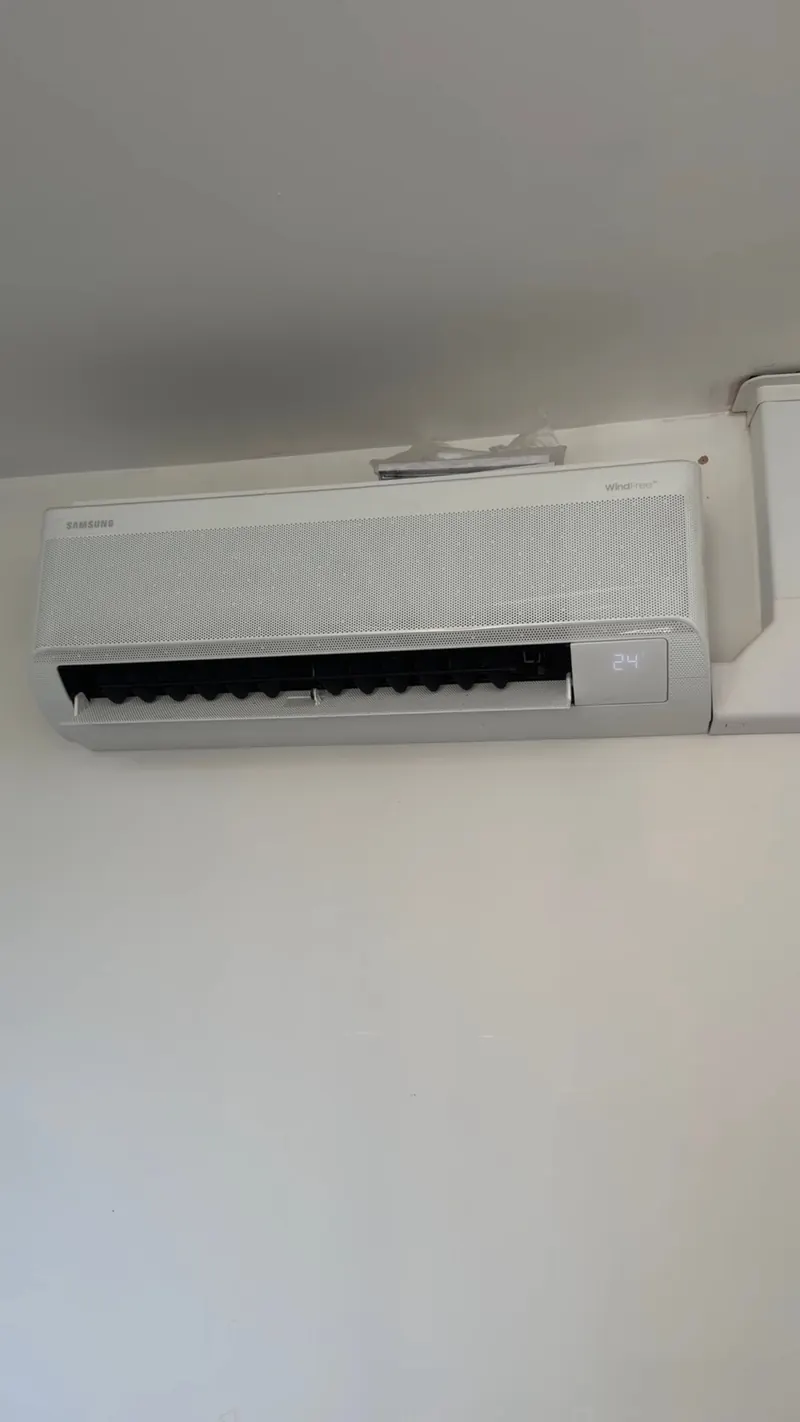 Air conditioning
Samsung Wind-Free
Cooling without a draught on the room
Air conditioning
Samsung Wind-Free
Cooling without a draught on the room
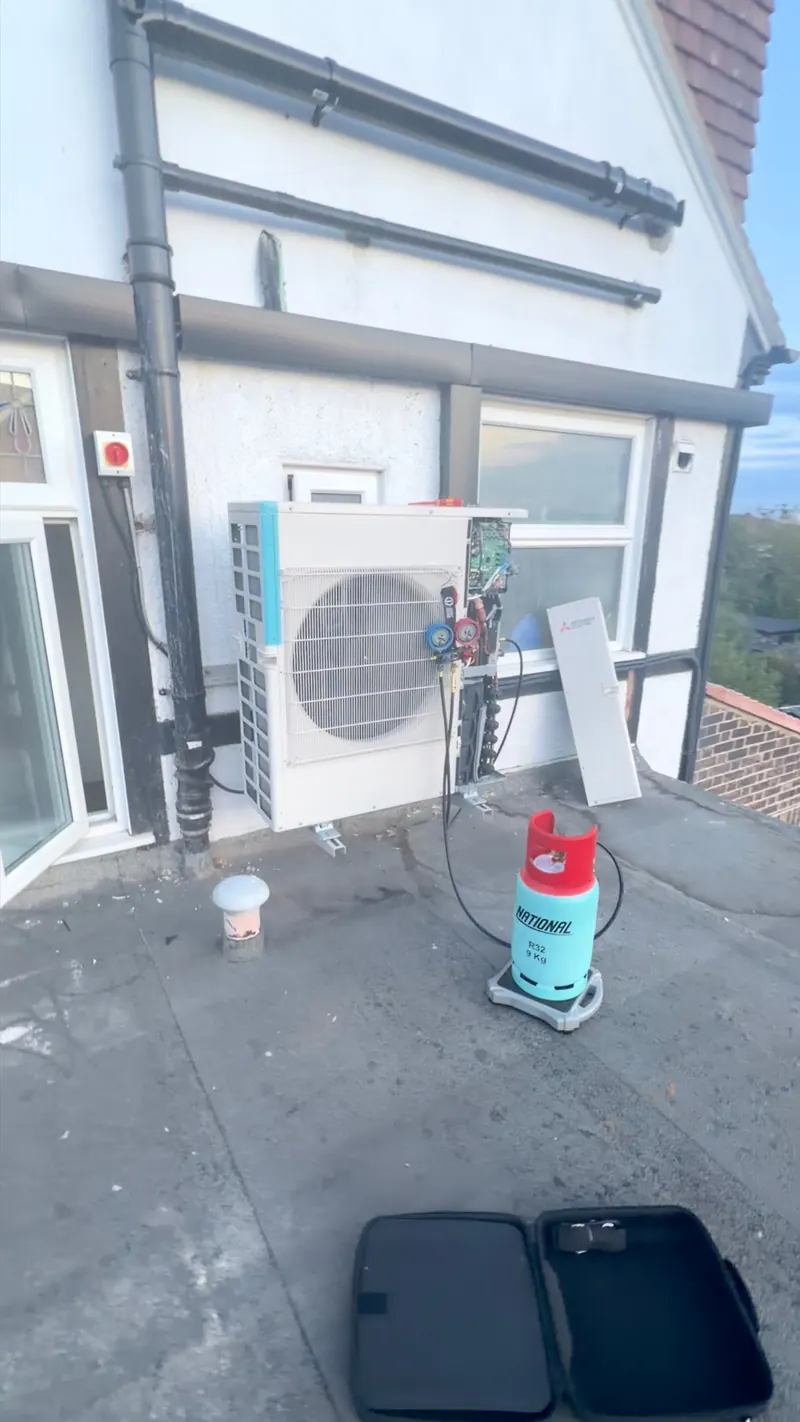 Air conditioning
Rooftop commissioning
Pressure tested and charged on gauges
Air conditioning
Rooftop commissioning
Pressure tested and charged on gauges
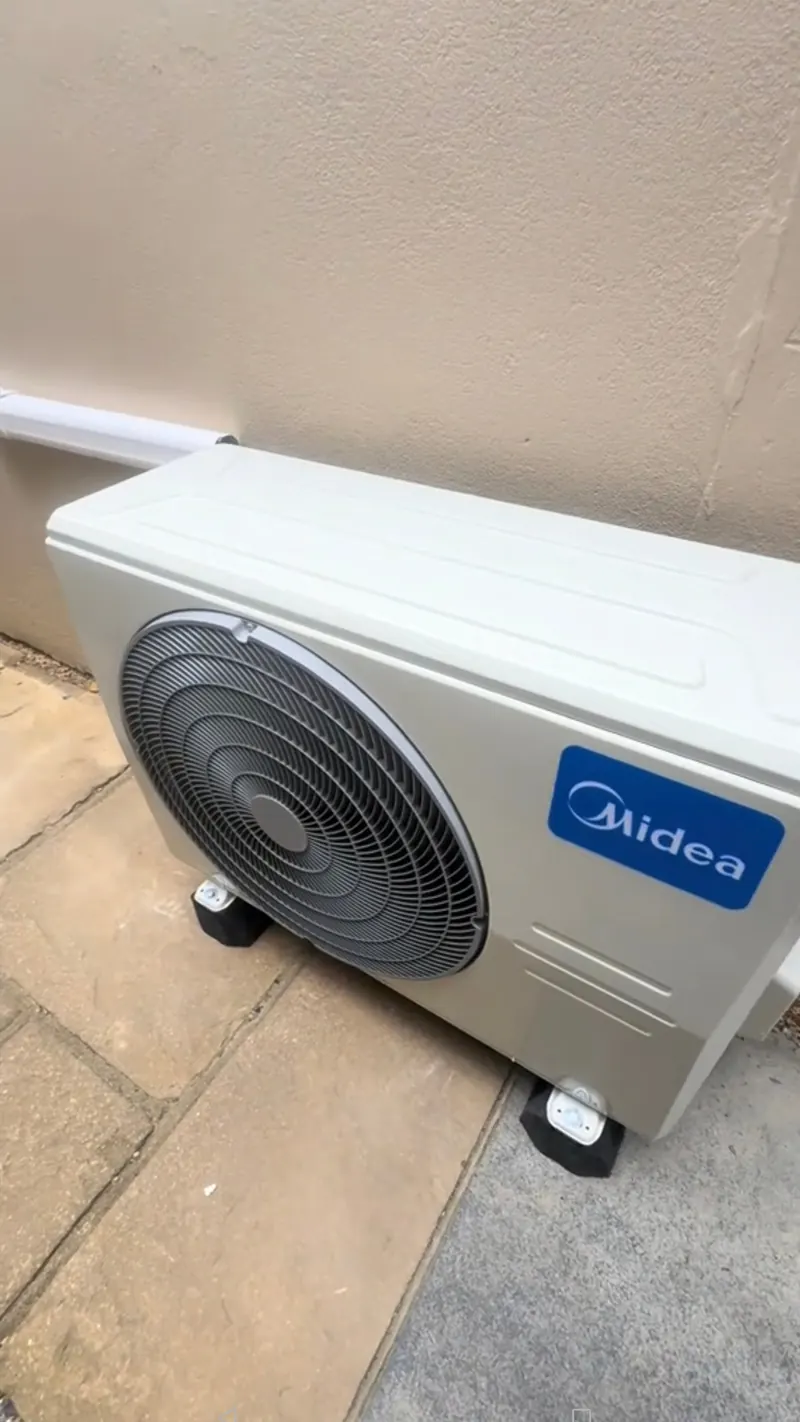 Air conditioning
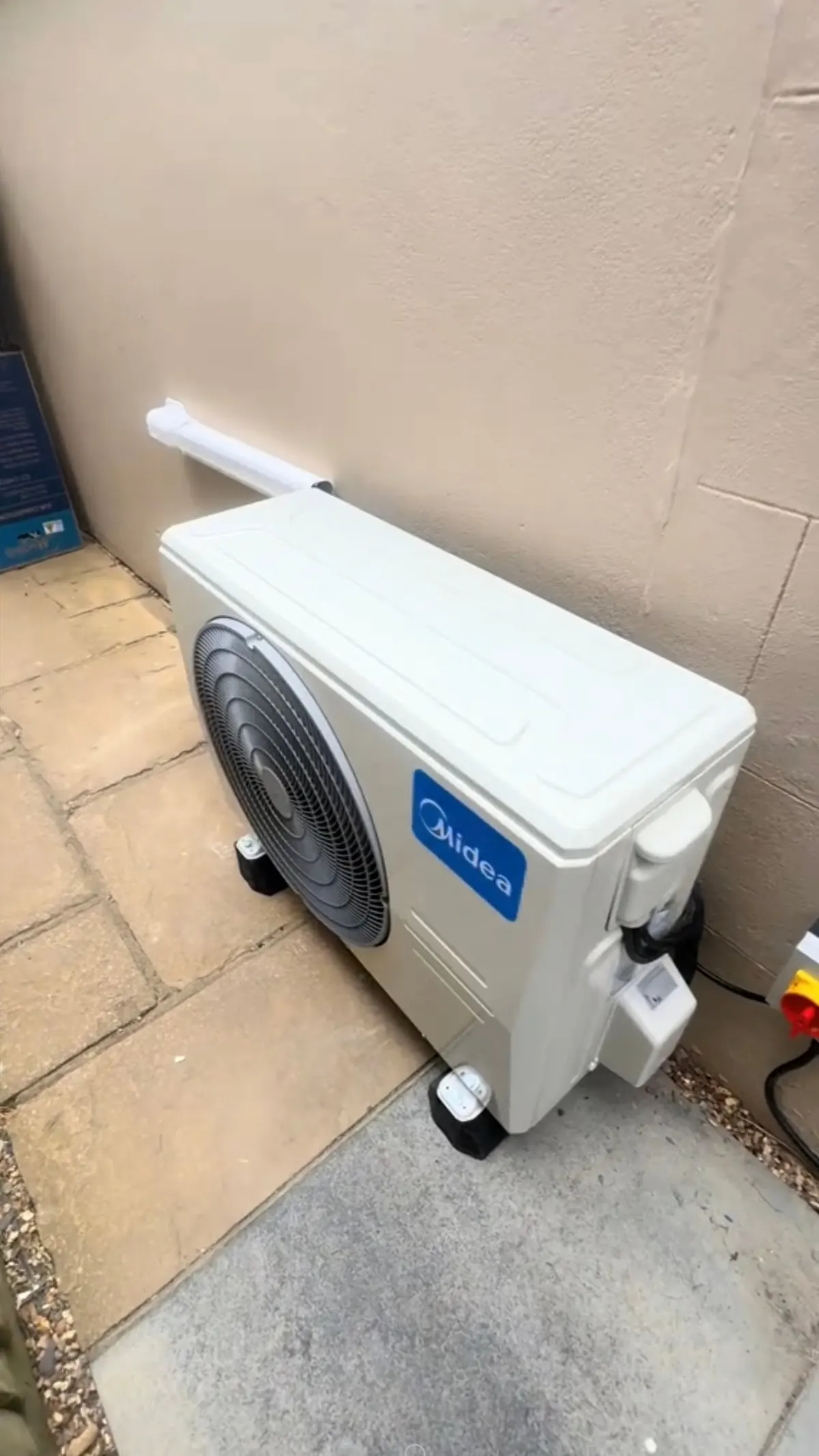
Outdoor unit at ground level
On paving beside the house, easy to service
Air conditioning
Outdoor unit at ground level
On paving beside the house, easy to service
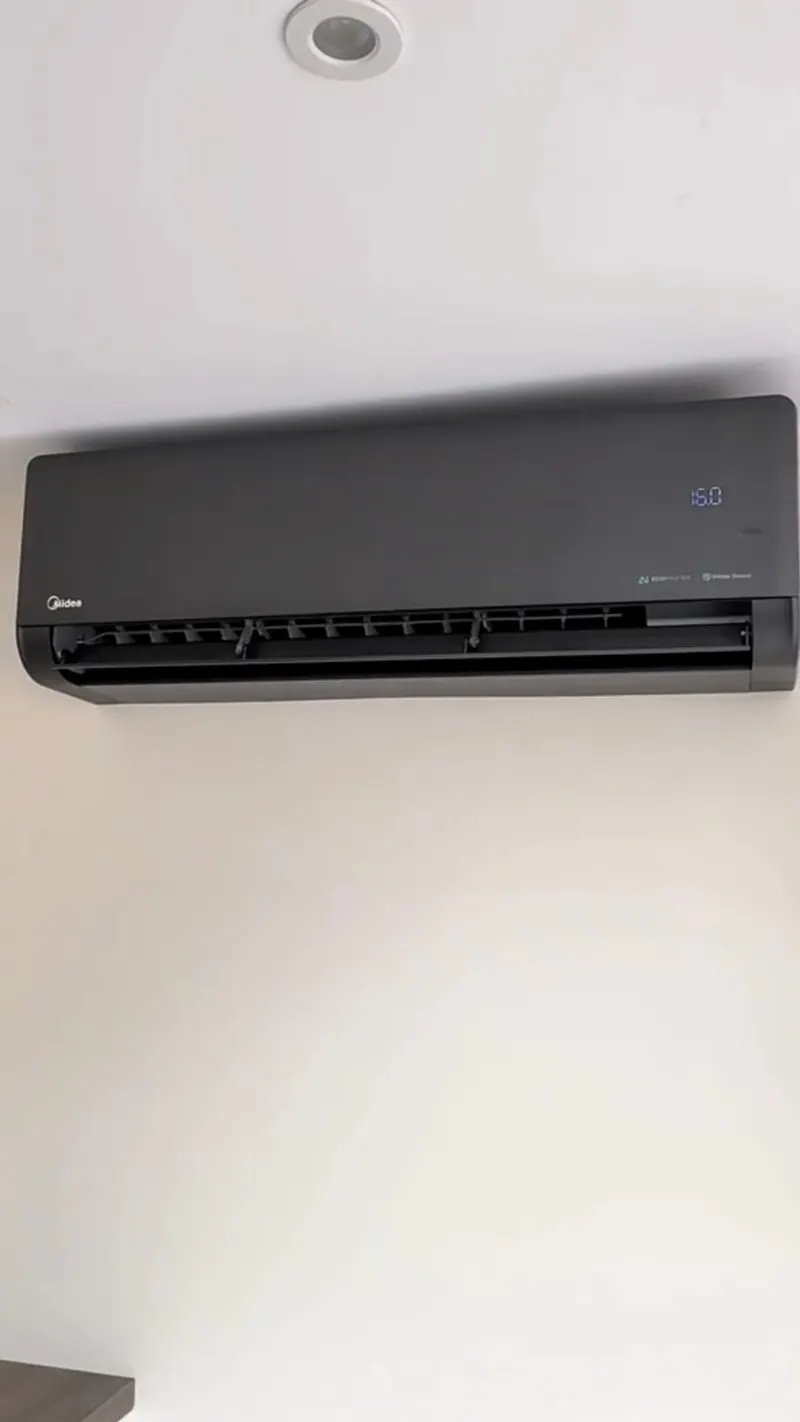 Air conditioning
Black wall unit, running
Quiet enough for a bedroom
Air conditioning
Black wall unit, running
Quiet enough for a bedroom
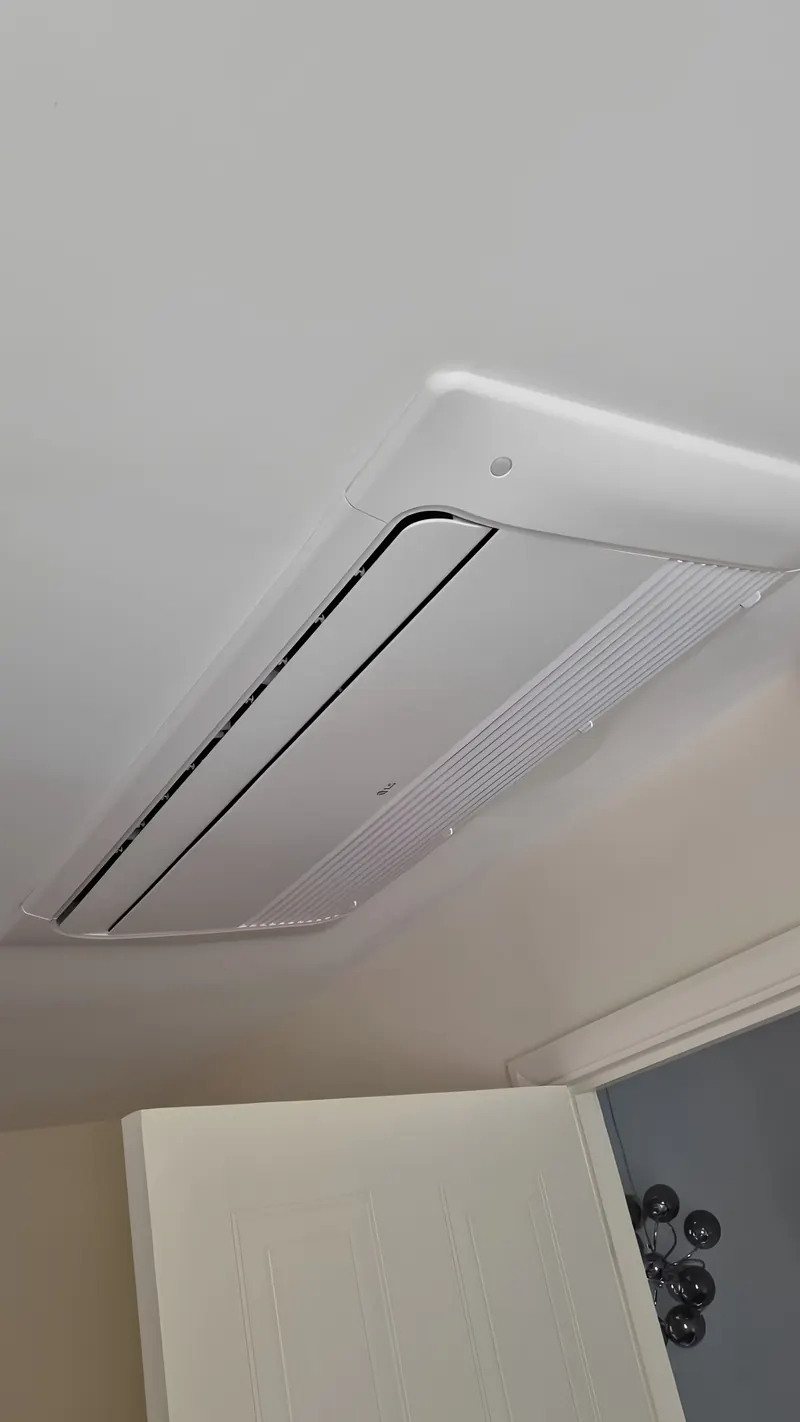 Air conditioning
One-way ceiling cassette
Only the grille shows
Air conditioning
One-way ceiling cassette
Only the grille shows
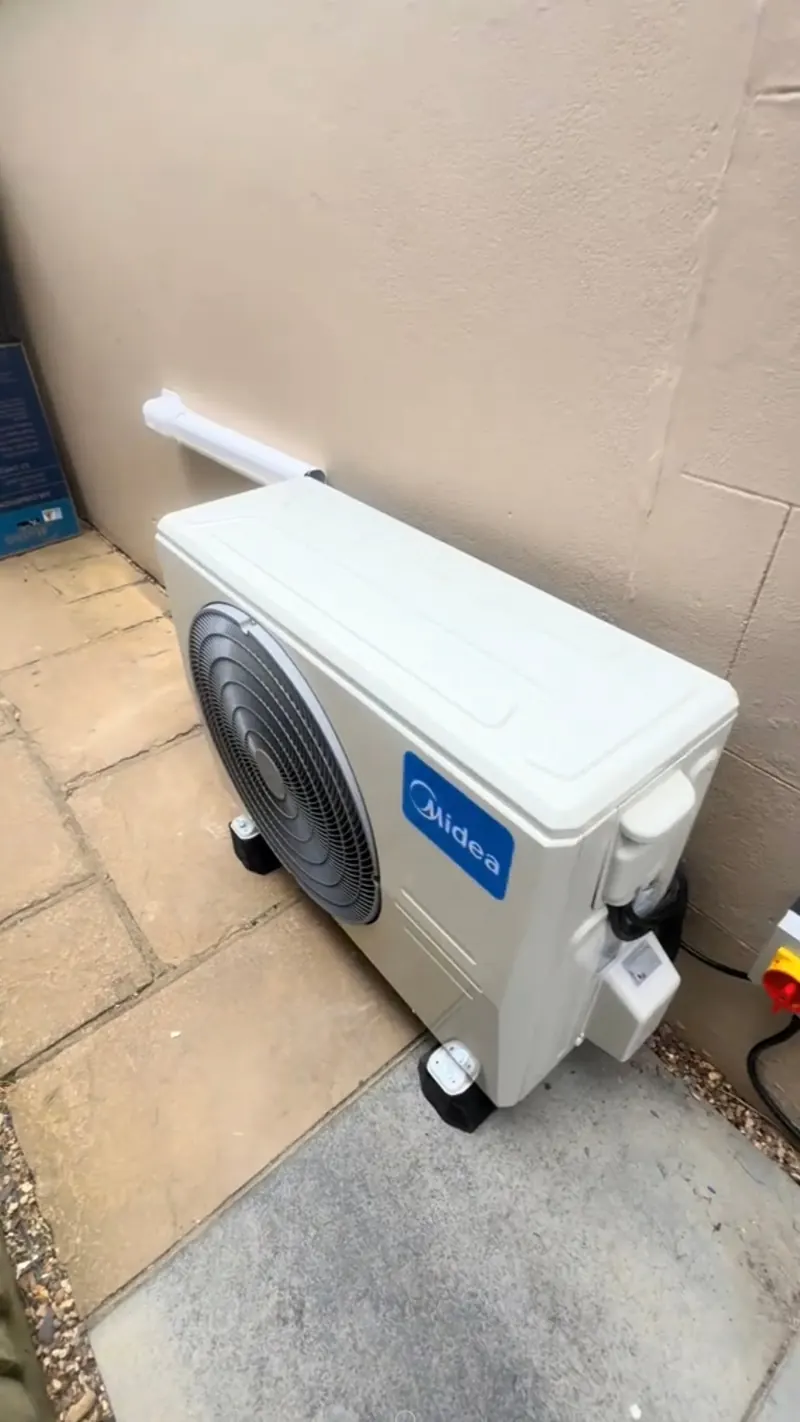 Air conditioning
Outdoor unit on paving
Against render, clear of the boundary
Air conditioning
Outdoor unit on paving
Against render, clear of the boundary
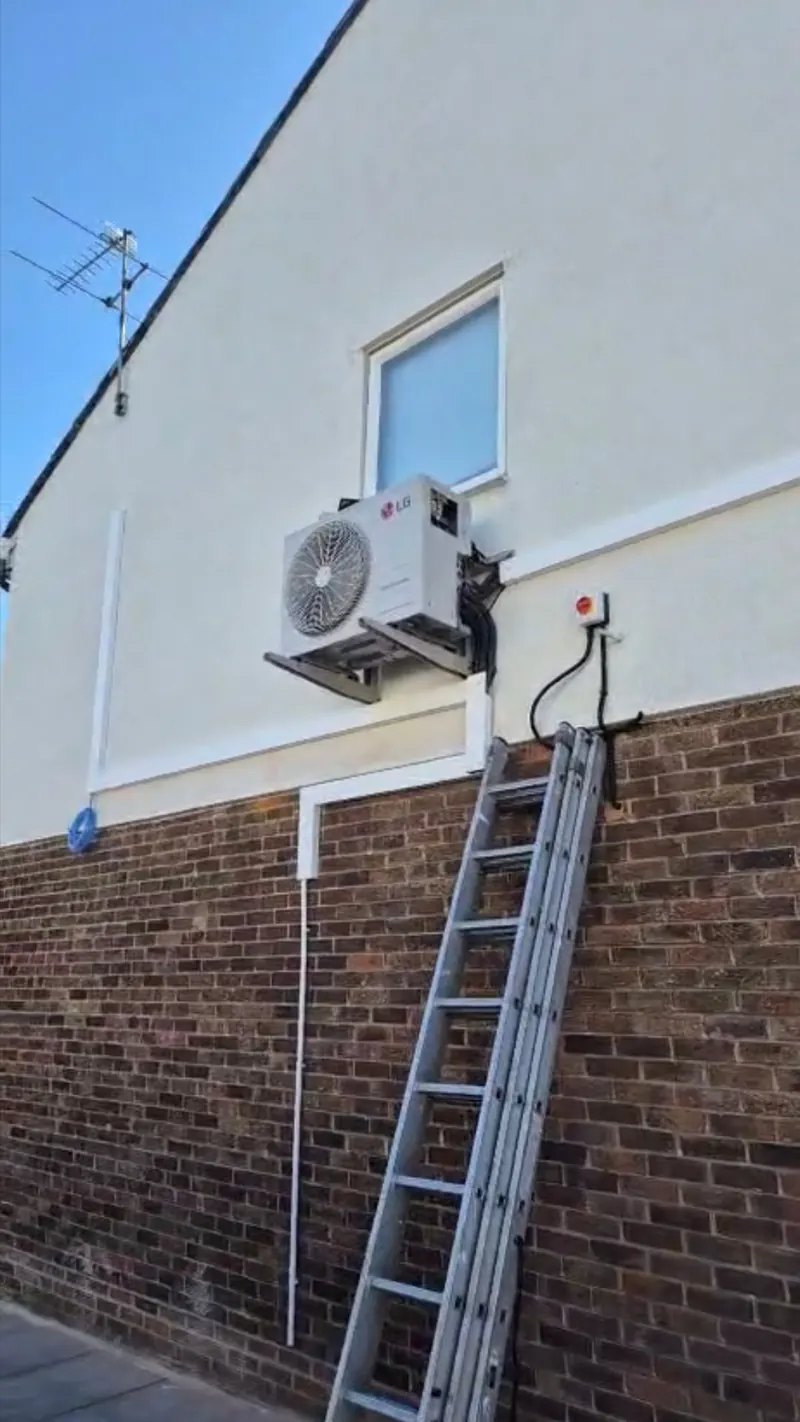 Air conditioning
Condenser high on a wall
On brackets where the ground was not an option
Air conditioning
Condenser high on a wall
On brackets where the ground was not an option
A multi-split runs two to five indoor units from one outdoor unit and is normally cheaper and tidier than the same number of single splits. Two rooms on a multi-split is 4,300 to 5,800 pounds; two separate single splits would need two outdoor positions.
The case for separate single splits is redundancy and independence, and it is stronger than it sounds in one specific situation.
Read the full guide: 5 sections, about 3 minutes
Side by side
| Multi-split | Separate single splits | |
|---|---|---|
| Outdoor units | One, serving 2 to 5 rooms | One per room |
| Outdoor space needed | One position | One position per room |
| Two rooms, installed | £4,300 to £5,800 | Roughly two single-room prices |
| Three rooms, installed | £6,400 to £8,600 | Roughly three single-room prices |
| If the outdoor unit fails | Every room is off | Only that room is off |
| Running two rooms at once | Efficient. One compressor, shared | Two compressors running |
| Running one room only | Slightly less efficient than a single split | As efficient as it gets |
| Neighbour impact | One thing making noise | Two or three |
| Adding a room later | Only if the outdoor unit was sized for it | Just add another system |
Every figure on this site is an estimate built from the quotations we issued in 2026 and our own installation experience. It is not a quotation. The price you are given after the free survey is the price you pay.
Why outdoor space usually decides it
A London terrace often has exactly one sensible outdoor position, and sometimes half of one. Once you have found the spot that is out of sight, away from a window, on solid ground and reachable for servicing, you are not going to find two more of it.
That is why multi-split is the normal answer in London and single splits are the normal answer in a detached house with a side and a rear elevation to play with.
It also matters for consent. A freeholder or a planning officer looking at one outdoor unit is a different conversation from one looking at three.
The mistake that makes a multi-split the wrong choice
Sizing the outdoor unit to the sum of the indoor units, and then only ever running one of them. A multi-split outdoor unit has a minimum output it can modulate down to, and if that minimum is well above what a single bedroom needs at 2am, the system cycles: on, off, on, off, which is noisy and leaves the room clammy.
In practice this bites when somebody puts four indoor units in for a whole house and then, in reality, uses the main bedroom every night and the others twice a year.
The answer is not to avoid multi-splits. It is to be honest at survey about which rooms will actually be used and how often, and to size the outdoor unit for the realistic simultaneous load rather than the theoretical maximum.
What happens when something fails
This is the strongest argument for separate systems and it is worth weighing honestly. On a multi-split, a failed outdoor unit takes every room with it. On separate systems, one room goes off and the others carry on.
For most homes that is an inconvenience rather than a problem, and it does not justify the extra outdoor positions and the extra cost. Where it does matter is a house with somebody in it who genuinely needs cooling for a health reason, and in that case the redundancy is worth buying.
Other things people weigh up
Split vs portable air conditioning
A portable unit costs 300 pounds and a fitted split costs 2,400.
CompareAir conditioning vs air source heat pump
These are the same technology wearing two names, and the confusion costs people real money.
CompareWhat happens on a survey
An hour, nothing to sign, and a written fixed price afterwards. The fastest way to settle any of this properly.
Free survey
Your estimate
£2,400to£3,200
Supplied, fitted, commissioned and certificated. Includes VAT.
Send this on WhatsAppPrice the fitted option
A fitted split system, priced. It is the option this page is comparing against, and this is what it actually costs.
Last step: where do we send your written price?
Every figure on this site is an estimate built from the quotations we issued in 2026 and our own installation experience. It is not a quotation. The price you are given after the free survey is the price you pay.
Questions people ask
Is a multi-split cheaper than separate units?
Usually, yes, for two or more rooms. One outdoor unit, one set of brackets, one electrical supply and one lot of labour on the outside of the building. Two rooms on a multi-split is 4,300 to 5,800 pounds, which is less than two separate single-room installations.
The saving narrows as the number of rooms rises, because the outdoor unit gets bigger and the indoor pipe runs get longer.
Can I mix different indoor units on one multi-split?
Yes, within one manufacturer's range, and it is usually the sensible way to spend the budget. A quiet flagship in the main bedroom, a plain wall unit in the spare room, and a ceiling cassette in the kitchen can all run from one outdoor unit.
You cannot mix manufacturers on one system, and you cannot add an indoor unit later unless the outdoor unit was sized with that in mind.
Can I add a room to a multi-split later?
Only if the outdoor unit has a spare port and enough capacity, which has to be decided when it is first specified. It is worth saying at survey if there is a loft conversion or an extension coming, because sizing for it then costs very little and retrofitting for it later means a new outdoor unit.
Is one big unit noisier than several small ones?
One larger outdoor unit is usually a little louder than one small one, and considerably quieter than two or three small ones running together. If neighbour noise is the concern, a single multi-split outdoor unit in a well-chosen position is nearly always the better answer. There is more on the noise page.
Not sure which way to go?
Tell us the rooms and what you are trying to achieve. We will say which of these we would fit in your property and why, before anybody quotes anything.
Monday to Friday 9am to 7pm, Saturday 10am to 3pm, Sunday closed
Page updated