Hair and beauty salon
air conditioning
A salon has two things almost no other small premises has: several kilowatts of hot air aimed deliberately at the room, and clients who sit perfectly still for two hours. Both change what the system has to do.
- Free survey and heat load calculation on jobs over 5,000 pounds
- Quote split into plant, install, electrics and out-of-hours
- Out of hours fitting where the business cannot close
Accredited, and fitting the brands you know










Air conditioning we have fitted
Our own jobs, photographed on site. Real rooms, real outdoor positions, nothing from a catalogue.
 Air conditioning
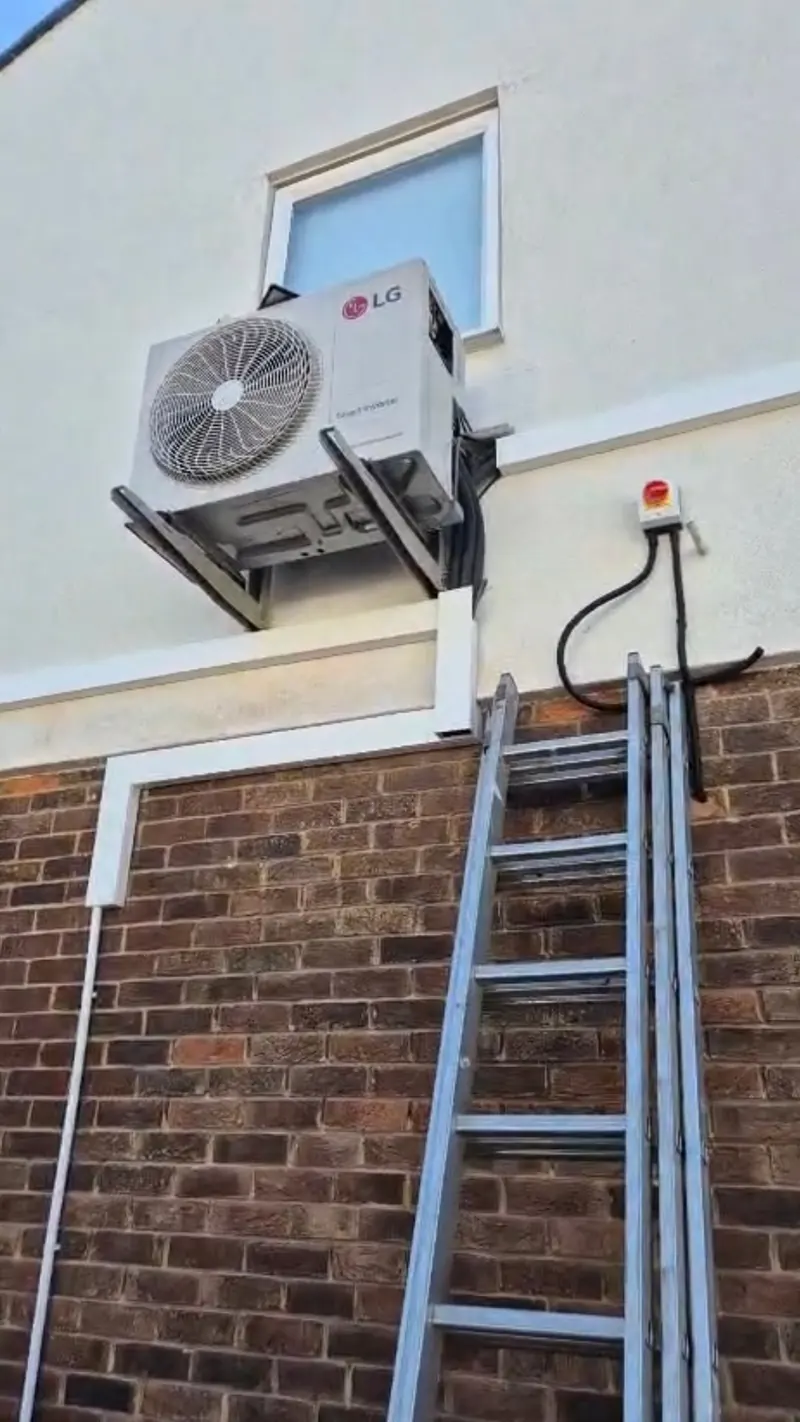
Outdoor unit on wall brackets
Above brick, isolator and cabling run tidy
Air conditioning
Outdoor unit on wall brackets
Above brick, isolator and cabling run tidy
 Air conditioning
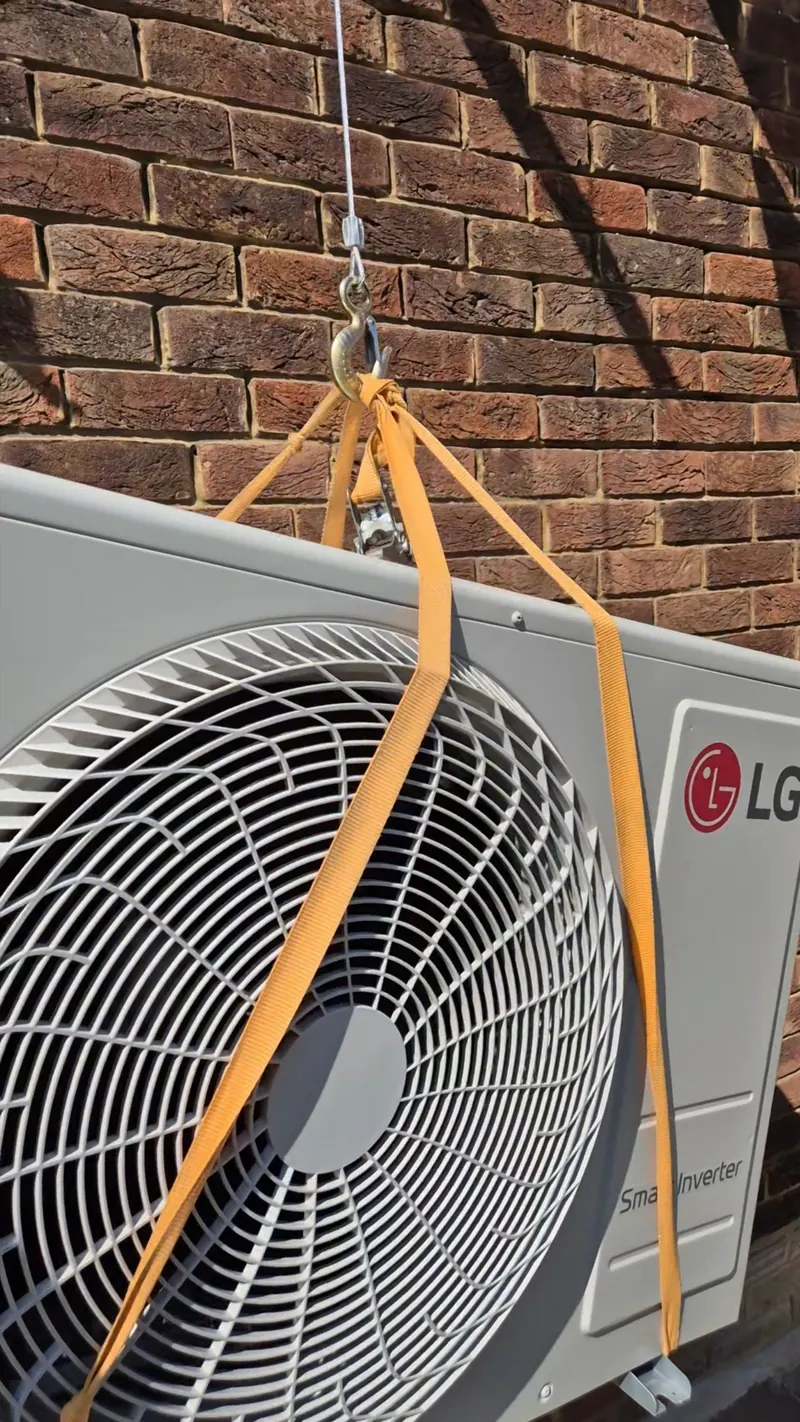
Condenser going up on straps
Lifted into a wall position, no scaffold
Air conditioning
Condenser going up on straps
Lifted into a wall position, no scaffold
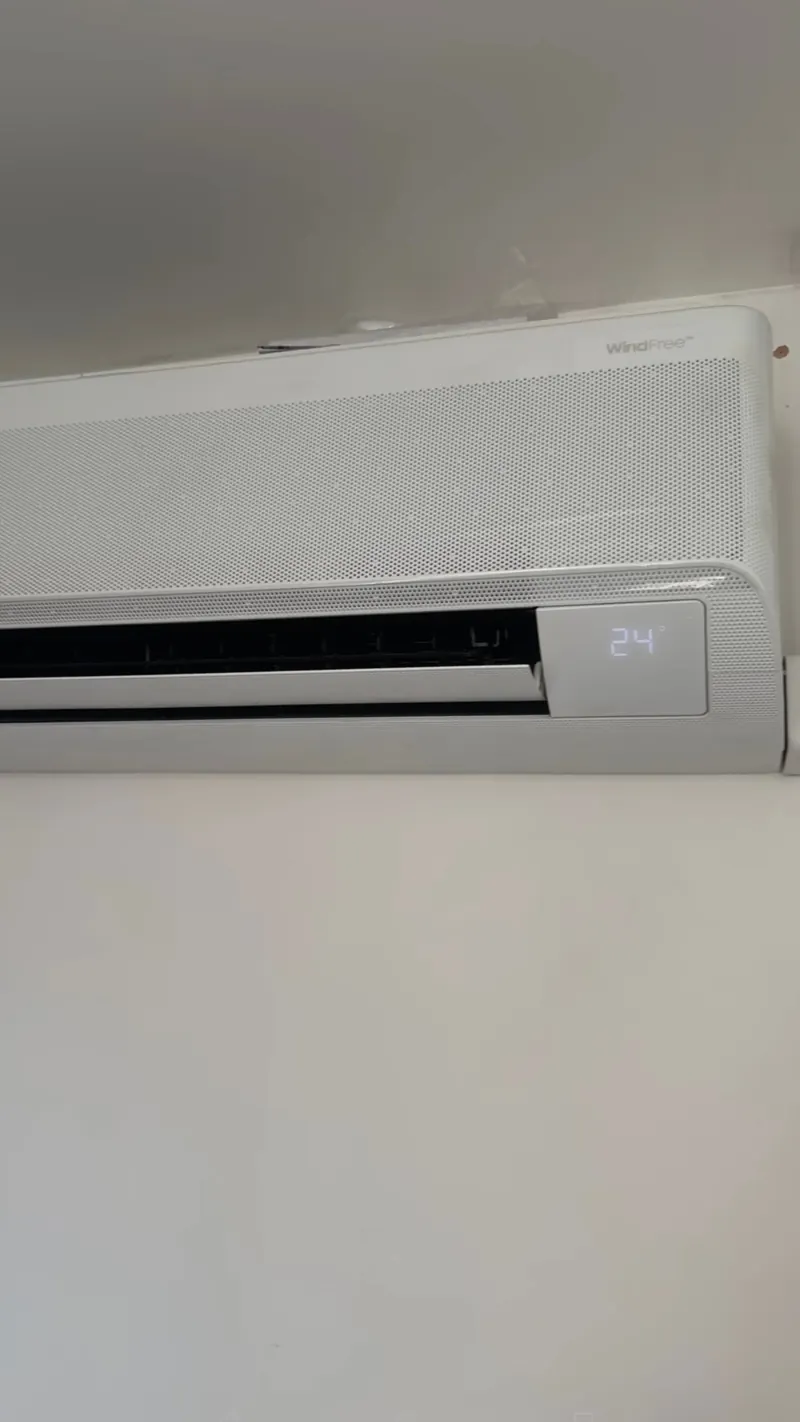 Air conditioning
Wall unit, commissioned
Set to 24 degrees and handed over
Air conditioning
Wall unit, commissioned
Set to 24 degrees and handed over
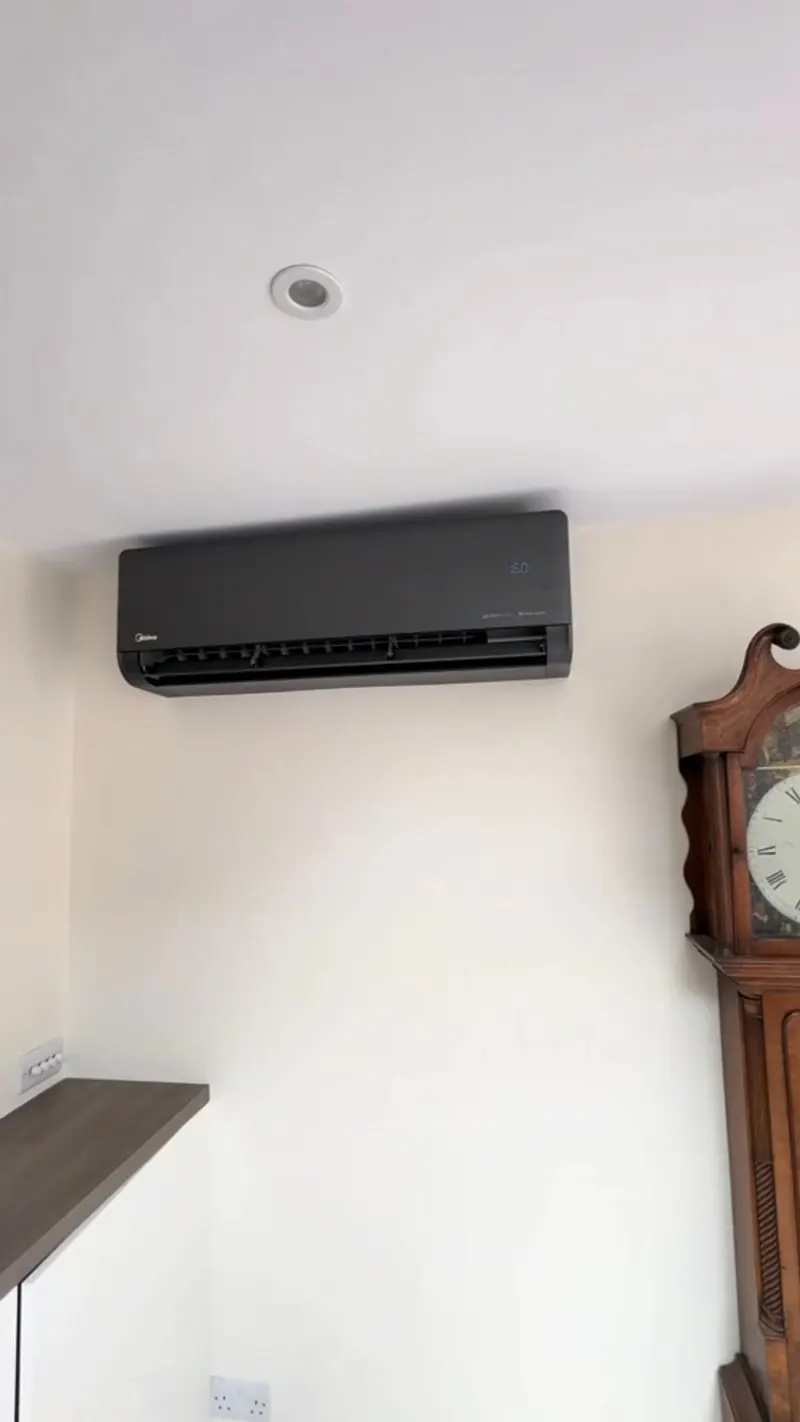 Air conditioning
Black wall unit in a sitting room
Chosen to sit with the room, not against it
Air conditioning
Black wall unit in a sitting room
Chosen to sit with the room, not against it
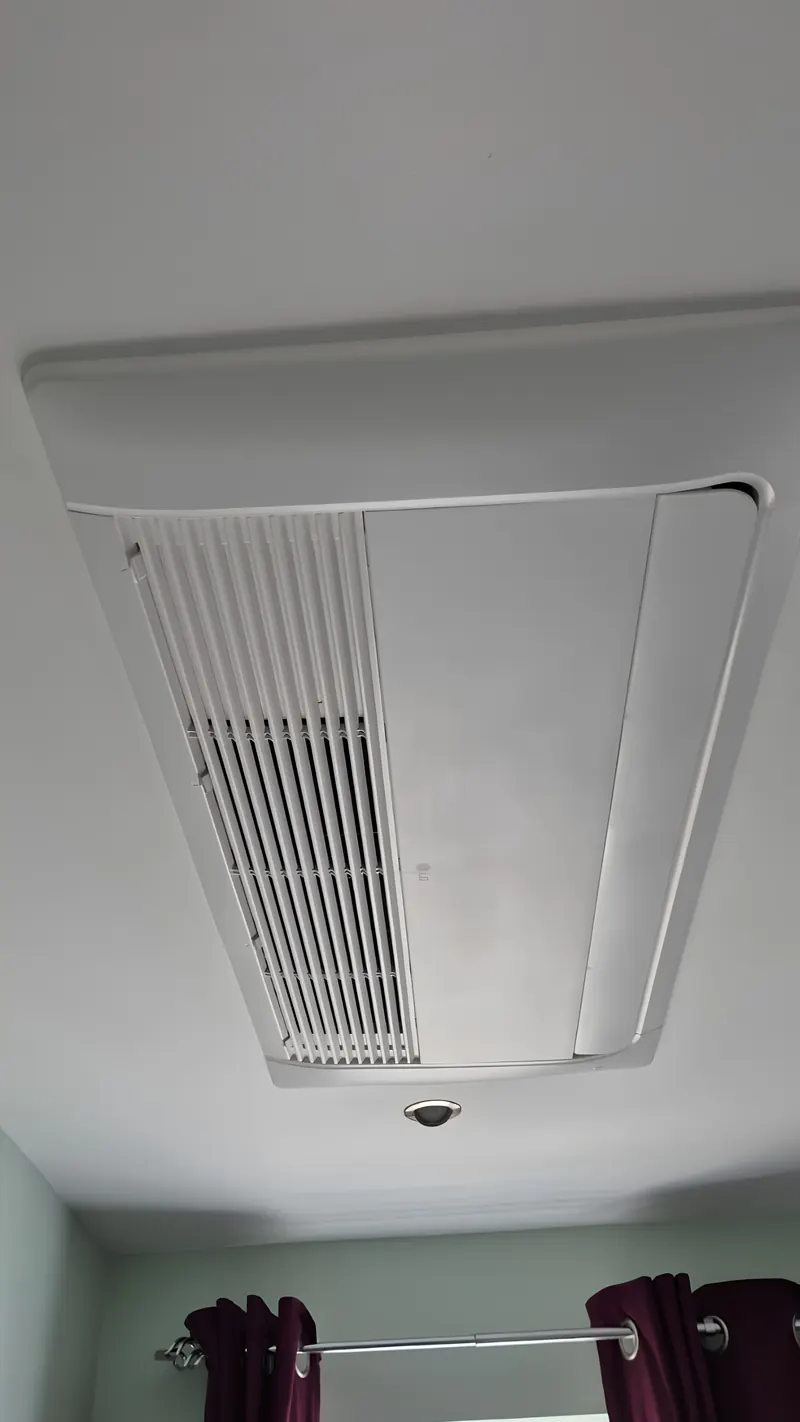 Air conditioning
Ceiling cassette
Recessed flush into the ceiling
Air conditioning
Ceiling cassette
Recessed flush into the ceiling
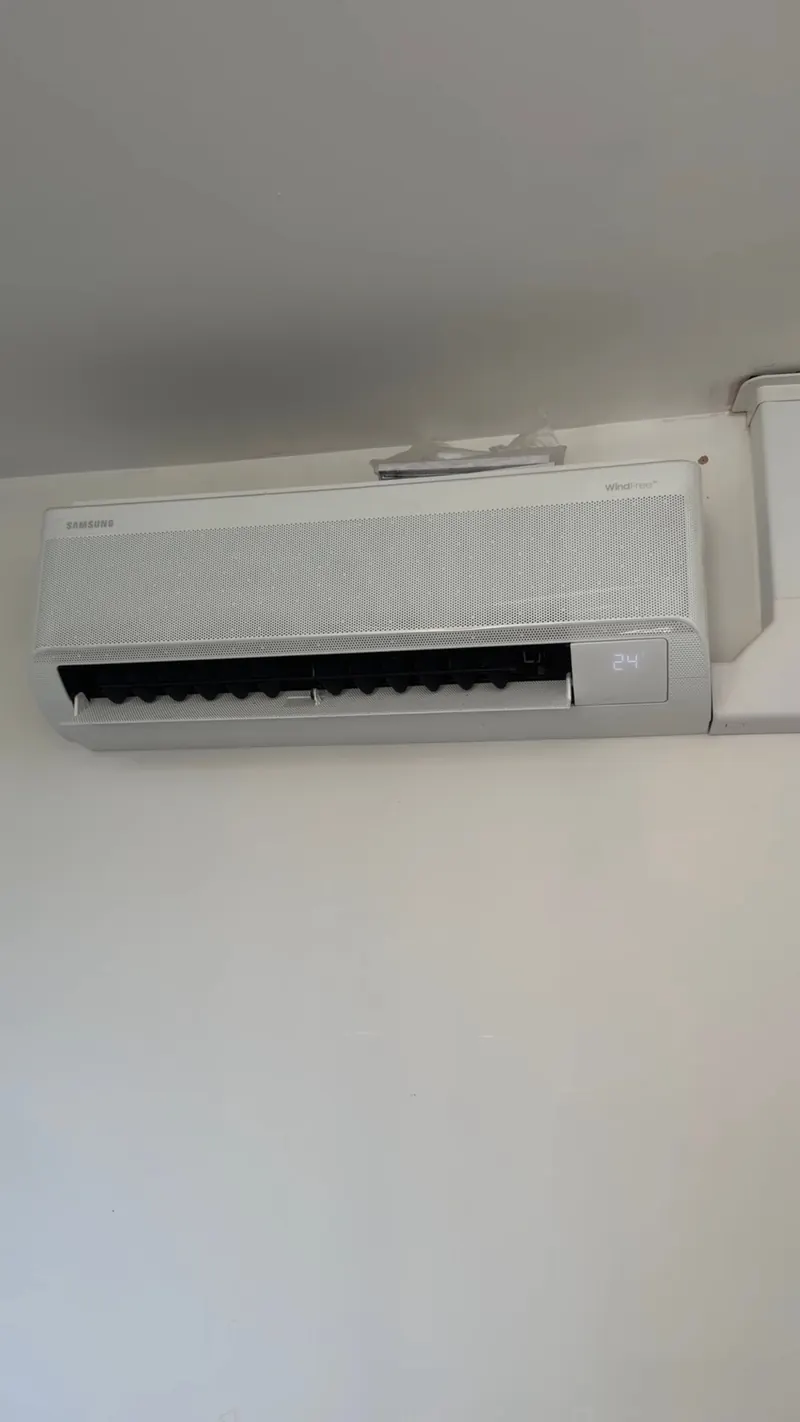 Air conditioning
Samsung Wind-Free
Cooling without a draught on the room
Air conditioning
Samsung Wind-Free
Cooling without a draught on the room
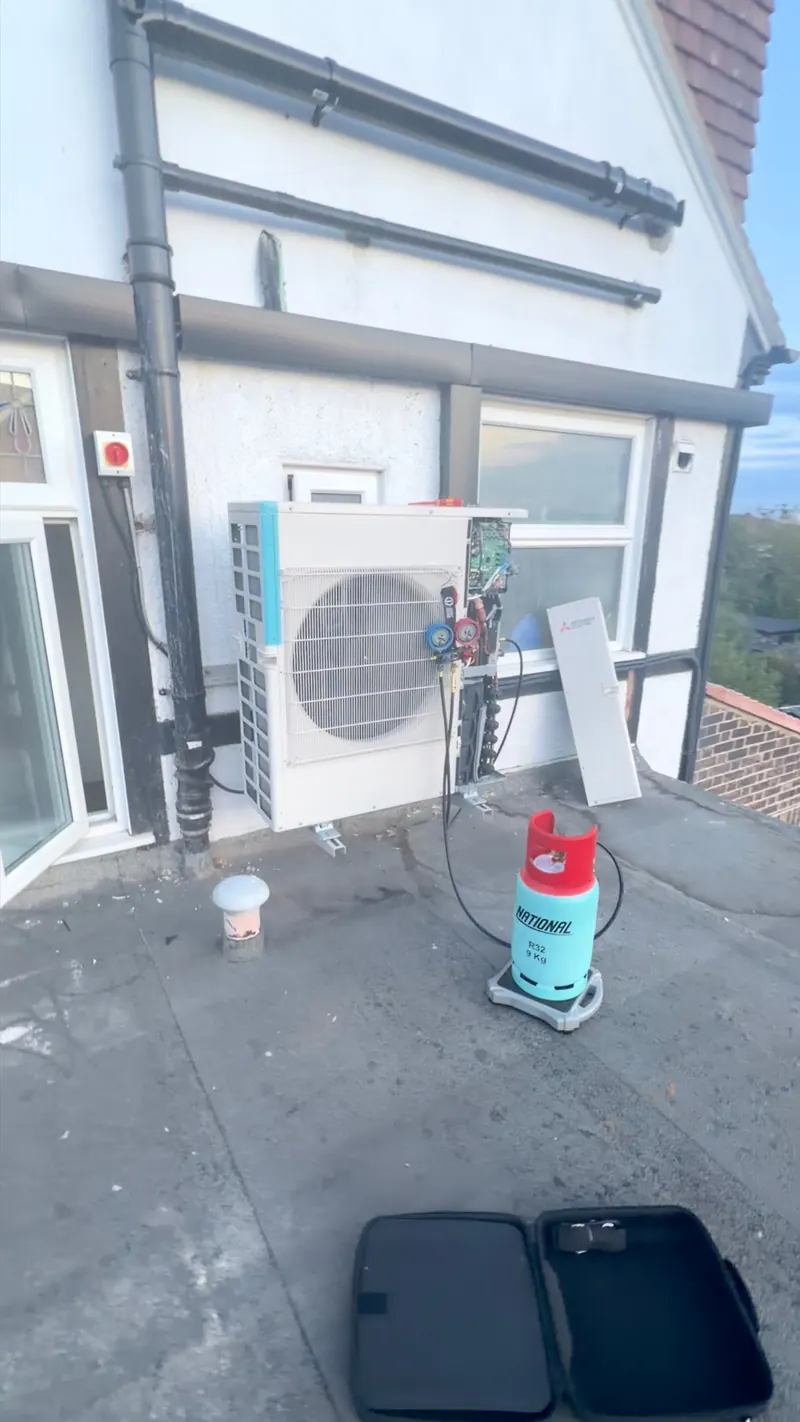 Air conditioning
Rooftop commissioning
Pressure tested and charged on gauges
Air conditioning
Rooftop commissioning
Pressure tested and charged on gauges
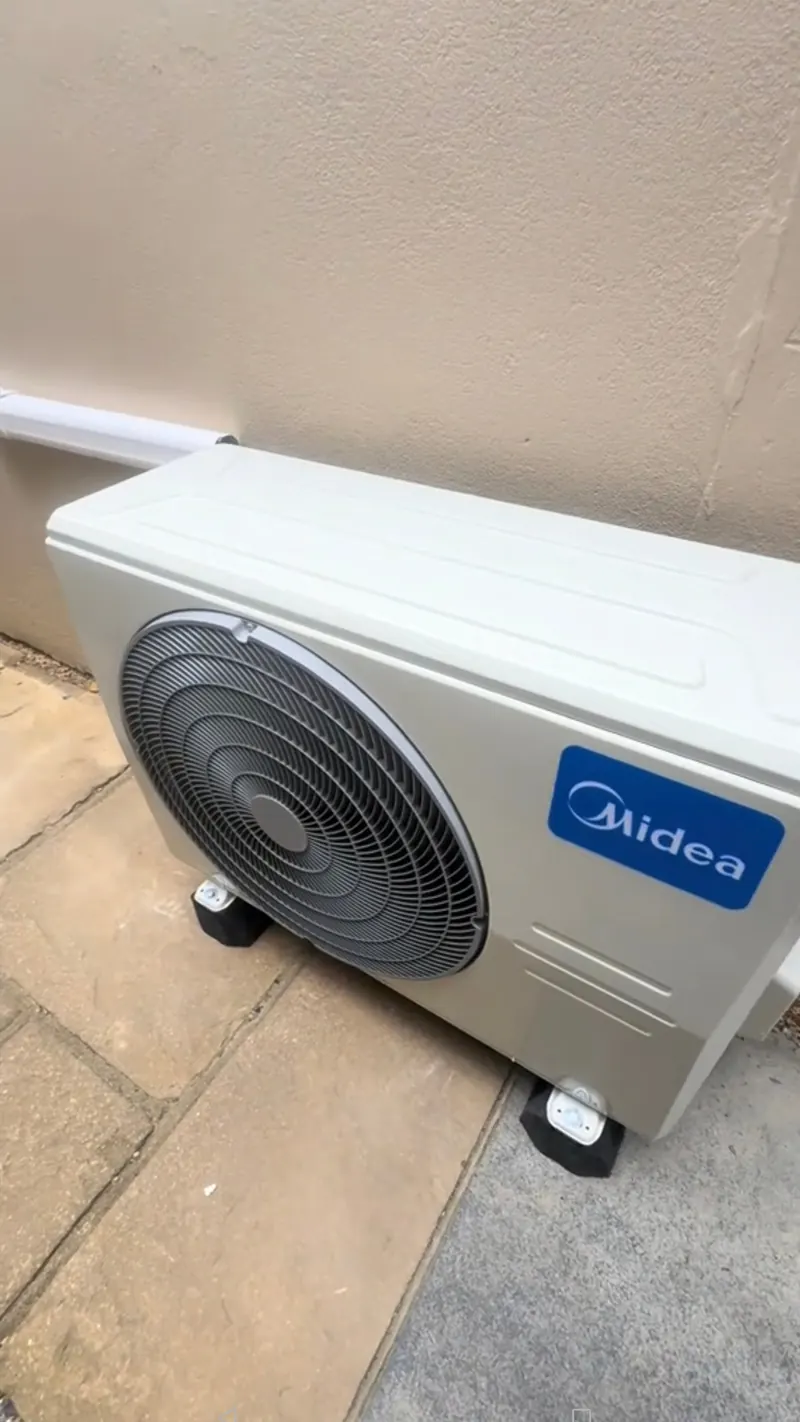 Air conditioning
Outdoor unit at ground level
On paving beside the house, easy to service
Air conditioning
Outdoor unit at ground level
On paving beside the house, easy to service
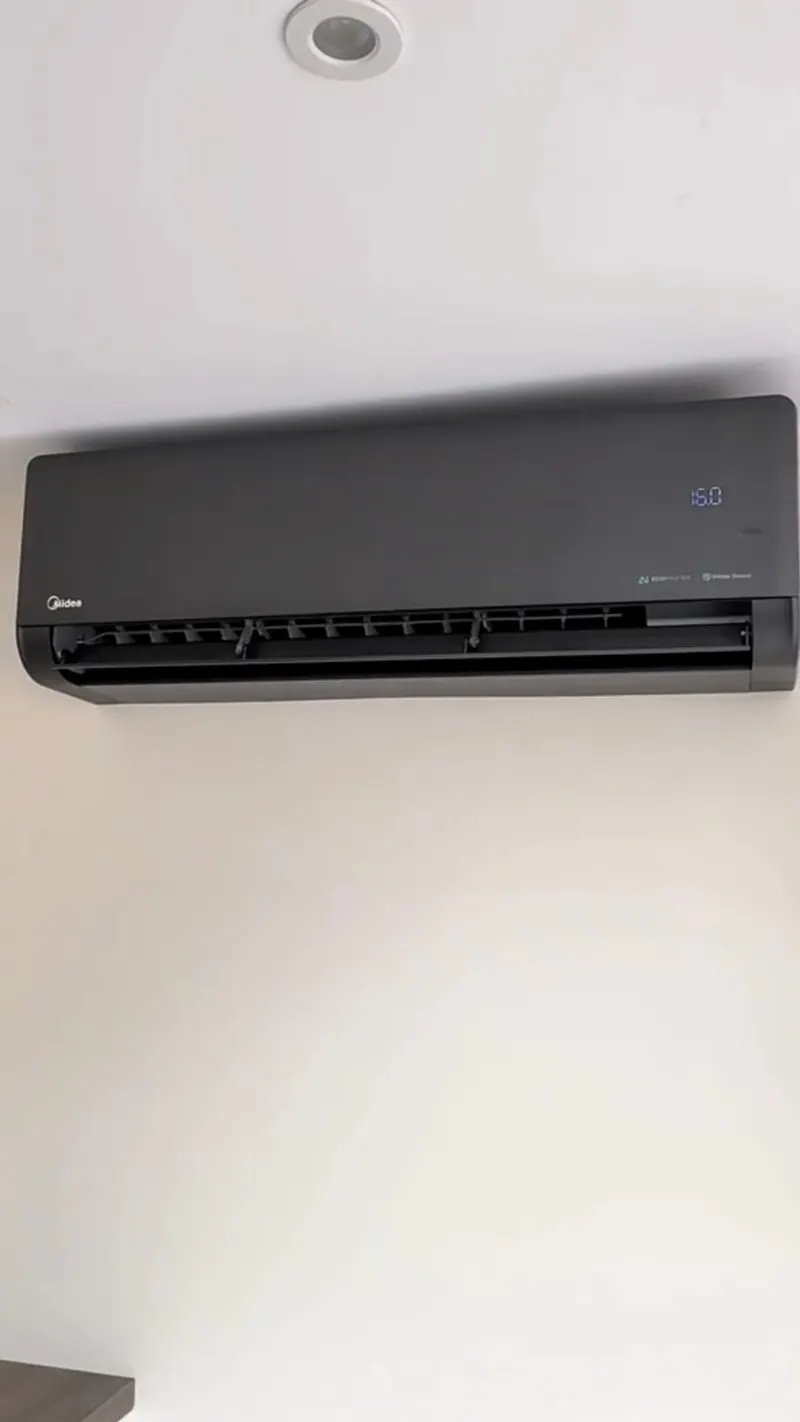 Air conditioning
Black wall unit, running
Quiet enough for a bedroom
Air conditioning
Black wall unit, running
Quiet enough for a bedroom
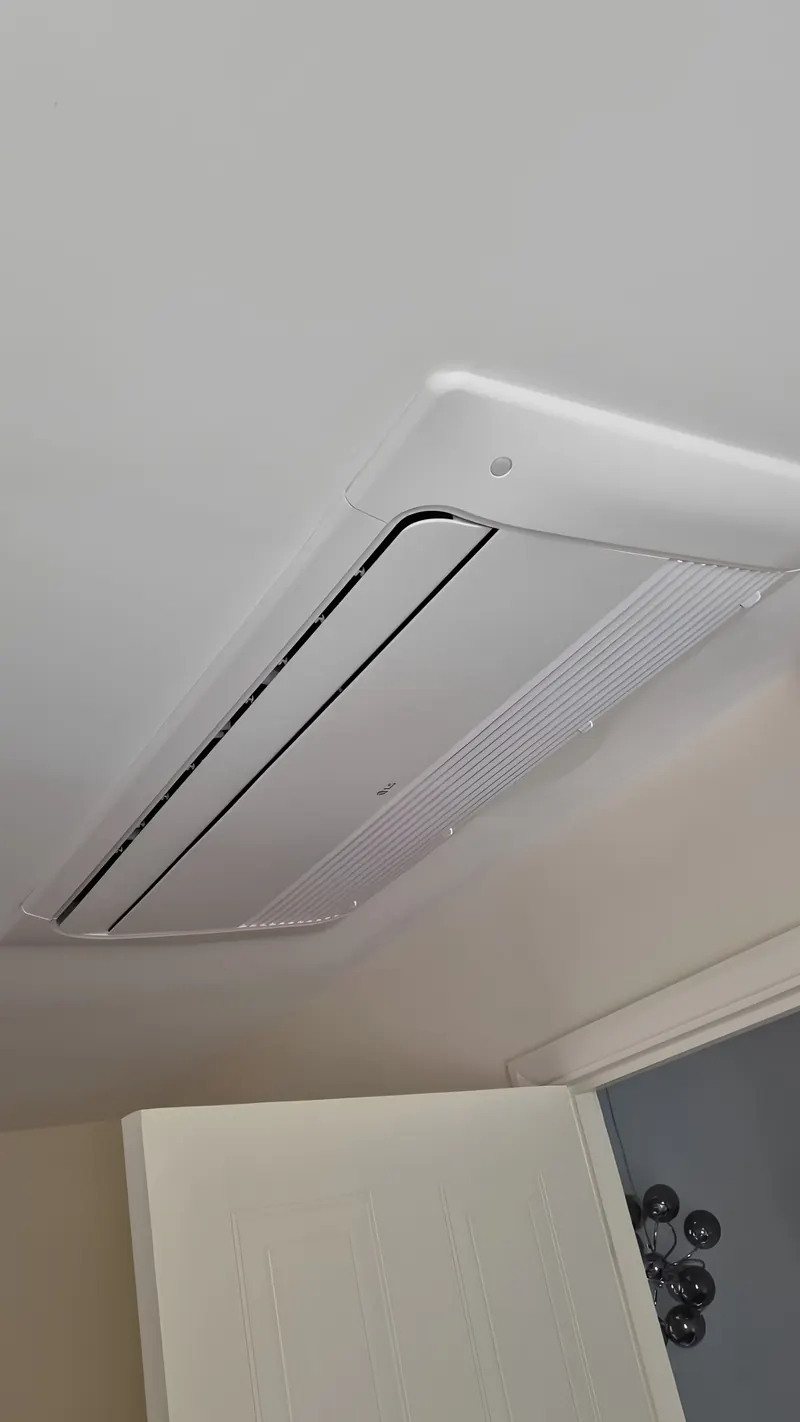 Air conditioning
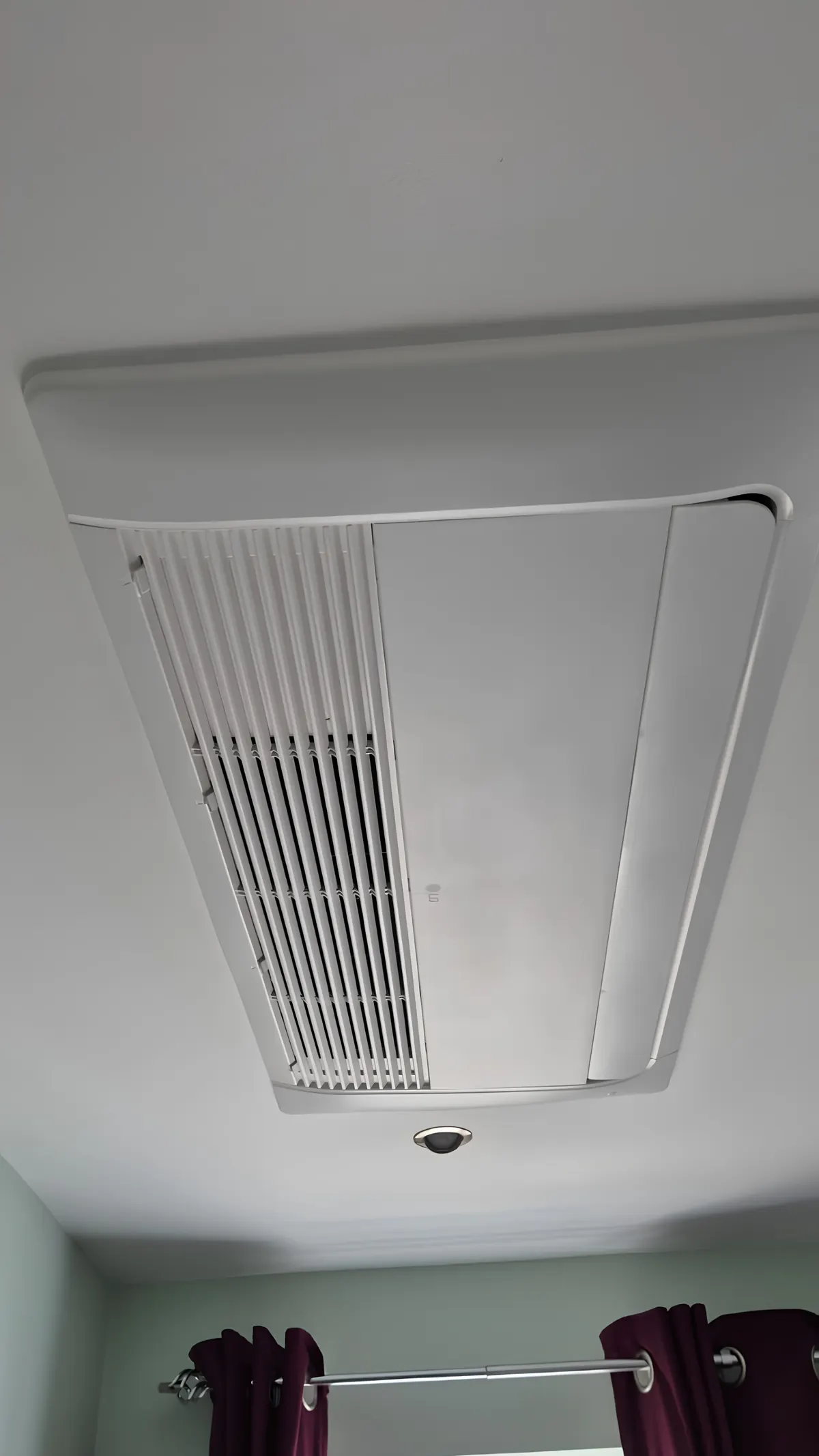
One-way ceiling cassette
Only the grille shows
Air conditioning
One-way ceiling cassette
Only the grille shows
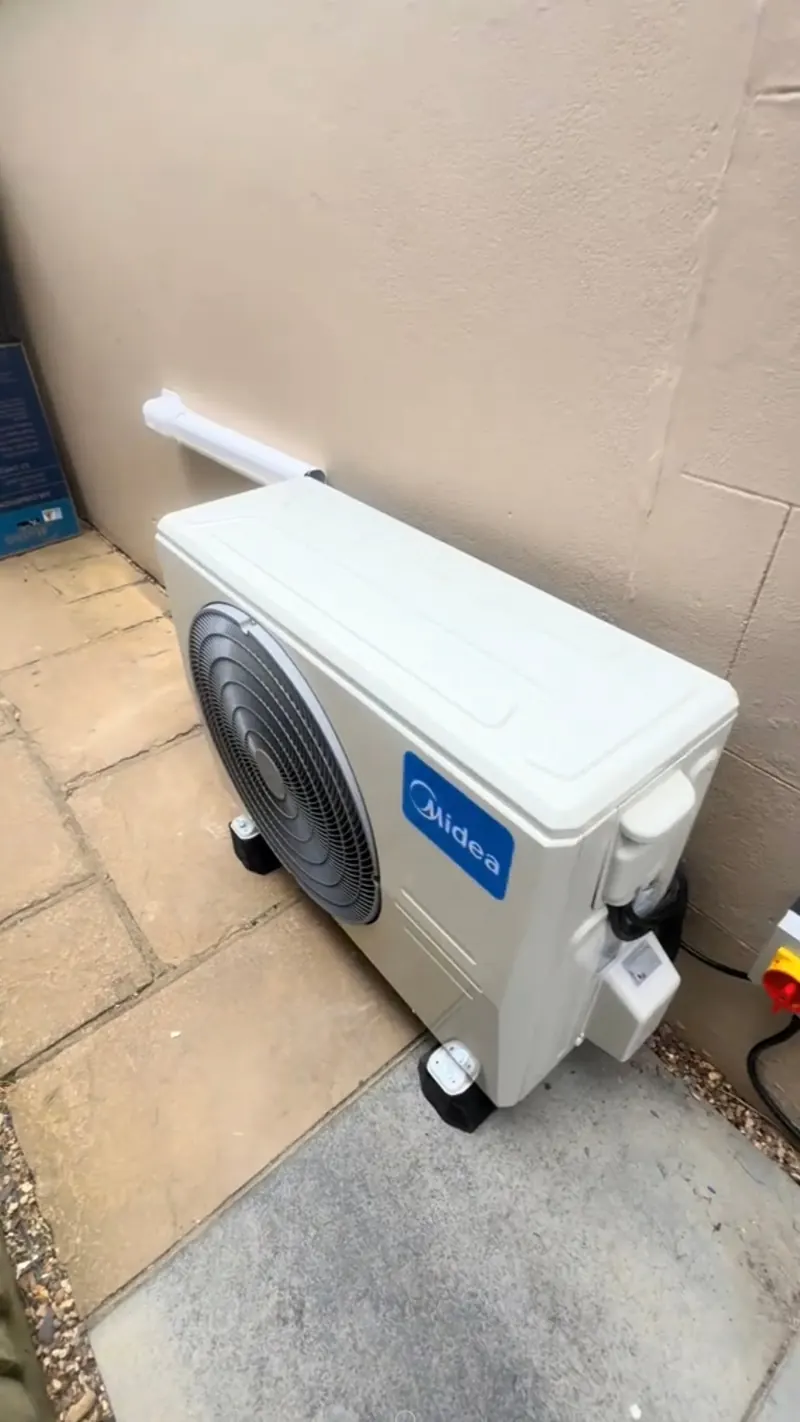 Air conditioning
Outdoor unit on paving
Against render, clear of the boundary
Air conditioning
Outdoor unit on paving
Against render, clear of the boundary
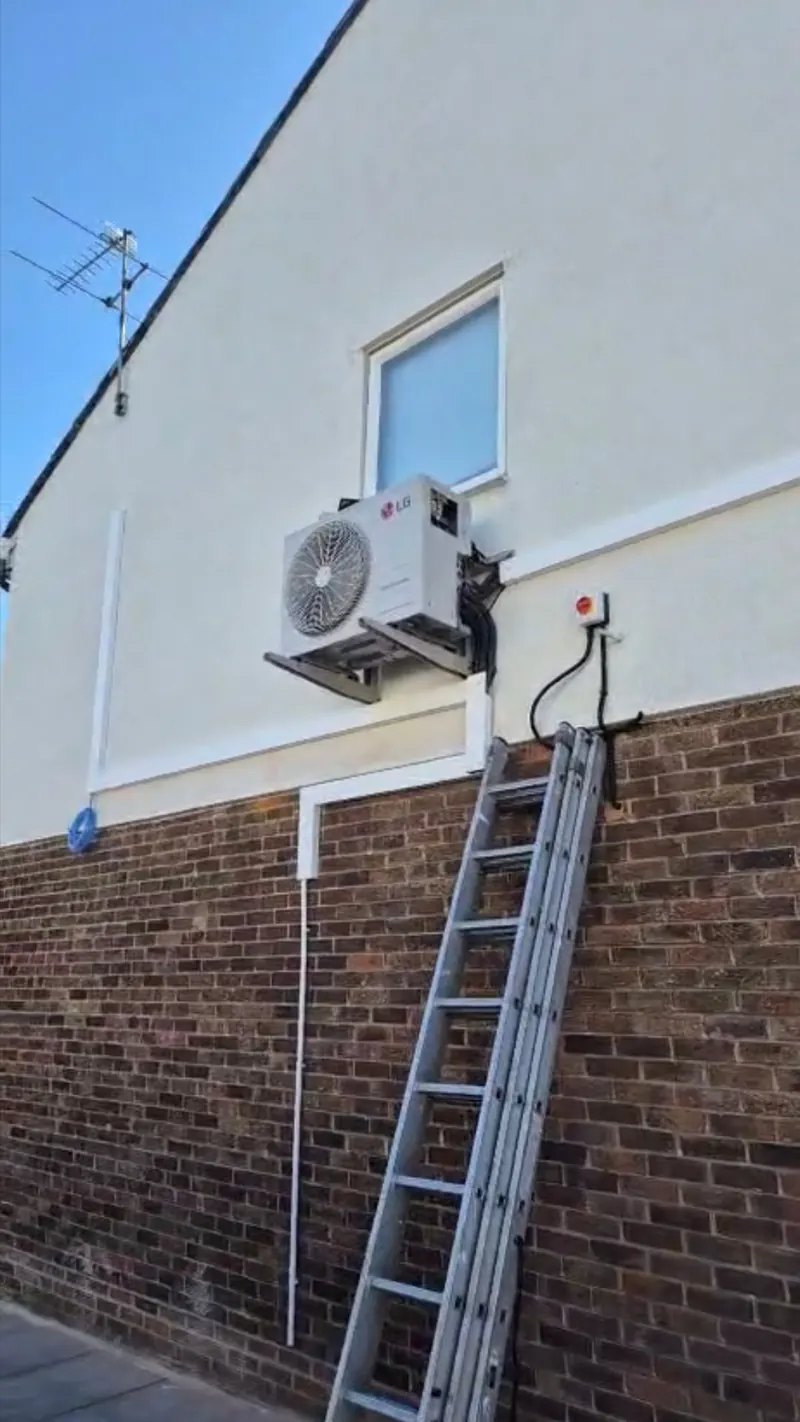 Air conditioning
Condenser high on a wall
On brackets where the ground was not an option
Air conditioning
Condenser high on a wall
On brackets where the ground was not an option
Every hairdryer in a salon adds around 2kW of heat, so a six-station salon can be putting out more heat from dryers alone than a small office does in total. Salon systems are sized from the station count, and typically cost 4,300 to 11,300 pounds.
The second half of the job is air changes, because temperature control does nothing about the smell of bleach and it is the smell that clients mention in reviews.
Read the full guide: 6 sections, about 3 minutes
What a salon puts into the air
| Source | What it contributes | Why it matters |
|---|---|---|
| Hairdryers | Roughly 2kW each while running, aimed at the room | Six stations busy at once is a real 12kW peak |
| Styling and processing heat | Straighteners, tongs, hoods and processors | Smaller individually, continuous collectively |
| Clients | Sitting still, so they feel a draught much more than staff do | Staff are moving and warm. Clients are not, and they are the ones paying |
| Chemical smell | Bleach, ammonia, acetone from nails | A cooling system alone does not remove it. Air changes do |
| Backwash humidity | Steam and wet towels | Adds latent load in a corner that often has no unit |
Cooling and ventilation are two different jobs
This is the point that most salon quotes get wrong. A split air conditioning system recirculates: it takes air from the room, cools it, and puts it back. It does not bring in fresh air and it does not take stale air out.
So a salon with excellent cooling and no ventilation is a cool room that still smells of bleach, and the smell is what clients talk about. The answer is a small mechanical ventilation supply and extract alongside the cooling, sized on air changes rather than on temperature.
It is not expensive, it is very often left out of the cheapest quote, and it is the difference between a salon that feels professional and one that does not.
Where the units go, and why the client chair decides it
A client in a gown, sitting still with wet hair, is the most draught-sensitive person in any commercial building we work in. Air discharged onto a styling chair produces a complaint at a temperature that the stylist standing next to them finds pleasant.
So the indoor units follow the chairs. Discharge along the mirror wall and down the circulation route, never straight down onto a station. Where the layout might change, four-way cassettes with closable vanes leave room to adjust.
The backwash area usually needs its own thought. It is humid, it is often at the back with the least air movement, and it is where a client is lying down and least able to move away from a draught.
What it costs to run, and why it is less than owners expect
A salon runs its cooling hardest on the days it earns most, which is the useful part. A modern inverter system serving a six-station salon draws a fraction of what the dryers do, and the same equipment heats the space in winter at a cost well below electric panel heating.
Because a salon is a daytime business with a summer-afternoon peak, it is also one of the best fits there is for solar, which generates most at exactly the hours the cooling load is highest. There is more on that on the <a href="../solar-panel-installation-london/">solar page</a>.
What a salon system costs
Quoted from a heat load calculation based on the station count and the layout. The indicative figures below use the same model as the rest of the site: the base for the number of indoor units plus the cassette uplift.
| Scope | Usual system | Indicative price |
|---|---|---|
| Small salon, 2 to 3 stations | 1 to 2 cassettes | £2,900 to £7,600 |
| Salon, 4 to 8 stations | 2 to 3 cassettes, zoned | £5,300 to £11,300 |
| Ventilation supply and extract | Sized on air changes, fitted alongside | Quoted at survey |
| Treatment room | Its own small unit, quiet by design | £2,400 to £3,200 |
| Maintenance, per unit | Basic contract, one visit a year | From £95 plus VAT |
Every figure on this site is an estimate built from the quotations we issued in 2026 and our own installation experience. It is not a quotation. The price you are given after the free survey is the price you pay.
Other commercial work
Server and comms rooms
A comms room is the one space in a building where the cooling has to work at three in the morning in February.
Server and comms roomsGyms and studios
A gym is the only premises we work in where the customers are deliberately generating as much heat and moisture as they can.
Gyms and studiosMaintenance contracts
A maintenance contract is not really about the machine.
Maintenance contractsAll commercial work
How commercial jobs are priced, the F-Gas and TM44 duties, and maintenance contracts.
Commercial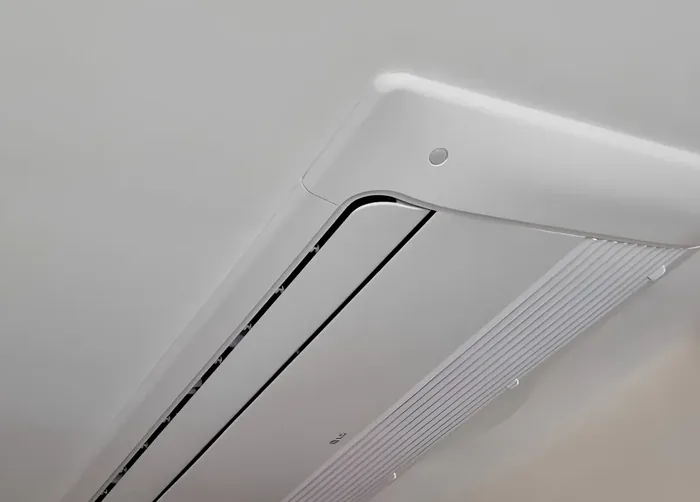
Your estimate
£2,400to£3,200
Supplied, fitted, commissioned and certificated. Includes VAT.
Send this on WhatsAppPrice it for salons
Commercial work is priced on the number of indoor units and what kind they are, the same as anywhere else. The heat load calculation at the survey is what turns this into one number.
Last step: where do we send your written price?
Every figure on this site is an estimate built from the quotations we issued in 2026 and our own installation experience. It is not a quotation. The price you are given after the free survey is the price you pay.
Salons: common questions
Will air conditioning get rid of the smell of bleach?
Not on its own. A split system recirculates the air in the room rather than replacing it, so it will make the room cooler and leave the smell exactly where it was.
Removing the smell is ventilation: a supply of fresh air and an extract, sized on air changes. It is a small addition to the cost of a salon installation and it is the part clients actually notice.
How many units does a salon need?
It follows the stations rather than the floor area, because the dryers are the load. As a rule of thumb a salon up to three stations is one or two indoor units, and four to eight stations is two or three, zoned so the backwash and the styling floor can differ.
We do the calculation properly at survey, because a salon that is busy at 11am on a Saturday and empty at 3pm on a Tuesday has a load profile worth designing for.
Our clients complain about draughts. Can that be fixed?
Usually, and often without new equipment. Changing the vane angles, closing one direction on a four-way cassette, or moving a unit a metre solves most of it.
Where a unit is genuinely in the wrong place over a chair, relocating it is a job of hours rather than a new system. It is worth a survey before assuming the system is wrong.
Can you fit it without closing the salon?
Yes. Most salon installations we do happen on the closed day or overnight, and the genuinely noisy work is a few hours of core drilling. The out-of-hours premium is shown as its own line on the quote.
Free survey and heat load calculation
Free on jobs over 5,000 pounds. You get a design drawing, a fixed price split into plant, installation, electrics and builders work, and a programme with the out-of-hours windows agreed before anyone starts.
Monday to Friday 9am to 7pm, Saturday 10am to 3pm, Sunday closed
Page updated