Shop and showroom
air conditioning
A retail unit has a problem no office has: the door is open, deliberately, because a shut door costs footfall. Everything about sizing a shop system follows from that one decision.
- Free survey and heat load calculation on jobs over 5,000 pounds
- Quote split into plant, install, electrics and out-of-hours
- Out of hours fitting where the business cannot close
Accredited, and fitting the brands you know










Air conditioning we have fitted
Our own jobs, photographed on site. Real rooms, real outdoor positions, nothing from a catalogue.
 Air conditioning
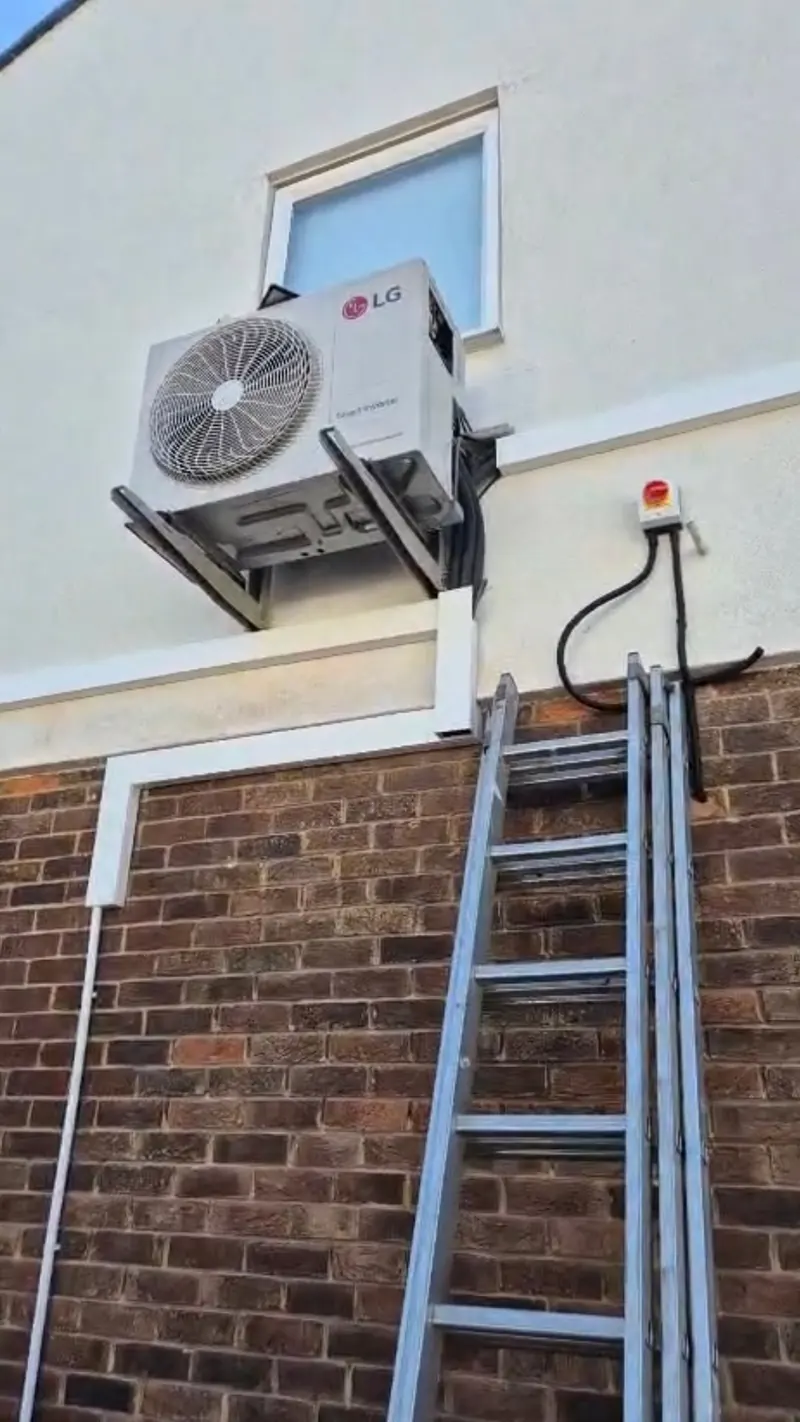
Outdoor unit on wall brackets
Above brick, isolator and cabling run tidy
Air conditioning
Outdoor unit on wall brackets
Above brick, isolator and cabling run tidy
 Air conditioning
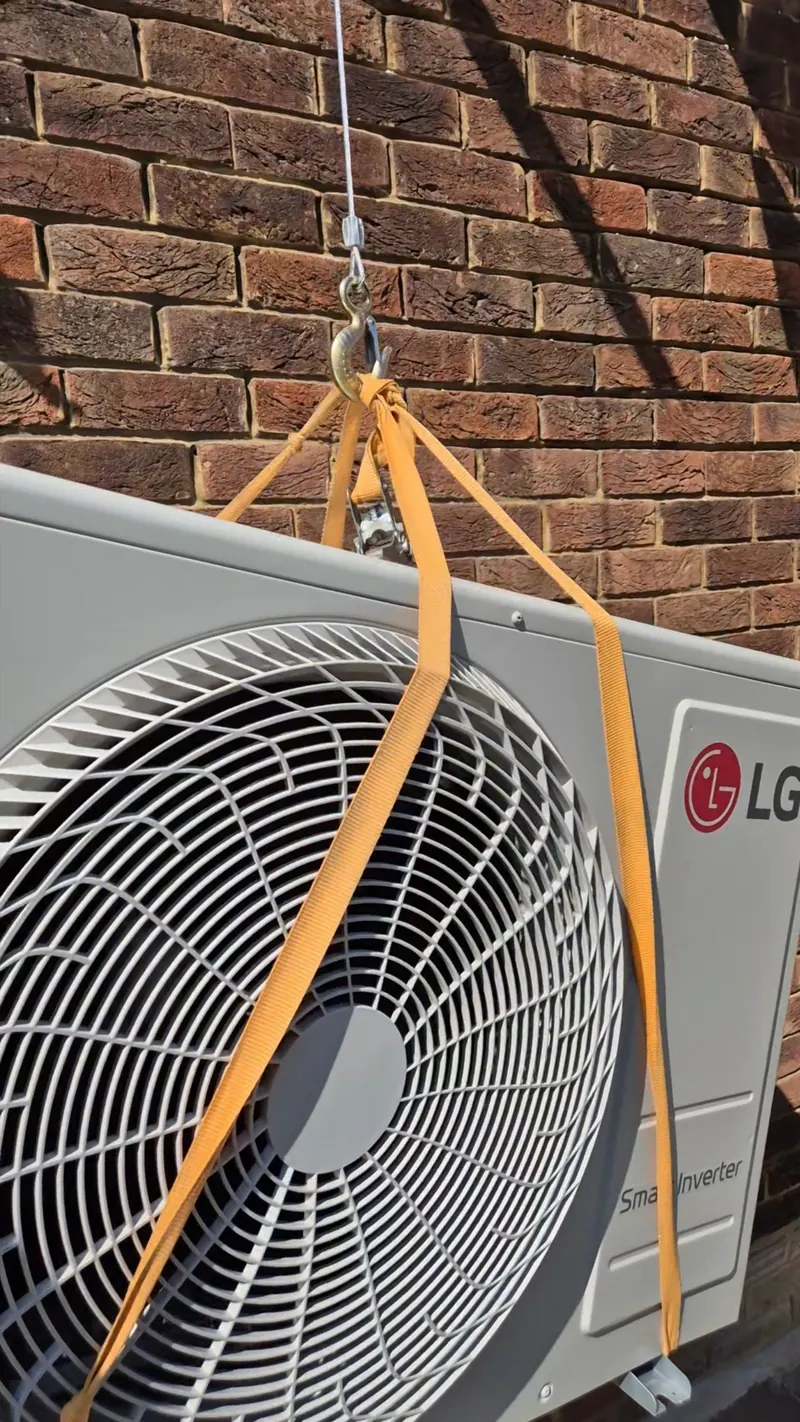
Condenser going up on straps
Lifted into a wall position, no scaffold
Air conditioning
Condenser going up on straps
Lifted into a wall position, no scaffold
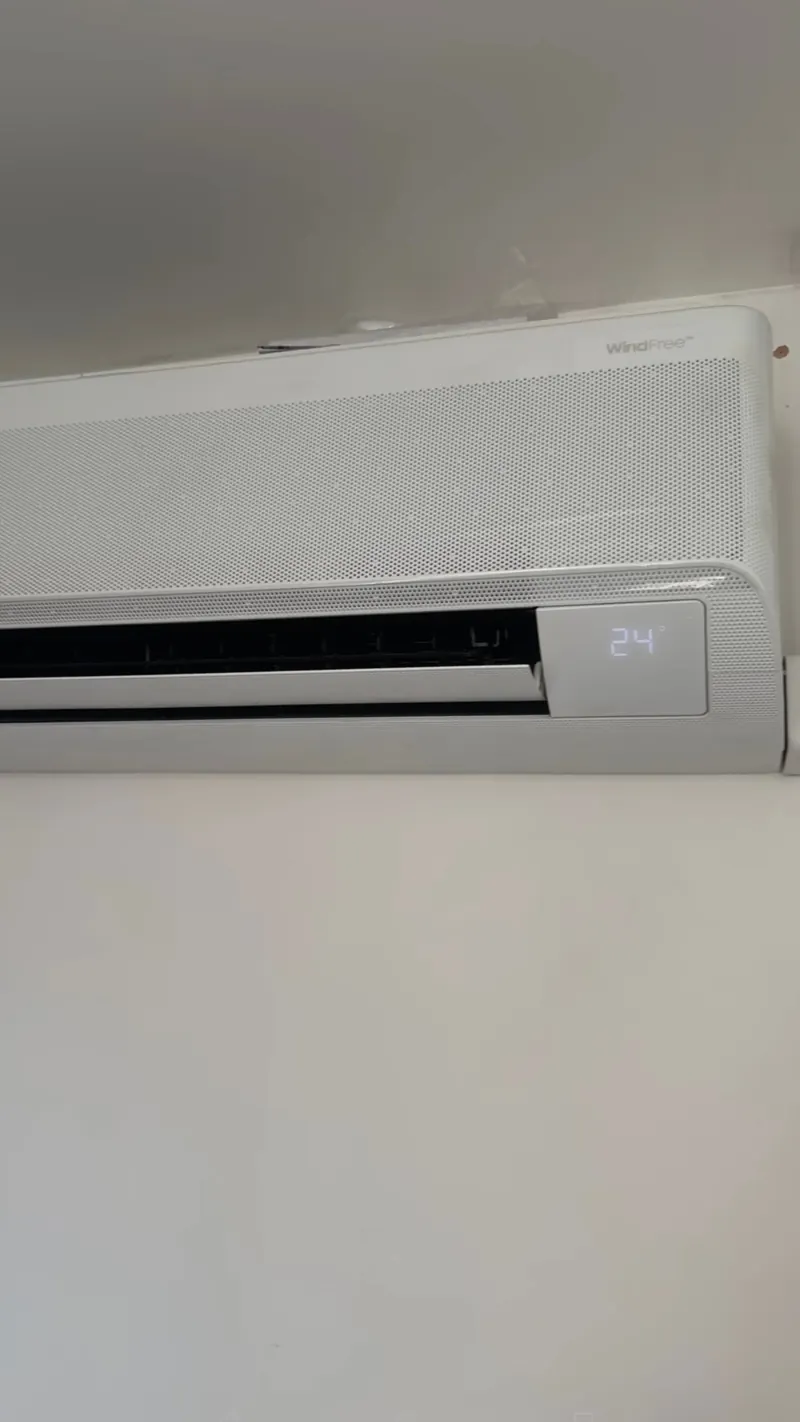 Air conditioning
Wall unit, commissioned
Set to 24 degrees and handed over
Air conditioning
Wall unit, commissioned
Set to 24 degrees and handed over
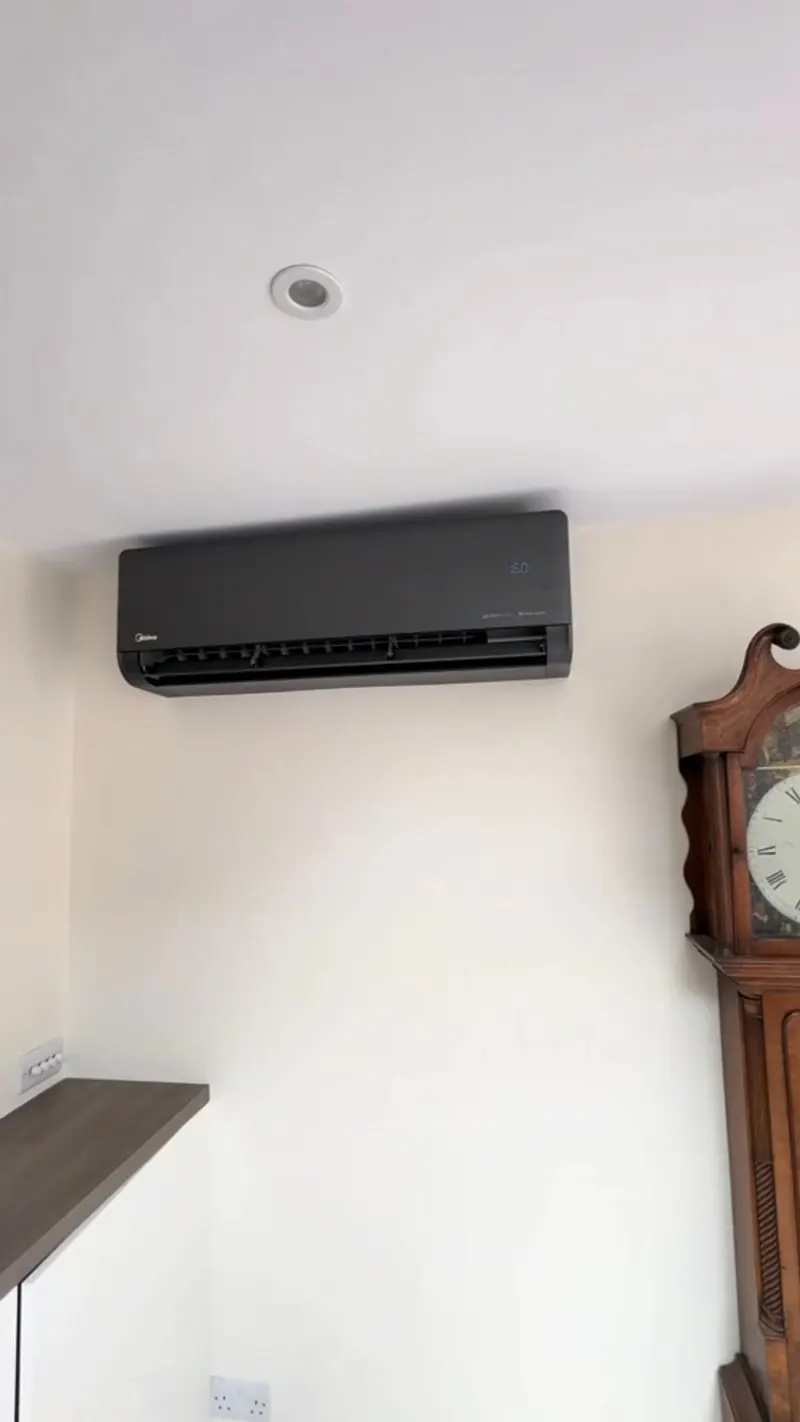 Air conditioning
Black wall unit in a sitting room
Chosen to sit with the room, not against it
Air conditioning
Black wall unit in a sitting room
Chosen to sit with the room, not against it
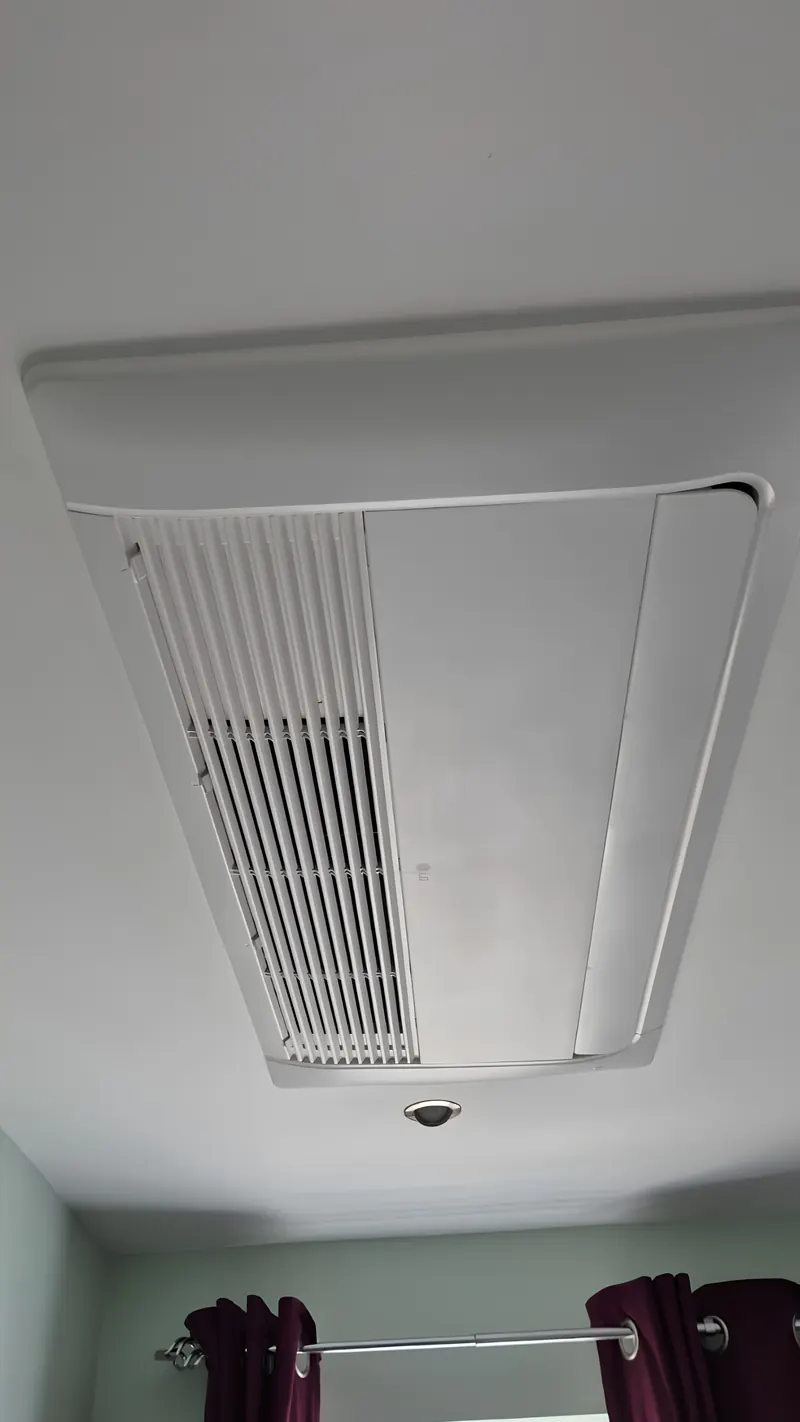 Air conditioning
Ceiling cassette
Recessed flush into the ceiling
Air conditioning
Ceiling cassette
Recessed flush into the ceiling
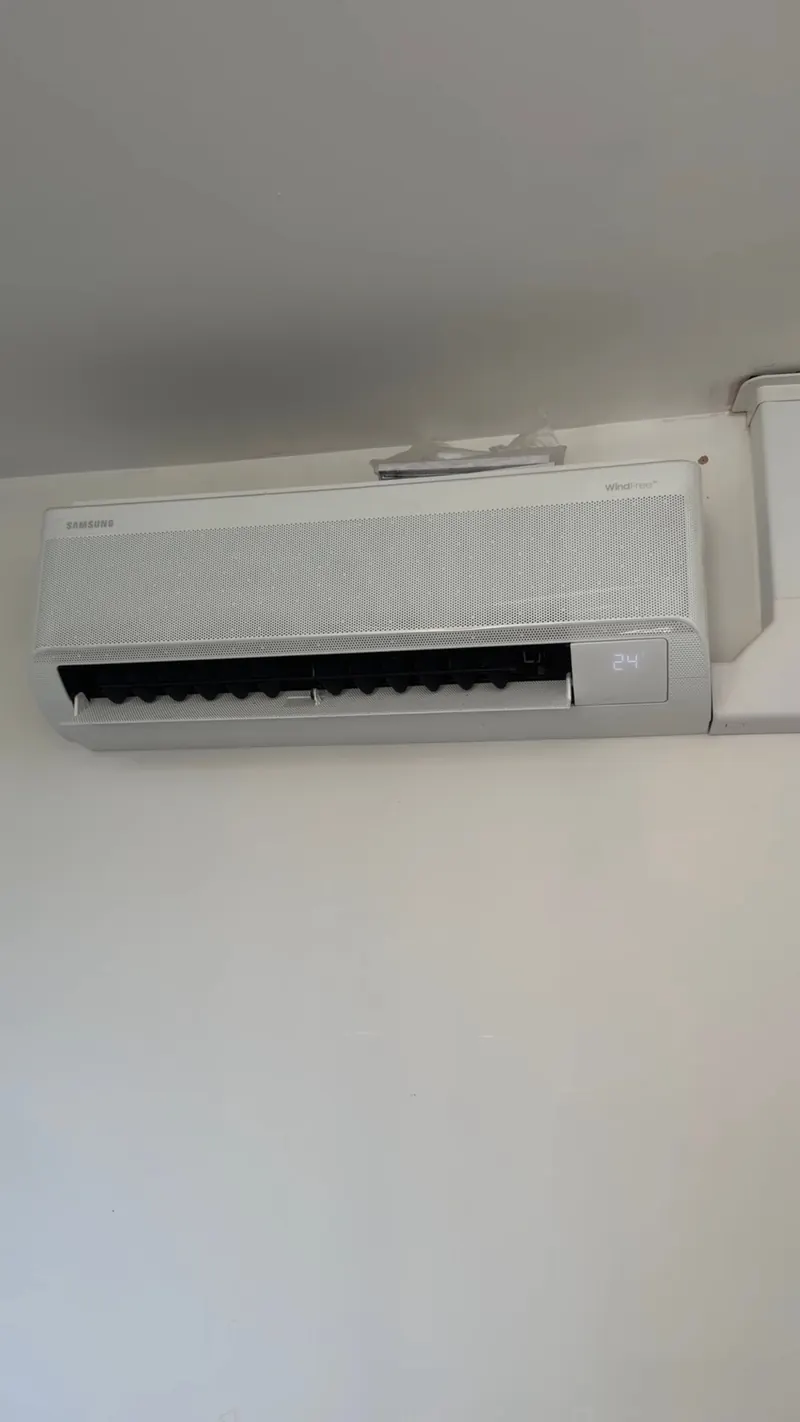 Air conditioning
Samsung Wind-Free
Cooling without a draught on the room
Air conditioning
Samsung Wind-Free
Cooling without a draught on the room
 Air conditioning
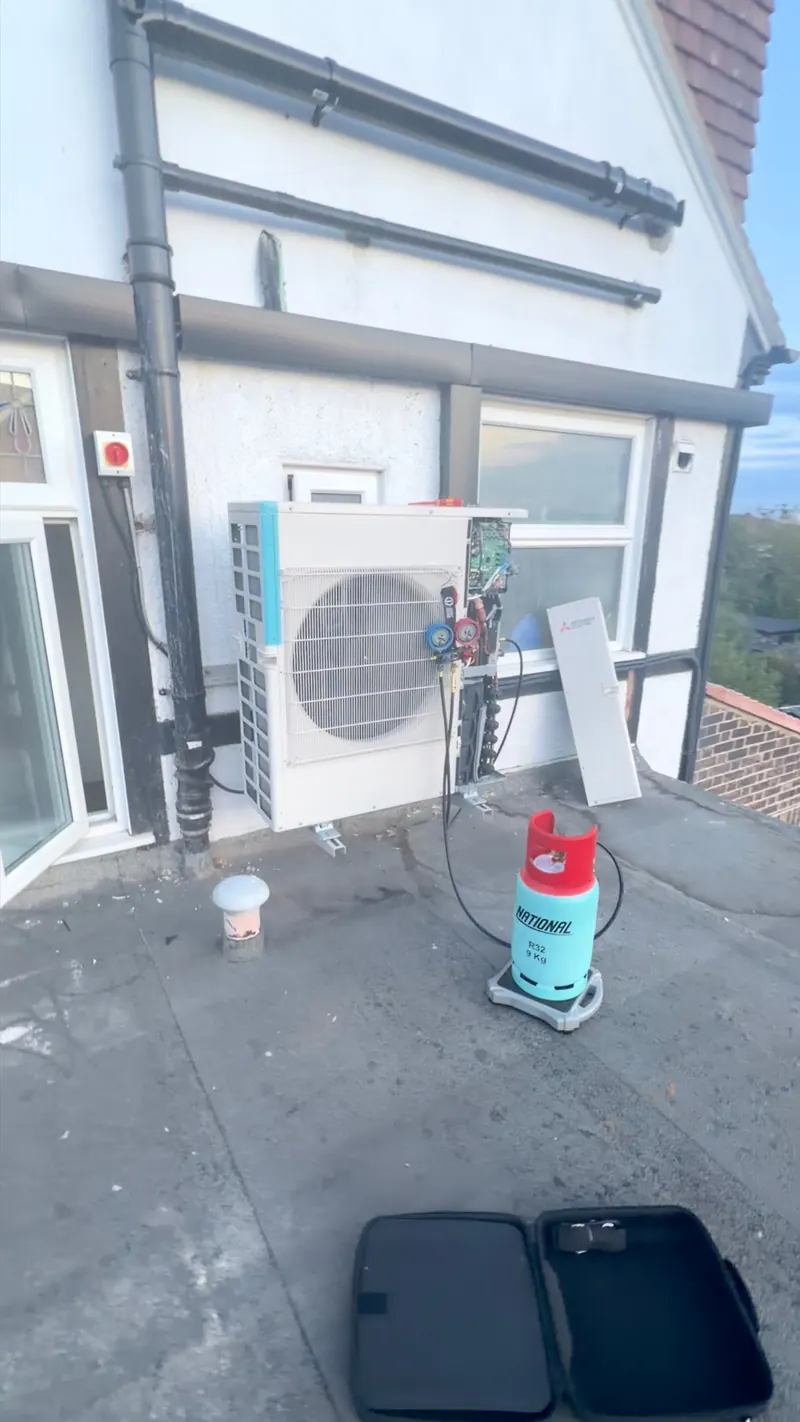
Rooftop commissioning
Pressure tested and charged on gauges
Air conditioning
Rooftop commissioning
Pressure tested and charged on gauges
 Air conditioning
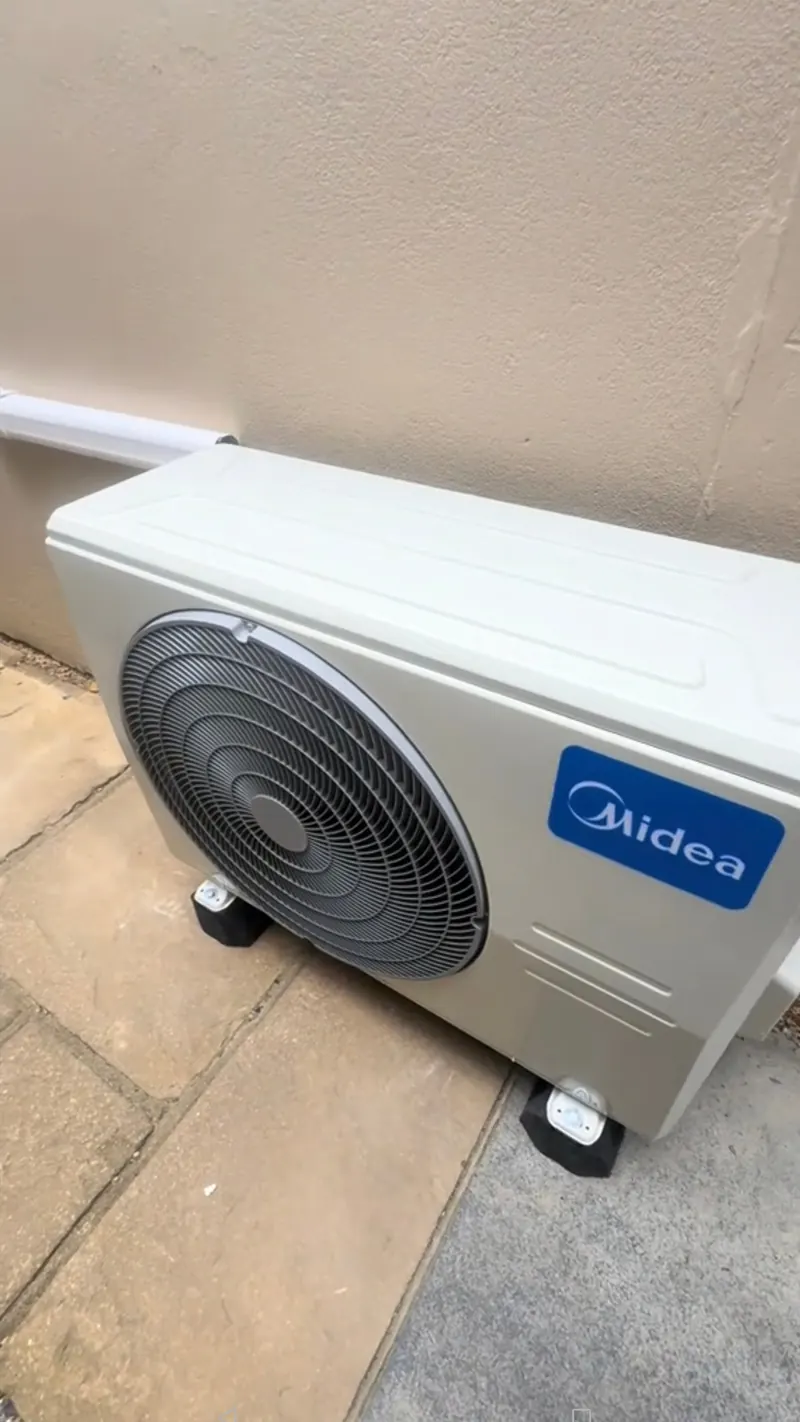
Outdoor unit at ground level
On paving beside the house, easy to service
Air conditioning
Outdoor unit at ground level
On paving beside the house, easy to service
 Air conditioning
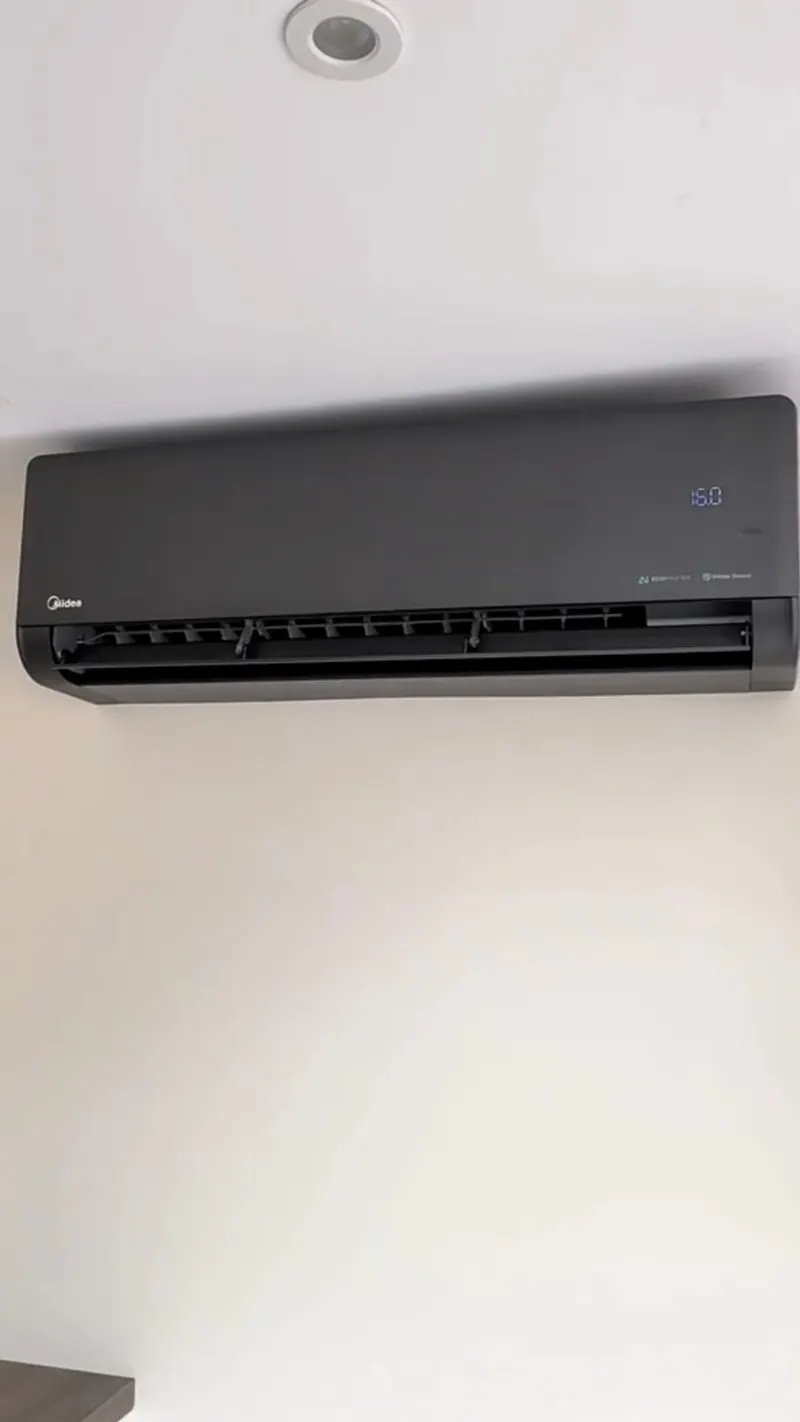
Black wall unit, running
Quiet enough for a bedroom
Air conditioning
Black wall unit, running
Quiet enough for a bedroom
 Air conditioning
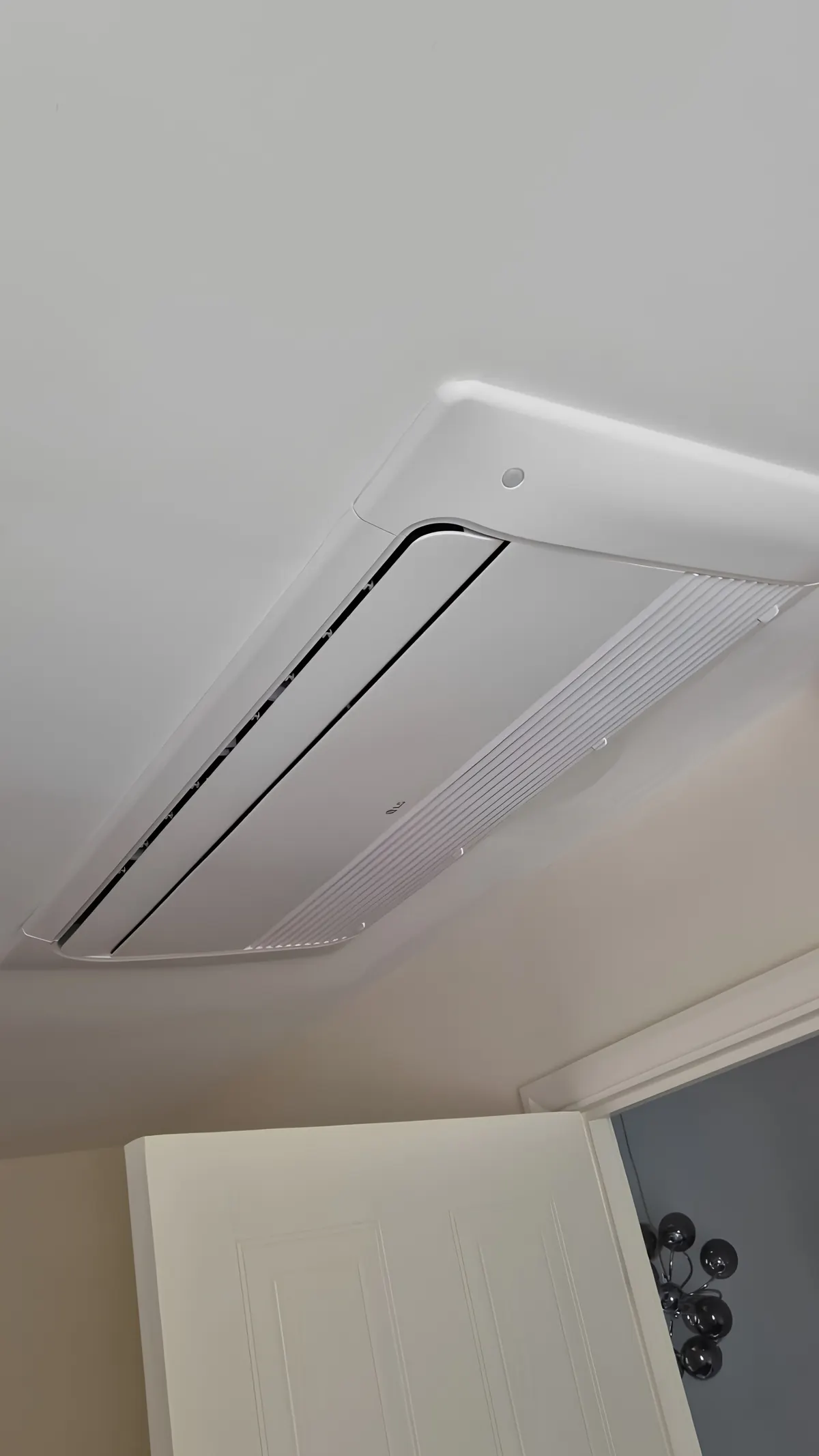
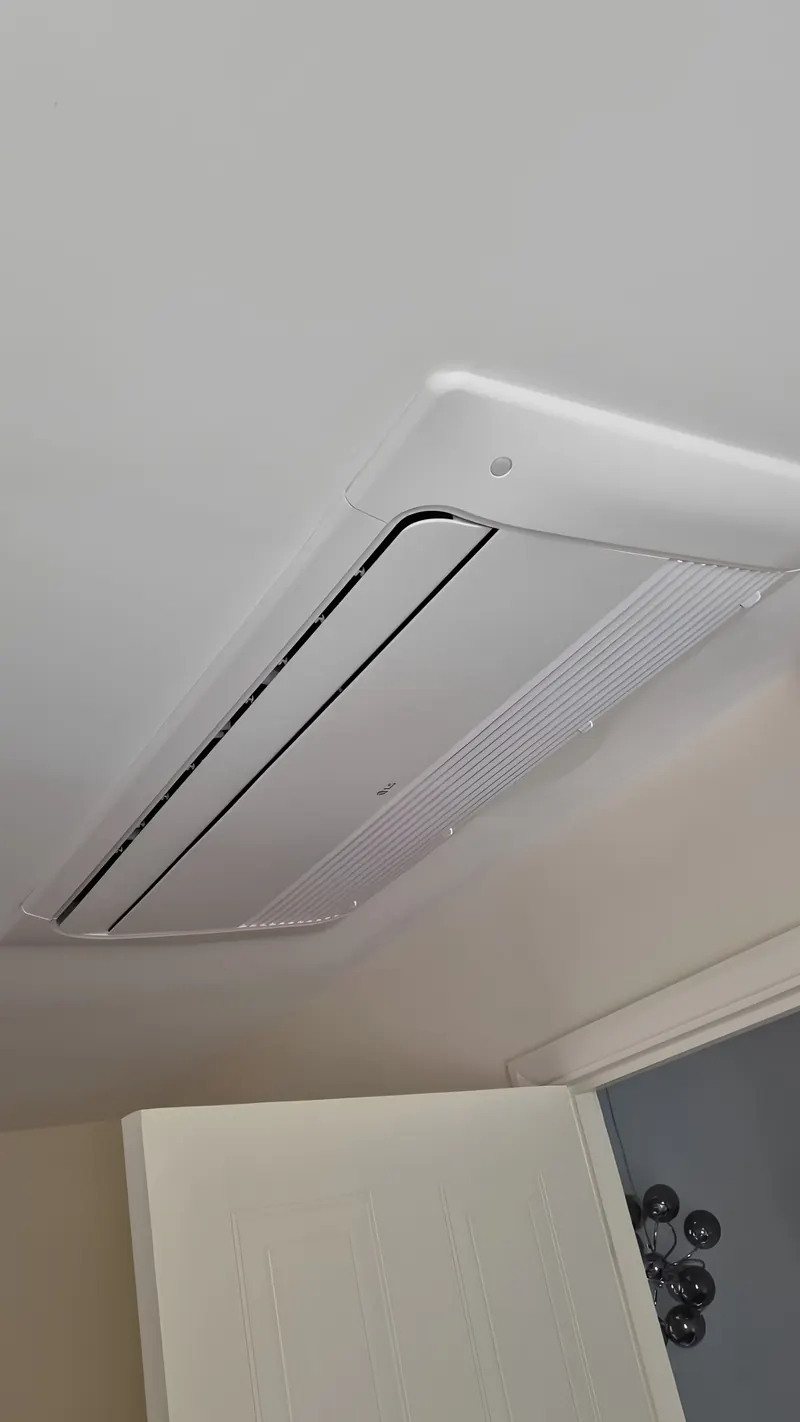
One-way ceiling cassette
Only the grille shows
Air conditioning
One-way ceiling cassette
Only the grille shows
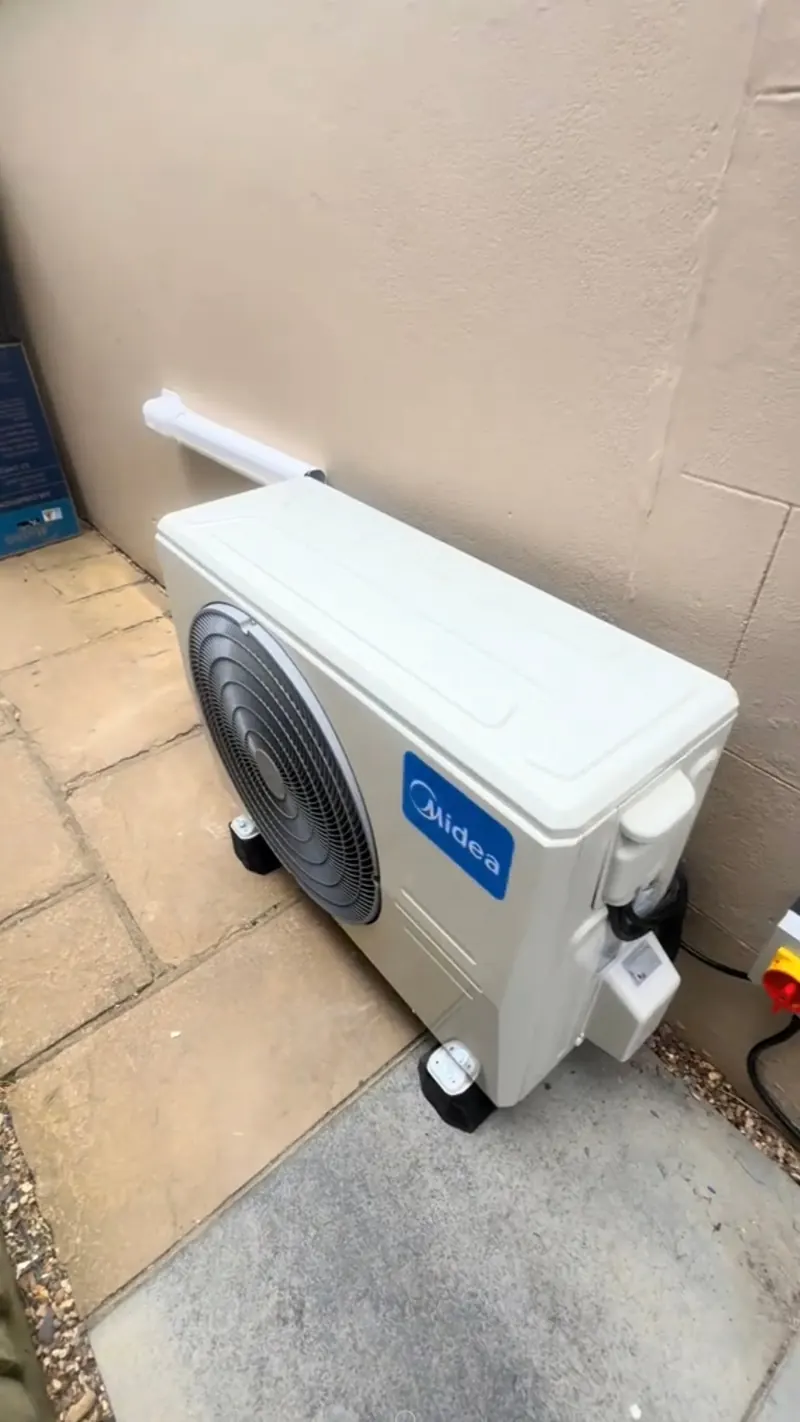 Air conditioning
Outdoor unit on paving
Against render, clear of the boundary
Air conditioning
Outdoor unit on paving
Against render, clear of the boundary
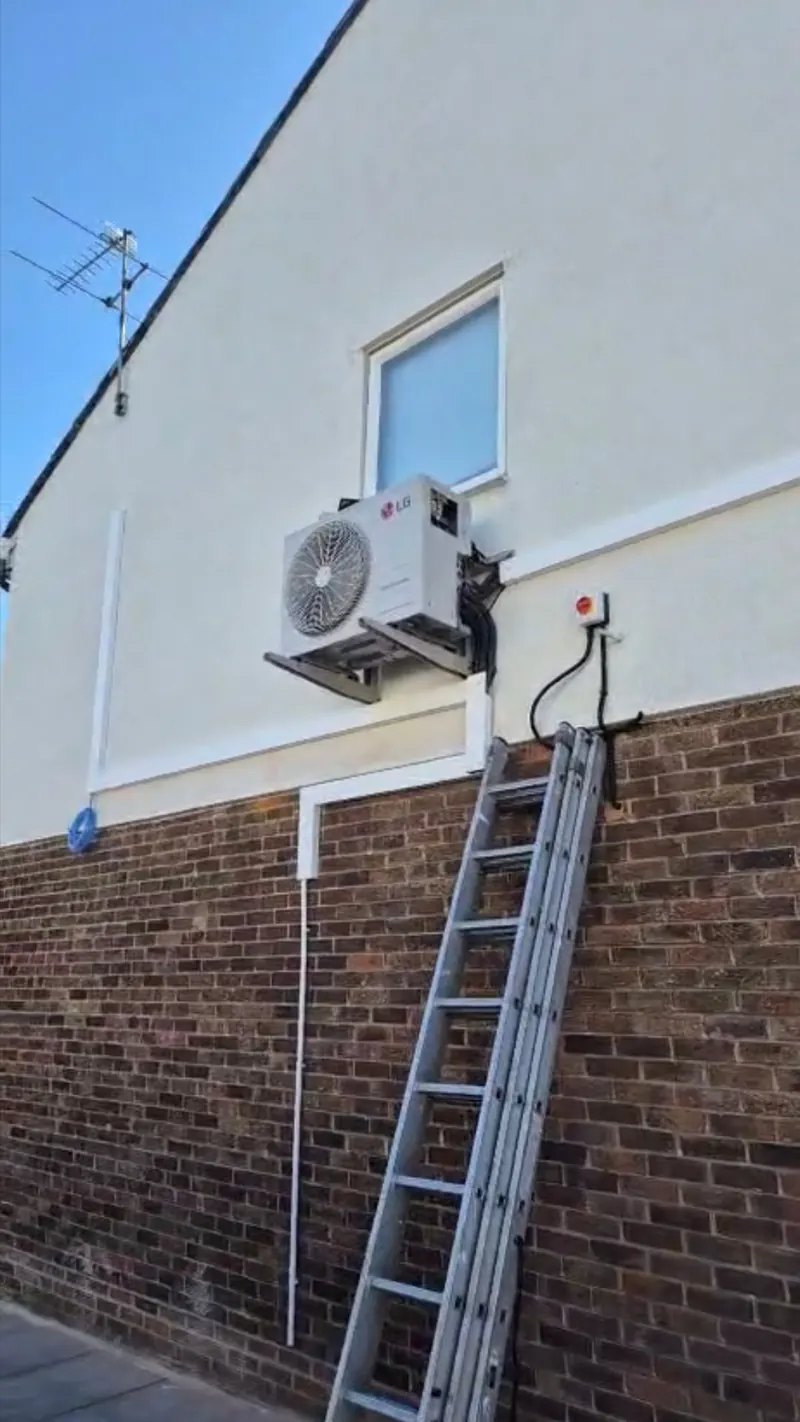 Air conditioning
Condenser high on a wall
On brackets where the ground was not an option
Air conditioning
Condenser high on a wall
On brackets where the ground was not an option
A shop with its door open all day can easily double its cooling load compared with the same unit closed up, so retail systems are sized with the open door assumed rather than ignored. On our rates a small shop on one or two wall units is 2,400 to 5,800 pounds, and a ceiling cassette adds 500 to 900 a unit.
The alternative, and it is often the cheaper one, is an air curtain over the door plus a smaller cooling system behind it.
Read the full guide: 6 sections, about 3 minutes
What makes a shop different
| Source | What it contributes | Why it matters |
|---|---|---|
| The open door | Continuous exchange with outside air, all day | Doubles the effective load. Design for it or fit an air curtain |
| Shopfront glazing | Large south or west glass is a solar oven by 3pm | Film or blinds are far cheaper than the extra kilowatts |
| Lighting | Display and accent lighting is real heat, and it is on all day | Older halogen display lighting is the worst offender |
| Customers | Load rises exactly when it is hottest outside | Saturday afternoon is the design condition, not Tuesday morning |
| The shopfront itself | What you are allowed to put on the outside | Conservation area and listed frontages restrict this hard |
Where the outdoor unit is allowed to go
This is the constraint that decides most retail jobs in London, and it is worth resolving before anything else. On a high street inside a conservation area, and most London high streets are, a unit on the front elevation is very unlikely to get consent. On a listed frontage it will not.
That normally leaves the rear, a flat roof, or a light well, and each of those brings its own access question and its own pipe run. Where the rear is a shared service yard, the landlord's consent matters as much as the council's.
We check the conservation area boundary and the listing before quoting, because the answer changes the price more than the choice of equipment does.
Air curtains, and when they are the right answer
An air curtain is a fan above the door that pushes a sheet of air downwards, separating inside from outside without a physical barrier. It does not cool. What it does is stop the cooled air you have paid for walking out of the door.
In a small unit with a wide opening it is frequently the cheapest single improvement available, because it lets the cooling system be sized for the room rather than for the room plus the street. In a deep unit with a narrow door it matters less.
It is worth pricing both ways at survey. Sometimes the curtain plus a smaller system costs less than the larger system on its own, and it always costs less to run.
Fitting without shutting the shop
Most retail installations we do happen before opening, after closing, or on the quietest day of the week. The disruptive part, which is core drilling and any chasing, is a few hours rather than days.
If the unit is in a shopping centre or a managed parade there will be a permit to work and agreed hours, and getting that in place is usually the longest lead time on the job. It is worth starting it the day the quote is accepted.
What a retail system costs
Quoted from a heat load calculation and a drawing rather than a price list. The indicative figures below come from the same model as the rest of the site: the base for the number of indoor units, plus the cassette uplift where the ceiling takes one.
| Scope | Usual system | Indicative price |
|---|---|---|
| Small unit, one open space | 1 to 2 wall units or cassettes | £2,400 to £7,600 |
| Unit with a stockroom or office behind | 2 to 3 indoor units | £5,300 to £11,300 |
| Air curtain over the entrance | Fitted with the system | Quoted at survey |
| Showroom with large glazing | Sized from the glazing, not the floor | From heat load and drawing |
| Maintenance, per unit | Basic contract, one visit a year | From £95 plus VAT |
Every figure on this site is an estimate built from the quotations we issued in 2026 and our own installation experience. It is not a quotation. The price you are given after the free survey is the price you pay.
Other commercial work
Restaurants and cafés
The single most expensive mistake in hospitality cooling is treating the dining room and the kitchen as one problem.
Restaurants and cafésSalons
A salon has two things almost no other small premises has: several kilowatts of hot air aimed deliberately at the room, and clients who sit perfectly still for two hours.
SalonsServer and comms rooms
A comms room is the one space in a building where the cooling has to work at three in the morning in February.
Server and comms roomsAll commercial work
How commercial jobs are priced, the F-Gas and TM44 duties, and maintenance contracts.
Commercial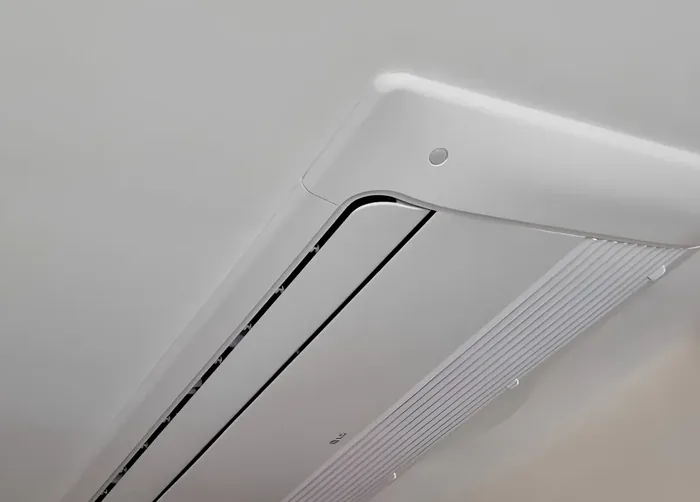
Your estimate
£2,400to£3,200
Supplied, fitted, commissioned and certificated. Includes VAT.
Send this on WhatsAppPrice it for shops and retail
Commercial work is priced on the number of indoor units and what kind they are, the same as anywhere else. The heat load calculation at the survey is what turns this into one number.
Last step: where do we send your written price?
Every figure on this site is an estimate built from the quotations we issued in 2026 and our own installation experience. It is not a quotation. The price you are given after the free survey is the price you pay.
Shops and retail: common questions
Should we keep the shop door open with air conditioning running?
Commercially, most retailers say yes, and we are not going to argue with footfall data we have not seen. What matters is that the system is sized knowing the door is open, rather than being sized for a closed room and then blamed when it cannot cope.
An air curtain is the way to have both. It keeps the opening clear and cuts the air exchange substantially, so the cooling you have paid for stays in the shop.
Can we put the unit on the front of the shop?
Usually not. Most London high streets are inside conservation areas, where plant on a frontage facing a highway is very unlikely to be acceptable, and on a listed frontage it will not be permitted at all.
The rear, a flat roof or a light well are the normal answers. We check the boundary and the listing for the address before quoting. The rules are set out on the planning page.
How disruptive is the installation?
Less than most people expect. A single-unit retail installation is usually one day, and the genuinely noisy part is a couple of hours of core drilling. We work before opening or after closing where the shop cannot lose the trading time.
Do we need the landlord's permission?
On a commercial lease, almost certainly. The outdoor unit is attached to the building and that is an alteration. We prepare the drawing, specification, sound data and insurance the landlord or managing agent will ask for, at no charge.
Free survey and heat load calculation
Free on jobs over 5,000 pounds. You get a design drawing, a fixed price split into plant, installation, electrics and builders work, and a programme with the out-of-hours windows agreed before anyone starts.
Monday to Friday 9am to 7pm, Saturday 10am to 3pm, Sunday closed
Page updated